
Neck tension is one of the most common physical complaints among adults. The muscles in this area work all day to hold your head upright, and they react strongly to stress, poor posture, and screen time. When they tighten, you feel it as stiffness, a dull ache, or even a headache. The fastest way to relax neck muscles naturally is to combine gentle movement with targeted heat and deliberate breathing. Stretching for two minutes, applying moist heat for ten, and slowing your breath can shift the muscle from a contracted state to a relaxed one. These methods work because they address the physiology of muscle tension directly, not because they mask the discomfort.
Why Do Neck Muscles Get So Tight?
Your head weighs about ten to twelve pounds. Every degree you tilt it forward increases the load on your neck muscles. Looking down at a phone can effectively double or triple that weight. The muscles at the back of your neck, the upper trapezius and the levator scapulae, work overtime to keep your head stable. Over hours, they fatigue and stay partially contracted even when you try to relax.
Stress makes this worse. When you are anxious, your body releases hormones that keep muscles in a state of readiness. Your neck and shoulders are prime targets for this tension because they carry the physical load of your posture. The result is a feedback loop: tense muscles cause pain, pain increases stress, and stress keeps the muscles tight.
Sleep position also matters. Sleeping on your stomach forces your neck into rotation for hours. A pillow that is too thick or too flat can hold your neck at an awkward angle all night. By morning, the muscles have adapted to that strained position and feel stiff.
What Is the Fastest Way to Release a Tight Neck?
Heat is the most direct natural tool for relaxing a contracted muscle. Moist heat penetrates deeper than dry heat. A warm shower, a steamed towel, or a microwaveable heat pack placed on the back of your neck for ten to fifteen minutes increases blood flow to the area. More blood means more oxygen and nutrients reach the muscle fibers, which helps them let go.
Combine heat with slow, gentle movement. After the muscle warms up, tilt your ear toward your shoulder on one side. Hold for twenty seconds. Return to center. Repeat on the other side. Then turn your chin toward your shoulder and hold. These are not stretches you force. You are simply moving the joint through its normal range while the tissue is warm.
Breathing is the overlooked piece. When you are in pain, you tend to hold your breath or breathe shallowly. This keeps your nervous system in a stress state. Slow exhales, longer than your inhales, signal your body to calm down. Inhale for four counts, exhale for six. Do this for two minutes while the heat is on. This combination of heat, movement, and breath work is the fastest natural sequence that reliably reduces neck tension.
How To Relax Neck Muscles Naturally And Quickly With Stretching
Stretching works best when your muscles are warm. Stretching a cold, tight muscle can actually trigger a protective contraction. So heat first, then stretch. The goal is not to lengthen the muscle forcefully. It is to teach it that it is safe to release.
The levator scapulae stretch targets a muscle that runs from the top of your shoulder blade to the side of your neck. Sit tall. Turn your head forty-five degrees to one side. Then tuck your chin slightly toward your armpit. You should feel a gentle pull along the back side of your neck. Hold for thirty seconds. This stretch directly addresses the muscle that gets painfully tight from cradling a phone between your ear and shoulder.
The upper trapezius stretch is simpler. Sit with your shoulders down and back. Tilt your head to one side as if trying to touch your ear to your shoulder. Use your hand to add light pressure. Hold for thirty seconds. Repeat three times per side. The key is to keep your opposite shoulder relaxed and down. If it creeps up, the stretch loses its effect.
Chin tucks are a different kind of exercise. They strengthen the deep neck flexors that oppose the overactive muscles. Sit up straight. Pull your chin straight back as if making a double chin. Hold for five seconds. Repeat ten times. This does not feel like a stretch, but it rebalances the muscles that hold your head upright. Over weeks, it reduces the tendency for your neck muscles to tighten in the first place.





Does Massage Actually Help Neck Tension?
Massage can help, but the type matters. Deep tissue massage on an already tight neck can cause a reactive spasm. The muscle may tighten further in defense. Gentle to moderate pressure is safer and often more effective for acute tension.
You can do effective self-massage at home. Find the fleshy muscle between your neck and shoulder, the upper trapezius. Pinch it gently between your thumb and fingers. Hold the squeeze for thirty seconds without rubbing. This sustained pressure can trigger the muscle to relax on its own. Move to the base of your skull where the suboccipital muscles attach. Press firmly with your fingertips and hold. These small muscles are often the source of tension headaches.
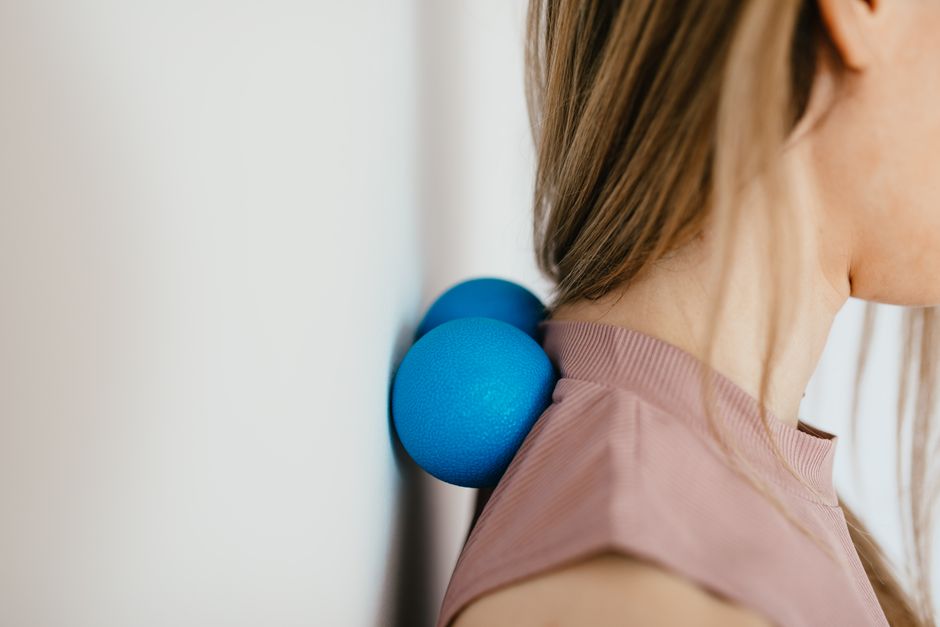
A massage tool like a tennis ball or a foam roller can help, but use it carefully. Place the ball between your neck and a wall. Lean into it gently. Do not press directly on your spine. Stay on the muscle tissue beside the spine. Limit this to two minutes per side. Longer pressure on these muscles can cause bruising or nerve irritation.
What Everyday Habits Keep Neck Muscles Tight?
Your daily habits matter more than any single treatment. The way you sit at a desk, hold your phone, and sleep either relaxes or tightens your neck muscles over time.
Computer posture is the biggest factor. Your monitor should be at eye level. If you look down at a laptop screen for hours, your neck muscles are working continuously. Elevate the screen and use a separate keyboard. Your ears should sit directly above your shoulders when viewed from the side.
Phone use is the newer problem. Holding a phone in your lap forces your neck into extreme flexion. Bring the phone up to eye level instead. It looks awkward at first, but it spares your neck from sustained strain.
Sleep position is harder to change because you are unconscious. Back sleepers need a thin pillow that supports the curve of the neck without propping the head up too high. Side sleepers need a pillow that keeps the head level with the spine. Stomach sleeping is the worst position for neck health because it forces rotation for hours. If you cannot break the habit, at least use a very thin pillow or none at all.
Stress management is not optional for neck health. If your body is chronically in a stress state, your neck muscles will stay tight no matter how much you stretch. Regular physical activity, adequate sleep, and time away from screens all reduce the baseline tension your muscles carry.
When Should You See a Doctor for Neck Pain?
Most neck tension resolves with the natural methods described here. But some neck pain signals something more serious. You should seek medical attention if neck pain follows a fall or injury. You should also see a doctor if the pain radiates down your arm or into your hand, if your fingers feel numb or weak, or if the pain is severe enough to wake you from sleep.
Neck pain combined with fever, unexplained weight loss, or difficulty walking requires urgent evaluation. These symptoms are rare, but they point to conditions that need medical treatment, not self-care.
If your neck is stiff and you also have a fever and a severe headache, seek emergency care. This combination can indicate meningitis, a serious infection that requires immediate treatment.
For ordinary tension that lasts more than a few weeks despite self-care, a doctor or physical therapist can help. They can assess your posture, identify muscle imbalances, and design a specific exercise program. This is not a sign of failure. It is a targeted approach to a problem that has become habitual.
Are There Supplements That Relax Neck Muscles?
Some people turn to magnesium supplements for muscle relaxation. Magnesium plays a role in muscle contraction and relaxation at the cellular level. The evidence that oral magnesium supplements reduce muscle tension is mixed. Some studies suggest benefit, but results are not consistent across populations.
No supplement has been proven to specifically relax neck muscles. Marketing claims about “muscle relaxant” supplements should be viewed with caution. If you have low magnesium levels, correcting that deficiency may help overall muscle function. But taking extra magnesium when your levels are normal is unlikely to produce a noticeable difference in neck tension.
Herbal remedies like valerian root or chamomile have mild calming effects. They may help if stress is driving your muscle tension. But they are not direct muscle relaxants. Their effect on neck tightness is indirect at best.
Frequently Asked Questions
How long does it take to relax a tight neck muscle?
Heat and gentle stretching can provide noticeable relief within ten to fifteen minutes. Complete relaxation of a chronically tight muscle may take days of consistent practice.
Is it better to use heat or ice for a tight neck?
Heat is better for muscle tightness because it increases blood flow and encourages relaxation. Ice is better for acute injury with swelling, not for general muscle tension.
Can stress alone cause neck muscles to tighten?
Yes, stress alone can cause measurable neck muscle tension. Stress hormones keep muscles in a contracted state, and the neck and shoulders are common targets for this response.
What is the best sleeping position to prevent neck pain?
Sleeping on your back with a thin pillow that supports the natural curve of your neck is generally best. Side sleeping with a pillow that keeps your head level with your spine is also good. Stomach sleeping is the worst for neck health.
