
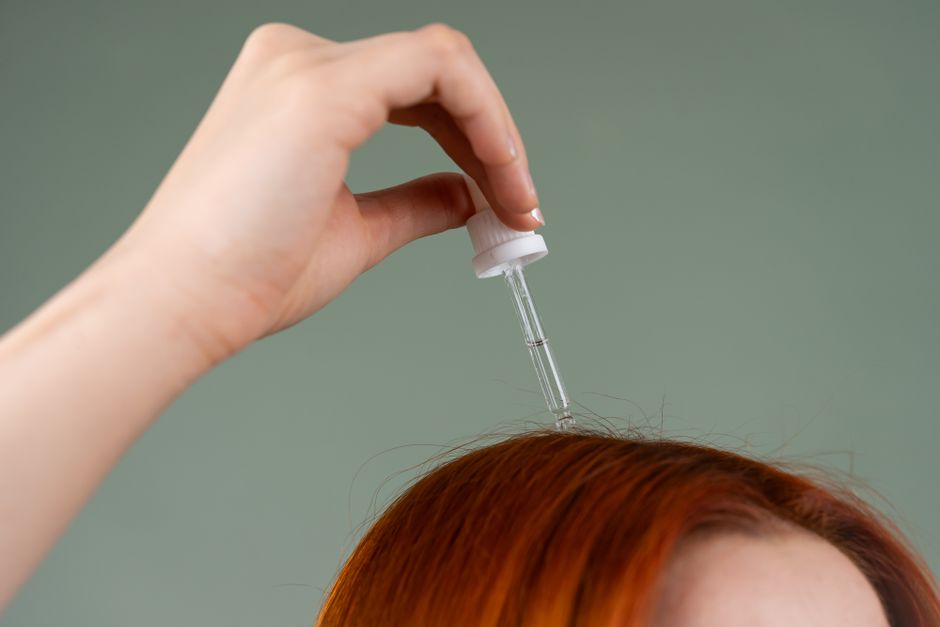
Retinol is famous for clearing acne and smoothing fine lines, but its effect on hair is a different story. The science shows that topical retinol does not directly cause permanent hair loss, yet it can trigger a temporary increase in shedding for some people. Meanwhile, oral retinoids and severe vitamin A excess are a different matter entirely — those can cause noticeable hair loss. The key is understanding the dose, the form, and how your scalp reacts.
What Is Retinol and How Does It Work on the Skin?
Retinol is a form of vitamin A. Your skin converts it into retinoic acid, the active ingredient that speeds up cell turnover. This is why it helps with acne and wrinkles — it pushes newer, healthier cells to the surface faster.
When you apply retinol to your face, it works locally. Very little of it enters your bloodstream in amounts large enough to affect hair follicles on your scalp. That is an important distinction. A face cream is not the same as a pill.
However, retinol can drift. People often apply it near the hairline or use it on their scalp for conditions like seborrheic dermatitis. When that happens, the skin on the scalp can become irritated, and irritation can influence hair shedding.
Does Retinol Cause Hair Loss?
Topical retinol does not cause permanent hair loss. The hair loss some people notice during retinol use is usually a temporary shedding phase called telogen effluvium. This happens when stress — including physical stress like skin irritation — pushes hair follicles into a resting state. A few months later, those hairs fall out all at once.
The evidence here is mostly clinical observation rather than large controlled trials. Dermatologists report that some patients experience increased shedding when they start a retinol product, especially if they apply it to the scalp. The shedding typically stops once the skin adjusts or the product is discontinued.
Oral retinoids are a different story. Isotretinoin, the prescription acne medication, is well documented to cause hair thinning in some users. The same applies to very high doses of vitamin A supplements. This is not a cosmetic side effect — it is a sign that the body is processing more vitamin A than it needs.
Can Retinol Actually Help Hair Grow?
Retinol may help hair growth indirectly, but the evidence is not strong. Vitamin A is required for normal cell growth, including hair follicle cells. A deficiency in vitamin A can cause hair loss. But deficiency is rare in the United States, and correcting a deficiency is not the same as using retinol to grow hair.
Some hair care products now include retinol or other vitamin A derivatives. The theory is that retinol improves scalp health by reducing buildup and inflammation, which could create a better environment for hair growth. That theory makes biological sense, but no large human studies have confirmed that topical retinol grows hair.
There is also a real risk of doing the opposite. Too much vitamin A, whether from supplements or excessive topical use, is toxic to hair follicles. The dose-response curve is not linear — a little may help, but more is not better.


What the Research Actually Shows
Research on topical retinol and hair growth is limited. Most of what dermatologists know comes from clinical experience and small studies, not large randomized trials. The strongest evidence for vitamin A’s role in hair is tied to deficiency and toxicity, not to cosmetic use.
Studies on isotretinoin have documented hair loss as a possible side effect. The mechanism is not fully understood, but it appears related to how retinoids affect the hair growth cycle at the cellular level. Some research suggests retinoids can disrupt the normal progression of the anagen (growth) phase, causing follicles to enter the telogen (resting) phase prematurely.
For topical products, the evidence is even thinner. Some studies suggest that retinol can improve scalp conditions like dandruff and folliculitis, which may indirectly support healthier hair. But no study has shown that retinol alone regrows hair in people with pattern baldness or other forms of hair loss.
Retinol vs. Other Vitamin A Forms
Not all vitamin A is the same. Retinol is one form, but there are others with different potencies and effects.
- Retinyl palmitate — a storage form of vitamin A, less potent, commonly used in moisturizers.
- Retinaldehyde — one step closer to retinoic acid, more potent than retinol.
- Adapalene and tazarotene — synthetic retinoids, prescription strength, used for acne and psoriasis.
- Isotretinoin — oral retinoid, reserved for severe acne, with a long list of side effects including hair loss.
The stronger the retinoid, the greater the potential for irritation and shedding. If you are using a prescription-strength retinoid and notice hair loss, that is a more serious situation than using an over-the-counter retinol serum.
How to Tell If Retinol Is Causing Your Hair Loss
Hair loss has many causes. Before blaming retinol, consider the other possibilities. Stress, iron deficiency, thyroid conditions, hormonal changes, and genetics are all far more common causes of hair shedding than a face cream.
If you suspect retinol, look at the timeline. Telogen effluvium typically occurs two to three months after the triggering event. If you started a new retinol product and noticed shedding three months later, that timing is consistent. If the shedding started within days, retinol is probably not the cause — the hair cycle does not work that fast.
Also check where you apply the product. If you only use retinol on your face, the amount reaching your scalp is minimal. If you use a scalp treatment with retinol, the connection is more plausible.
What to Do If You Notice Shedding
If you are using a topical retinol and notice increased shedding, the first step is to stop using it on or near your scalp. Give your skin a break for a few weeks and see if the shedding slows. Most temporary shedding resolves on its own within a few months.
If you are taking an oral retinoid, do not stop without talking to your doctor. Isotretinoin is a serious medication with important monitoring requirements. Your doctor can help you weigh the benefits against the side effects and may be able to adjust your dose or timing.
If the shedding continues after stopping retinol, or if you notice bald patches, redness, or scalp pain, see a dermatologist. These symptoms can indicate a different condition that needs proper diagnosis.
Who Should Avoid Retinol for Hair Concerns?
People with a known vitamin A sensitivity should be cautious. Pregnant women and those trying to conceive should avoid oral retinoids entirely, and should use topical retinol only under medical guidance. High-dose vitamin A is linked to birth defects, and this is well established.
People with naturally dry or sensitive scalps may find that retinol worsens irritation. If your scalp is already prone to flaking or redness, introducing a retinoid can make things worse, and irritated skin is not a good environment for hair growth.
Frequently Asked Questions
Can retinol make your hair fall out?
Topical retinol can cause temporary shedding in some people, especially if applied to the scalp. Oral retinoids are more strongly linked to hair loss, and the effect is usually reversible once the medication is stopped.
Does retinol help hair growth?
There is no strong evidence that topical retinol grows hair. It may improve scalp health indirectly, but no large human trials have confirmed a direct hair growth benefit.
How long does retinol hair shedding last?
Shedding from telogen effluvium usually lasts a few months. Once the trigger is removed, hair typically returns to its normal growth cycle within three to six months.
Is vitamin A deficiency a cause of hair loss?
Yes, vitamin A deficiency can cause hair loss, but it is rare in the United States. Most people get enough vitamin A from their diet, and supplementing beyond normal levels can actually cause hair loss.
