
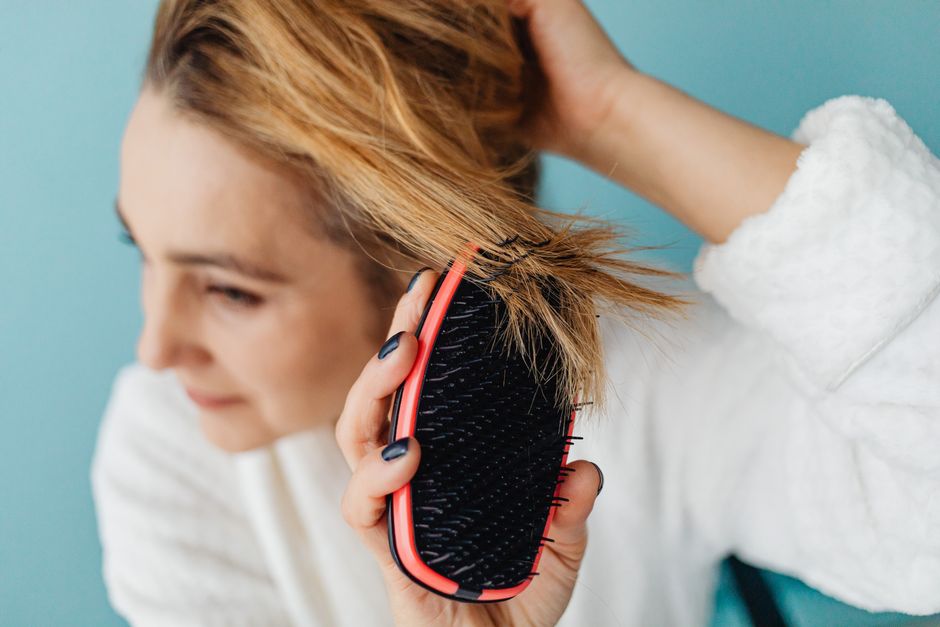
You have probably heard the claim before: if you do not wash your hair often enough, it will fall out. It sounds logical in a way. Dirty hair looks limp, greasy, and unhealthy. But does the buildup of oil and product actually cause your hair to shed from the root? The short answer is no. Dirty hair does not directly cause hair loss. However, the conditions that come with an unclean scalp can indirectly contribute to breakage and, in rare cases, create an environment where shedding increases. The distinction matters because it changes what you should actually do about it.
Does Dirty Hair Fall Out More What Science Says
Hair loss happens at the follicle, which sits below the surface of your scalp. Sebum, sweat, and dead skin cells accumulate on the surface, not deep inside the follicle. Because of this, a dirty scalp does not stop hair from growing or cause the follicle to fail. The hair you see on your brush or in the shower drain is part of a natural shedding cycle. Most people lose between 50 and 100 hairs per day. That number does not change just because you skipped a few shampoos.
What dirty hair does affect is the hair shaft. When oil and product buildup coat the strand, it becomes stickier and more prone to tangling. Brushing or combing through tangled, greasy hair creates friction. That friction can snap the hair shaft, which looks like hair loss but is actually breakage. Breakage is not the same as shedding, and it does not mean you are going bald. It means the strand broke off somewhere along its length.
Can a Dirty Scalp Cause Inflammation That Leads to Hair Loss?
This is where the science gets more complex. A scalp that stays dirty for a long time can develop buildup that traps bacteria and yeast. In some people, this triggers inflammation. Inflammation around the follicle is a real cause of hair shedding. Conditions like seborrheic dermatitis and folliculitis are linked to an overgrowth of microorganisms on the scalp. Both can cause itching, flaking, and sometimes temporary hair loss.
But there is a difference between a few days of skipped washing and a chronic, untreated scalp condition. Occasional dirty hair does not cause inflammation. A scalp that is never properly cleaned for weeks or months is a different situation. Even then, the hair loss is not caused by the dirt itself. It is caused by the inflammatory response to the microbial overgrowth. Treating the underlying scalp condition usually allows the hair to regrow.
Some research suggests that a compound called malassezia, a yeast that naturally lives on the scalp, can multiply when oil buildup is high. In susceptible people, this triggers flaking and itching. Scratching an itchy scalp can damage the hair follicle over time. That is a plausible indirect pathway from dirty hair to hair thinning, but it requires prolonged neglect and a genetic or immune predisposition. It is not something that happens after a long week without shampoo.
What Actually Causes Hair to Fall Out?
If dirt is not the culprit, what is? The most common cause of hair loss in men and women is genetics. Androgenetic alopecia, also known as male or female pattern baldness, is driven by hormones and inherited genes. It follows a predictable pattern and progresses slowly over years. No amount of washing, or not washing, changes this process.
The second most common cause is telogen effluvium. This is a temporary shedding that happens weeks or months after a physical or emotional stressor. Major surgery, rapid weight loss, high fever, childbirth, or extreme psychological stress can push a large number of hair follicles into the resting phase at the same time. A few months later, those hairs all fall out together. This condition is temporary and usually resolves on its own once the stressor is gone.
Nutritional deficiencies can also play a role. Low iron levels, specifically ferritin, are associated with hair shedding. Vitamin D deficiency has also been linked to hair loss in some studies. Thyroid disorders, both overactive and underactive, can cause diffuse thinning. These are medical conditions that require blood tests and proper diagnosis, not a change in shampoo frequency.




Does Washing Hair Less Often Cause More Shedding in the Shower?
This is a common confusion. People who wash their hair every day notice a few hairs in the drain. People who wash once a week notice a larger clump. The instinct is to think the less frequent washing caused more hair to fall out. That is not what is happening.
Hair sheds on its own schedule. The hairs that were going to fall out over the course of a week do not wait for you to wash your hair. They fall out when they fall out. If you only wash once a week, all of those shed hairs are still sitting in your hair, held in place by oil and product buildup. When you finally shampoo, they all come out at once. The total number is the same. It just looks more dramatic because it happens all at once.
This is not a sign of hair loss. It is a sign of normal shedding that was delayed by the lack of washing. If you switch from daily washing to weekly washing, you will see bigger clumps in the drain. That is expected and not a reason to worry.
Can Certain Hair Products in Dirty Hair Make Things Worse?
Product buildup is a separate issue from natural oil. Dry shampoo, styling gels, waxes, and heavy conditioners can leave a residue on the scalp and hair. Over time, this residue can mix with sebum and dead skin cells to form a layer that is hard to remove with a quick rinse. This buildup can make the hair look dull and flat, and it can contribute to tangling and breakage.
Some ingredients are more likely to cause buildup than others. Silicones, which are common in conditioners and serums, coat the hair shaft to make it smooth. They are not harmful, but they can accumulate if you do not use a clarifying shampoo occasionally. The same goes for certain oils and butters used in styling products. This is a cosmetic issue, not a medical one. It does not cause hair to fall out from the root.
If you use heavy styling products regularly, washing your hair more often or using a clarifying shampoo once every week or two can help. This removes residue and restores the hair’s natural movement. It will not change your rate of shedding, but it will make your hair look and feel healthier.
How Often Should You Wash Your Hair?
There is no single answer that works for everyone. Washing frequency depends on your scalp type, hair texture, activity level, and the products you use. People with fine, straight hair often need to wash every day or every other day because oil travels down the shaft quickly. People with thick, curly, or coily hair may go a week or longer between washes because the oil does not distribute as easily and the hair is more prone to dryness.
The goal is to keep the scalp clean enough to avoid buildup and itching, while not stripping the hair of the moisture it needs. If your scalp feels itchy, looks flaky, or has a strong odor, it is time to wash. If your hair feels dry and brittle, you may be washing too often or using a shampoo that is too harsh.
There is no evidence that washing more or less frequently prevents hair loss. The only exception is if a scalp condition develops from prolonged neglect, and that is a medical issue that needs treatment. For most people, washing based on comfort and appearance is the right approach.
When Should You See a Doctor About Hair Loss?
If you notice sudden, patchy hair loss, see a doctor. If you are losing handfuls of hair at a time, see a doctor. If the shedding continues for more than six months without an obvious cause, see a doctor. These are signs that something beyond normal shedding is happening.
A primary care doctor or a dermatologist can run basic blood tests to check for thyroid problems, iron deficiency, and other hormonal issues. They can also examine your scalp for signs of inflammation, infection, or scarring. Early diagnosis matters for conditions like alopecia areata, which is an autoimmune condition that causes patchy hair loss. Treatment options exist, but they work best when started early.
Do not waste months trying special shampoos or supplements before seeing a doctor. If the hair loss is caused by a medical condition, no topical product will fix it. A proper diagnosis is the first step toward the right treatment.
Frequently Asked Questions
Can dirty hair cause permanent baldness?
No. Dirty hair does not cause permanent baldness. Permanent hair loss is almost always genetic or related to a medical condition that affects the follicle.
Why do I lose more hair when I wash it less often?
You are seeing the normal daily shedding that accumulated over several days. The hairs were going to fall out anyway, but they stayed in place until the wash.
Does greasy hair mean my hair is falling out?
No. Greasy hair is caused by sebum production on the scalp. It is a cosmetic issue and does not indicate hair loss.
Can not washing my hair cause scalp inflammation?
Prolonged buildup can contribute to conditions like seborrheic dermatitis in some people. This can cause itching and temporary shedding, but it is treatable and not the same as permanent hair loss.
