
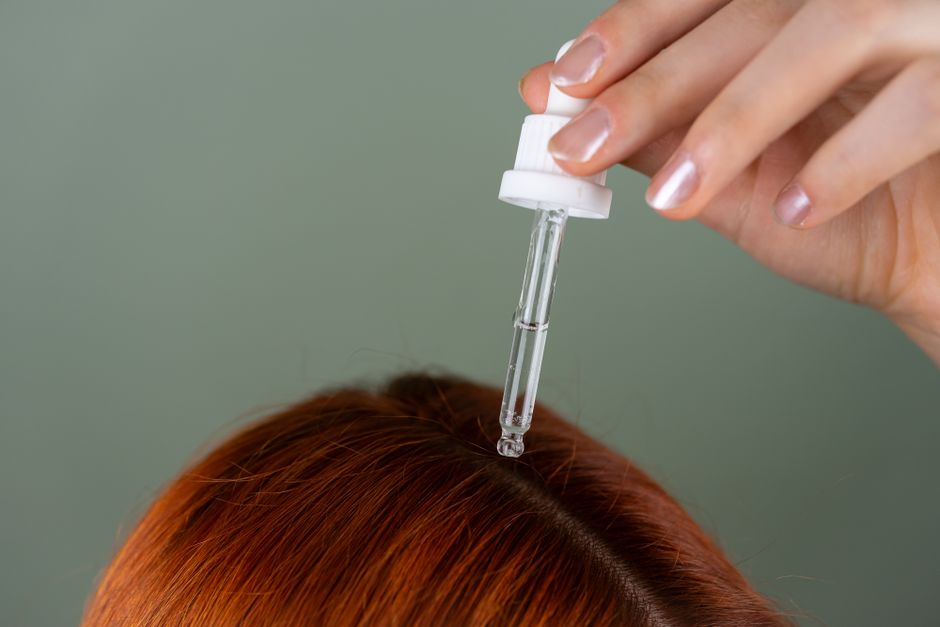
Essential oils are a popular natural remedy for hair loss, but the science behind them is mixed. Some plant oils show real promise for improving hair growth, while others are mostly marketing. The strongest evidence points to rosemary oil and peppermint oil, which have been studied in human trials and animal models. Other oils like lavender, cedarwood, and thyme show potential, but the research is thinner. Here is what the science actually says about which essential oils may help your hair grow.
What Essential Oils Are Good For Hair Growth? Science Says
The short answer is that a few essential oils have genuine research behind them. Rosemary oil has the most evidence. Peppermint oil also shows real promise. The rest of the essential oil market relies on tradition, animal studies, or small human trials that need more confirmation.
One important distinction: essential oils are not the same as carrier oils. Coconut oil, jojoba oil, and argan oil are carrier oils. They moisturize the scalp and protect the hair shaft. Essential oils are concentrated plant extracts. They contain active compounds that may affect the scalp and hair follicles directly. You should never apply undiluted essential oil to your skin.
How Do Essential Oils Affect Hair Growth?
Hair growth depends on the health of the hair follicle. Each follicle goes through cycles: growth, rest, and shedding. Anything that extends the growth phase or stimulates blood flow to the scalp may support thicker, longer hair.
Essential oils may work through several pathways. Some increase blood circulation to the scalp. Better blood flow delivers oxygen and nutrients to the follicles. Others have anti-inflammatory properties. Scalp inflammation is linked to certain types of hair loss. Some compounds in essential oils may also directly stimulate the cells in the hair follicle.
This all makes biological sense. But biological plausibility is not the same as clinical proof. A compound can do something interesting in a lab dish and still fail to help a real person grow hair. The research matters more than the mechanism.
Rosemary Oil: The Strongest Evidence
Rosemary oil is the most studied essential oil for hair growth. The key active compound is rosmarinic acid, which has anti-inflammatory and antioxidant properties. Some research suggests it may also block the hormone byproduct that shrinks hair follicles in pattern baldness.
One well-known clinical trial compared rosemary oil to minoxidil, the active ingredient in Rogaine. The study ran for six months and included men with androgenetic alopecia, which is male pattern baldness. At the end of the study, rosemary oil increased hair count about as much as minoxidil did. The minoxidil group saw slightly better results, but the difference was not significant. The rosemary oil group also reported less scalp itching than the minoxidil group.
That trial is important because it compared rosemary oil to an FDA-approved hair loss treatment. Most essential oil research does not reach this level of rigor. Still, this is a single trial with a modest number of participants. More research would strengthen the case.



Peppermint Oil: Promising Animal Studies
Peppermint oil contains menthol, which creates a cooling sensation and increases blood flow to the skin. This is why peppermint oil is a common ingredient in scalp treatments. The question is whether that increased circulation actually translates to hair growth.
A widely cited animal study compared peppermint oil to minoxidil in mice. The peppermint oil group showed significantly more hair growth than both the control group and the minoxidil group after four weeks. That is an impressive result in mice. But mice are not humans. Their hair cycles are shorter and their skin responds differently to topical treatments.
No large human trial has confirmed peppermint oil works for hair growth. The evidence is encouraging but preliminary. If you use peppermint oil, you are acting on early research, not established clinical proof.
Lavender, Cedarwood, and Thyme: Limited Evidence
These three oils often appear in hair growth blends. Lavender has anti-inflammatory and antimicrobial properties. Cedarwood may improve blood circulation. Thyme contains compounds that could stimulate the scalp. But the clinical evidence for each one is thin.
One small study tested a blend of lavender, cedarwood, rosemary, and thyme oils against a placebo. Participants had alopecia areata, an autoimmune condition that causes patchy hair loss. After seven months, the essential oil group showed significantly more hair regrowth than the placebo group. This sounds promising, but the study was small and has not been replicated.
Another study looked at lavender oil alone in mice. The mice showed increased hair follicle depth and thicker hair after treatment. Again, that is animal data. It tells us lavender is worth studying, not that it definitely works in humans.
How to Use Essential Oils Safely for Hair
Safety comes first. Essential oils are concentrated and can irritate or burn the skin if used undiluted. You must always mix them with a carrier oil before applying to your scalp.
A common dilution is 3 to 5 drops of essential oil per tablespoon of carrier oil. Good carrier options include jojoba oil, coconut oil, sweet almond oil, or argan oil. Apply the mixture to your scalp and massage gently. Leave it on for 30 minutes to a few hours, then wash it out. Some people leave it overnight, but that increases the risk of skin irritation.
Do a patch test first. Apply a small amount of the diluted mixture to your inner forearm and wait 24 hours. If you see redness, itching, or swelling, do not use the oil on your scalp.
Do not ingest essential oils. Do not apply them near your eyes. If you have sensitive skin, eczema, or psoriasis, talk to a dermatologist before trying essential oils on your scalp.
Pregnant women should be especially careful. Some essential oils have not been studied for safety during pregnancy. No clinical guidelines currently exist for essential oil use in pregnant women for hair growth. If you are pregnant or breastfeeding, consult your doctor before using any essential oil.
What Essential Oils Cannot Do
Essential oils are not a cure for all hair loss. They will not regrow hair lost to severe scarring alopecia. They will not help if you have a nutritional deficiency that needs correcting. They will not stop autoimmune hair loss like alopecia areata on their own.
Hair loss has many causes. Genetics, hormones, stress, medications, and medical conditions all play a role. If you are seeing sudden or patchy hair loss, see a doctor first. Sudden shedding can signal a medical problem that needs proper diagnosis. Essential oils are not a substitute for medical care.
It is also worth noting that many hair growth products claim to contain essential oils but include only trace amounts. Check the label. If an essential oil appears near the bottom of the ingredient list, it is probably there for scent, not for effect.
Frequently Asked Questions
How long does it take for essential oils to show results on hair?
Most studies that show positive results run for at least six months. Hair grows slowly, so do not expect visible changes in a few weeks. Consistency matters more than intensity.
Can I use essential oils if I have sensitive skin?
You can, but you must dilute them properly and do a patch test first. Some oils like peppermint are more likely to irritate sensitive skin. If you have a skin condition, ask a dermatologist before use.
Is rosemary oil as effective as minoxidil for hair growth?
One clinical trial found rosemary oil performed similarly to minoxidil after six months in men with pattern baldness. This is a single study, so treat it as promising evidence, not a guarantee.
Which carrier oil is best to mix with essential oils for hair?
Jojoba oil is a common choice because it closely resembles the skin’s natural sebum. Coconut oil and sweet almond oil are also good options. Any of these will safely dilute your essential oil.
