
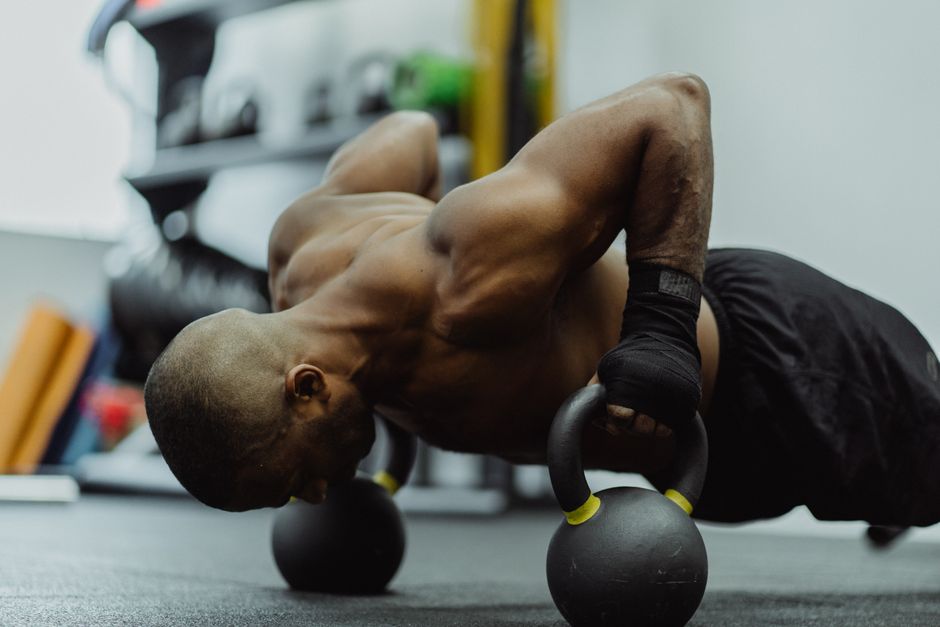
Push-ups are a staple bodyweight exercise, but many people wonder if they actually build the biceps. The short answer is yes, push-ups do work your biceps, but not in the same way that curls do. They activate the biceps as a secondary muscle, helping with elbow stability and control throughout the movement. To truly maximize bicep growth from push-ups, you need to understand the mechanics and adjust your form or exercise selection accordingly.
How Push-Ups Engage the Biceps Muscles
Your biceps brachii has two main jobs. It flexes the elbow and it supinates the forearm, turning your palm up. During a standard push-up, your elbows bend and straighten, which puts the biceps to work as a dynamic stabilizer.
As you lower your chest toward the floor, your biceps lengthen under tension. This eccentric phase is critical for muscle growth. Then, as you push back up, your biceps contract to help control the movement, though your chest and triceps do the heavy lifting.
Research using electromyography, or EMG, consistently shows moderate biceps activation during push-ups. It is not the primary mover, but the muscle is active enough to contribute to strength and size over time, especially for beginners.
Why Push-Ups Are Not a Primary Bicep Exercise
The biceps are a small muscle group compared to your chest and triceps. In a push-up, the chest and triceps are the prime movers because they generate the force needed to lift your body weight. The biceps assist mainly at the bottom of the movement when your elbows are fully flexed.
To build significant bicep size, you generally need exercises that place direct tension on the muscle through a full range of motion. Bicep curls do this by isolating elbow flexion. Push-ups do not, because the load is shared across multiple larger muscle groups.
This does not mean push-ups are useless for biceps. It means they are an accessory exercise, not a primary one. If your goal is bigger arms, push-ups alone will likely produce slower results than a program that includes dedicated bicep work.
What Research Says About Push-Up Variations and Bicep Activation
Some research suggests that certain push-up variations increase bicep involvement. Narrow-grip push-ups, where your hands are closer together, require more elbow flexion and may increase bicep activation compared to standard push-ups.
Diamond push-ups, where your thumbs and index fingers form a triangle, are another variation that places greater emphasis on the triceps but also keeps the elbows bent for longer. This extended time under tension can benefit the biceps as well.
Research published in the Journal of Strength and Conditioning Research has examined muscle activation across push-up variations. The findings generally show that while no push-up variation turns the exercise into a bicep builder on par with curls, some variations do recruit the biceps more than others.
The most effective way to increase bicep work during push-ups is to slow down the lowering phase. Taking three to five seconds to lower your chest increases the time your biceps spend under tension, which is a key driver of muscle growth.





How to Make Push-Ups More Effective for Biceps
If you want to maximize bicep activation during push-ups, focus on form first. Keep your elbows close to your body rather than flaring them out. This changes the angle of elbow flexion and increases bicep involvement.
Try these adjustments:
- Elbow position: Keep elbows at about 45 degrees or closer to your torso. Flared elbows shift work to the chest and shoulders.
- Range of motion: Lower your chest all the way to the floor. A full range of motion keeps the biceps under tension longer.
- Tempo: Lower for a slow count of three to four seconds. Explode up quickly but under control.
- Hand position: Use a neutral grip with palms facing each other, or a narrow grip, to increase elbow flexion demands.
These adjustments will not turn push-ups into curls, but they will make the biceps work harder within the movement.
Push-Ups vs. Curls for Bicep Growth
When comparing push-ups to curls, the evidence is clear. Curls are superior for isolated bicep growth because they place direct, constant tension on the muscle through a full range of motion.
Push-ups, by contrast, provide indirect stimulation. The biceps are active but never fully loaded in the way they are during a curl. For a beginner who cannot do a single pull-up or has no access to weights, push-ups can stimulate some bicep growth. For someone with training experience, push-ups alone will likely not be enough to add meaningful arm size.
If you have access to dumbbells, a barbell, or resistance bands, adding curls to your routine is the more effective path for bicep development. Push-ups can remain a valuable part of your overall upper-body program.
Can You Build Bigger Biceps With Only Push-Ups?
Building visibly bigger biceps with only push-ups is possible but unlikely for most people. The biceps receive enough stimulation to grow in beginners, but the load is limited to your body weight. As you get stronger, the relative challenge decreases, and so does the growth stimulus.
Progressive overload is the principle that drives muscle growth. You must continually increase the demand on the muscle. With push-ups, you can add difficulty by elevating your feet, wearing a weighted vest, or using resistance bands. These methods increase the load and can keep the biceps working hard.
However, even with added weight, push-ups do not isolate the biceps enough to match the growth potential of direct curl variations. The practical answer is that push-ups can contribute to bicep development, but they are not the most efficient tool for that specific goal.
Practical Recommendations for Your Workout Routine
If your goal is overall upper-body strength, push-ups are an excellent exercise to keep in your program. They build chest, shoulder, and tricep strength while giving your biceps a moderate workout.
If your goal is bicep size, combine push-ups with direct bicep work. A simple approach is to do push-ups as a compound movement early in your workout, then finish with curls or chin-ups for focused bicep stimulation.
Chin-ups are particularly effective because they use a supinated grip with palms facing you, which places the biceps under heavy load. Research consistently shows chin-ups produce high bicep activation, making them one of the best bodyweight exercises for arm growth.
For best results, train your biceps two to three times per week. Allow at least 48 hours of recovery between sessions that target the same muscles. This recovery time is when muscle repair and growth actually happen.
Frequently Asked Questions
Do push-ups build bicep mass?
Push-ups can contribute to bicep mass, especially for beginners, but they are not the most effective exercise for that purpose. Direct bicep exercises like curls and chin-ups produce greater growth.
What push-up variation works the biceps most?
Narrow-grip push-ups and push-ups with a slow lowering phase increase bicep activation compared to standard push-ups. Keeping your elbows close to your body also shifts more work to the biceps.
Are push-ups enough for arm growth?
Push-ups alone are generally not enough for significant arm growth in trained individuals. They work the triceps well, but the biceps need direct isolation exercises to grow substantially.
How many push-ups should I do to target biceps?
There is no specific number that targets biceps, since push-ups are not a bicep isolation exercise. Focus on quality reps with slow lowering and full range of motion rather than chasing a specific count.
