
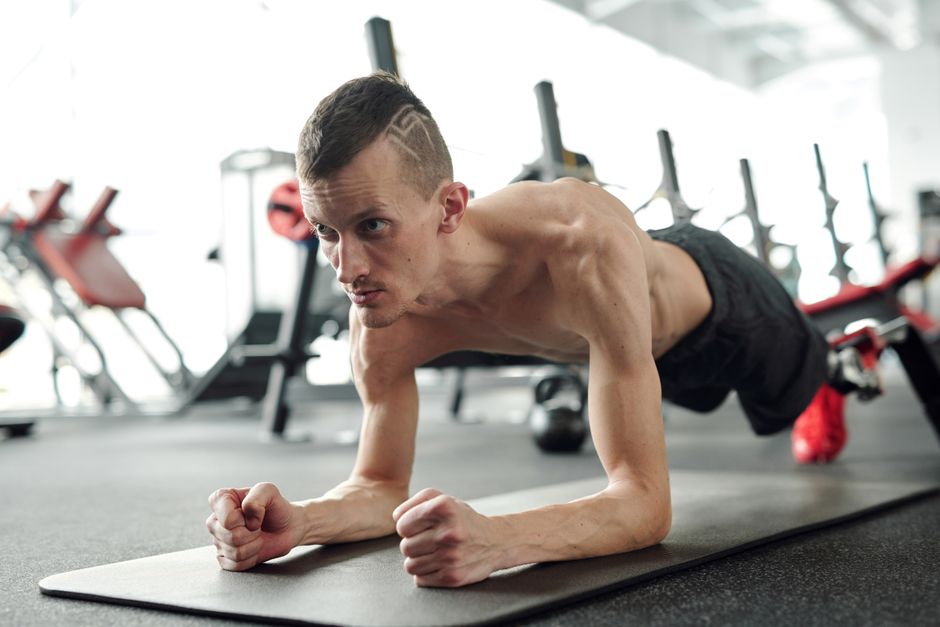
Planking does not burn tummy fat directly. No exercise can target fat loss from a specific body part. When people ask “Does planking burn tummy fat?” what they really want to know is whether this simple core exercise can help shrink their waistline. The honest answer is yes and no — and the research explains exactly why.
Does Planking Burn Tummy Fat Directly?
No. Planking does not burn belly fat in the way most people hope. The idea that you can lose fat from one area by exercising that area is called spot reduction. Research has repeatedly shown this does not work.
A well-known study published in the Journal of Strength and Conditioning Research had participants do abdominal exercises five days a week for six weeks. The result? Their abdominal muscles got stronger. Their belly fat did not change. The fat cells in that area did not shrink more than fat cells anywhere else in the body.
When you plank, your body burns energy from your entire fat supply — not just the fat covering your abs. Your body decides where it pulls fat from based on genetics, hormones, and overall energy balance. You cannot override that with a plank.
What Does Planking Actually Do for Your Body?
Planking strengthens your core. That is its main job, and it does it well. The core includes your rectus abdominis (the six-pack muscle), your transverse abdominis (the deep corset muscle), your obliques, and muscles in your lower back and hips.
When you hold a plank correctly, your transverse abdominis works hard. This muscle acts like a natural weight belt. Strengthening it improves posture, reduces lower back pain, and makes everyday movements easier. The American Council on Exercise rates the plank as one of the most effective core exercises for this reason.
Here is what planking will not do: burn enough calories to create significant fat loss on its own. A 155-pound person burns roughly 3 to 4 calories per minute holding a plank. In a two-minute plank, that is about 6 to 8 calories. Compare that to jogging, which burns about 10 to 12 calories per minute. The difference matters.
| Activity | Calories Burned Per Minute (155 lb person) | Fat Loss Impact |
|---|---|---|
| Plank (2 minutes) | 3-4 | Minimal on its own |
| Brisk walking (30 minutes) | 4-5 | Moderate |
| Jogging (30 minutes) | 10-12 | High |
| Full-body strength training (30 minutes) | 6-8 | High (plus muscle gain) |
The plank is a stabilizer exercise, not a calorie burner. Treating it like one will disappoint you.
Does Planking Help You Lose Belly Fat Indirectly?
Yes, but only when part of a bigger plan. Planking builds core muscle. More muscle means a slightly higher resting metabolism. Every pound of muscle burns about 6 to 7 calories per day at rest, compared to about 2 calories for fat. That is a small effect, but it adds up over time.
Stronger core muscles also improve your ability to do other exercises. If your core is weak, you struggle with squats, lunges, running, and lifting. A strong plank helps you do these exercises with better form, which means you can work harder and burn more calories overall.
Some people report that planking makes their stomach look flatter even without fat loss. This is not an illusion. A stronger transverse abdominis pulls the abdominal wall inward, which can improve posture and create a tighter appearance. This is muscle tone, not fat loss, but it can change how your midsection looks.





What Actually Works to Burn Tummy Fat?
Fat loss comes from one thing: a calorie deficit. You need to burn more energy than you consume. Where you lose fat first is largely determined by genetics. Some people lose belly fat early. Others lose it last. There is no way to force your body to prioritize your stomach.
The CDC reports that about 42% of US adults have obesity, and excess belly fat is linked to higher risks of heart disease, type 2 diabetes, and certain cancers. Reducing overall body fat through diet and exercise is the proven approach.
Here is what research supports for reducing belly fat specifically:
- Calorie deficit — the foundation of all fat loss. Without it, no exercise will shrink your waistline.
- High-intensity interval training (HIIT) — studies show HIIT can reduce visceral fat more effectively than steady-state cardio in less time.
- Resistance training — building muscle throughout your body increases your resting metabolism and improves body composition.
- Protein-rich diet — eating enough protein helps preserve muscle during fat loss and increases satiety.
- Sleep and stress management — cortisol, the stress hormone, is linked to increased belly fat storage. Poor sleep raises cortisol levels.
Planking can be part of this picture. It just cannot be the whole picture.
How to Use Planks Effectively in a Fat Loss Plan
If you want planking to help with belly fat, use it strategically. Do not make it your only exercise. Use it as one piece of a full-body routine.
Aim for 3 to 5 sets of planks, holding each for 20 to 60 seconds. Longer is not always better. Once you can hold a plank for 60 seconds with good form, add variation rather than extending time. Side planks, plank with leg lifts, and plank to push-up transitions challenge your core differently.
Plank every other day at most. Your core muscles need recovery time just like any other muscle group. Doing planks daily does not speed up results and can lead to poor form from fatigue.
Combine planking with exercises that burn more calories. A sample routine might include:
- 20 minutes of HIIT (like sprint intervals or jump rope)
- 20 minutes of full-body strength training (squats, push-ups, rows)
- 3 sets of 30-second planks
This combination builds muscle, burns calories, and strengthens your core. That is how planking fits into a fat loss plan — not as the star, but as a reliable supporting player.
Common Misconceptions About Planking and Belly Fat
The biggest myth is that planking burns belly fat because you feel it in your abs. Feeling a muscle work does not mean you are burning fat from that area. That burning sensation is muscle fatigue, not fat melting away. This confusion leads people to spend 10 minutes planking every day and wonder why their belly has not changed.
Another misconception is that planking for longer periods is better. Some people try to hold a plank for 5 or 10 minutes. This does not increase fat loss. It increases the risk of lower back strain and poor form. Once your core fatigues, your hips drop and your lower back takes the load. That is how injuries happen.
Some people report that planking alone tightened their stomach. As mentioned earlier, this is likely from improved muscle tone and posture, not from losing belly fat. If you lose body fat overall while planking, your stomach will look leaner. But the plank itself is not the cause of that fat loss.
As of 2026, there is no clinical evidence that any exercise can spot-reduce belly fat. The studies that claim otherwise have been small, poorly designed, or misinterpreted. If a product or program promises to melt belly fat with a single exercise, it is not backed by science.
Frequently Asked Questions
Does planking burn belly fat?
No. Planking strengthens your core muscles but does not burn fat from your stomach specifically. Fat loss happens across your whole body based on genetics and overall calorie balance.
How long should I plank to see results?
Hold a plank for 20 to 60 seconds with good form. Longer planks do not provide extra benefit and increase injury risk. For visible changes, combine planking with full-body exercise and a calorie deficit.
Can planking replace sit-ups for fat loss?
No. Neither planking nor sit-ups burn belly fat directly. Planking is better for core stability, while sit-ups target the rectus abdominis more. Both are strengthening exercises, not fat-burning exercises.
What exercise burns the most belly fat?
No single exercise targets belly fat. High-intensity interval training and full-body resistance training are most effective for reducing overall body fat, which includes belly fat. Diet and sleep quality also play major roles.
