
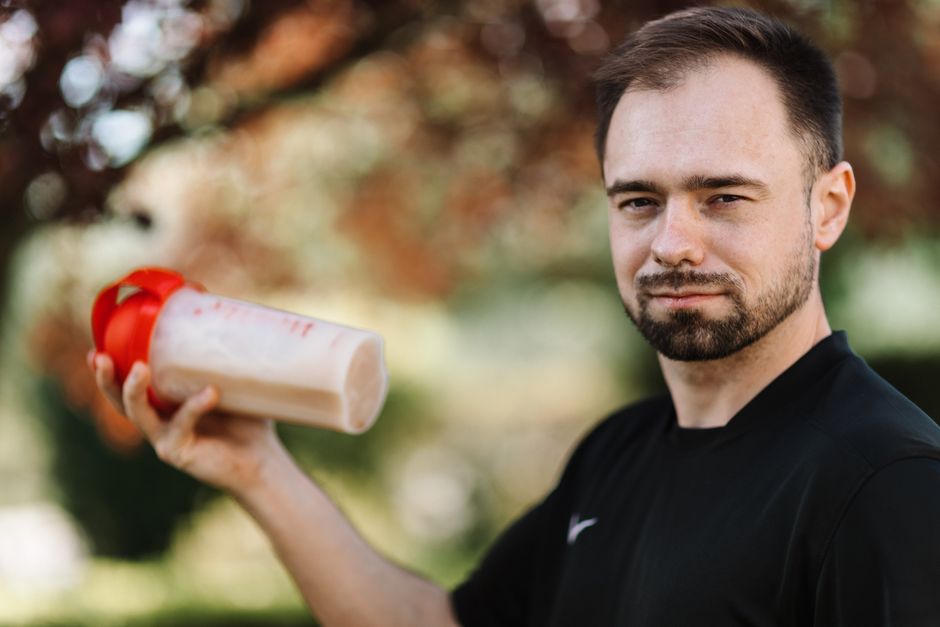
Protein shakes can help with weight loss, but not because they burn fat. They help because protein is the most filling macronutrient, and replacing a meal or snack with a protein shake can reduce your total daily calorie intake. The shake itself does nothing special — it works by helping you eat less overall.
How Protein Shakes Actually Affect Your Body
Protein affects weight loss through three well-established mechanisms: satiety, thermogenesis, and muscle preservation.
Satiety means feeling full. Protein triggers the release of hormones like GLP-1 and peptide YY that signal fullness to your brain. Studies consistently show that high-protein meals reduce hunger more than meals high in carbohydrates or fat. A shake before or between meals can take the edge off hunger, which makes it easier to stick to a calorie deficit.
Thermogenesis is the energy your body uses to digest food. Protein requires more energy to process than carbs or fat. This effect is real but modest — roughly 20-30% of protein calories are burned during digestion, compared to about 5-10% for carbs and 0-3% for fat. That difference matters over weeks, but it is not the main reason shakes help.
Muscle preservation matters more than most people realize. When you lose weight, about 20-30% of the weight lost is muscle, not fat. Higher protein intake — whether from shakes or food — helps preserve lean mass during a calorie deficit. More muscle means a slightly higher resting metabolic rate, which makes maintaining weight loss easier.
What the Research Shows About Protein Shakes and Weight Loss
Research consistently shows that meal replacement shakes can produce meaningful short-term weight loss. Studies have found that people using protein shakes as meal replacements lose more weight in the first 12-24 weeks compared to those following standard low-calorie diets. The effect is strongest when the shake replaces a high-calorie meal like breakfast or lunch.
Some research indicates that whey protein specifically may be more effective than soy or casein for appetite control. Whey digests quickly and spikes amino acid levels fast, which may explain its stronger effect on hunger hormones. This does not mean other proteins do not work — it means whey has the most evidence behind it.
Here is the honest limit of the research: most studies showing weight loss with protein shakes are short-term, typically 12-24 weeks. Long-term data beyond one year is thin. People who stop using shakes often regain the weight, just like people who stop any diet regain weight. The shake is a tool, not a permanent solution.
Meal Replacement vs. Snack Replacement — Which Works Better?
How you use the shake determines whether it helps or hurts your weight loss.
Meal replacement: Swapping a 700-calorie breakfast for a 200-calorie shake creates a clear calorie deficit. This is the approach used in most clinical studies, and it works. The risk is that some people overcompensate at other meals because they feel deprived. If the shake leaves you ravenous by 10 a.m., this strategy may backfire.
Snack replacement: Using a shake instead of a 300-calorie snack can work too, but the math is less dramatic. A 200-calorie shake replacing a 300-calorie snack saves 100 calories — helpful, but not transformative.
Adding a shake to your diet: This is where problems start. If you drink a protein shake in addition to your normal meals, you are adding calories, not subtracting them. A 200-calorie shake on top of a 2,500-calorie diet does not cause weight loss. It causes weight gain, unless it reduces your food intake later in the day.
The critical question is not whether protein shakes help weight loss. It is whether the shake displaces something else you would have eaten. If it does, it helps. If it does not, it does not.
-
 How Important is Protein for Weight Loss? The Real Answer
 -
What is a Good Protein Powder for Weight Loss? The Real Answer
-
How to Drink Protein Shakes for Weight Loss? Steps You Can Start Today
-
How Much Protein for Weight Loss? What the Research Says
-
Java Burn Reviews 2026. Complaints, Pros-Cons, Scam Check





How Much Protein Do You Actually Need?
Most adults need about 0.36 grams of protein per pound of body weight per day (0.8 grams per kilogram). That is the minimum to prevent deficiency, not the amount for weight loss.
For weight loss with muscle preservation, research generally supports higher intake: roughly 0.55-0.73 grams per pound of body weight per day (1.2-1.6 grams per kilogram). For a 180-pound person, that is 99-131 grams of protein daily.
A standard scoop of whey protein powder provides about 20-25 grams of protein. One or two shakes per day can help you reach that target, especially if you struggle to get enough protein from food alone.
More is not necessarily better. Intake above 0.73 grams per pound has not been shown to provide additional weight loss benefit. Extremely high protein intake — over 2 grams per pound — is unnecessary for most people and can displace other important nutrients.
Does the Type of Protein Matter?
All protein powders are not equal, but the differences matter less than the marketing suggests.
Whey is the most studied. It digests quickly, contains all essential amino acids, and has the strongest evidence for appetite control. It is a complete protein derived from milk.
Casein also comes from milk but digests slowly. It provides a steadier amino acid release. Some research suggests casein may preserve muscle slightly better during long fasting periods, like overnight. For weight loss purposes, the difference is minor.
Soy is a complete plant protein. It has been studied for decades and is effective, though some research suggests it is slightly less satiating than whey. It is a good option for people avoiding dairy.
Pea and rice proteins are plant-based and can be combined to create a complete amino acid profile. Evidence for their effectiveness in weight loss is thinner than for whey, but they are reasonable options.
What matters more than the protein source is the total calorie content of the shake. A shake with added sugars, oils, or “weight gainer” formulas can easily contain 400-600 calories. Read the label. If the shake has more calories than the meal it replaces, it will not help.
Common Mistakes That Sabotage Protein Shake Weight Loss
These are the patterns that turn a useful tool into a weight gainer.
Adding high-calorie ingredients. A shake made with whole milk, peanut butter, banana, and honey can easily reach 600 calories. That is not a diet shake — that is a milkshake with protein. Use water, unsweetened almond milk, or low-fat milk as the base.
Drinking shakes on top of meals. As discussed, this adds calories. If you are not replacing anything, you are not creating a deficit.
Ignoring total daily intake. A 200-calorie shake can still fit into a weight loss plan, but only if your total daily calories stay below your maintenance level. Track your intake for at least a few weeks to see where the shake fits.
Using shakes to “cleanse” or “detox.” There is no evidence that protein shakes detoxify the body. Your liver and kidneys handle that. A shake-only diet for several days is not a weight loss strategy — it is a crash diet that typically leads to rebound weight gain.
Expecting shakes to work alone. No study shows that adding a protein shake to an otherwise unchanged lifestyle produces weight loss. The shake works only within an overall calorie deficit.
Protein Shakes vs. Whole Food Protein
Whole food protein sources like chicken, fish, eggs, beans, and Greek yogurt offer the same satiety benefits as shakes. Some research suggests whole foods may be slightly more satiating because of their fiber, water content, and chewing time.
Shakes have two advantages: convenience and precision. A shake takes 60 seconds to prepare and has a known calorie count. That makes it easier to stay on track during busy days or when traveling.
Whole foods have one clear advantage: additional nutrients. Chicken provides iron and B vitamins. Beans provide fiber. Fish provides omega-3 fatty acids. A shake provides protein and little else.
The best approach for most people is a mix: whole food protein at meals, and shakes only when convenience matters. There is no nutritional superiority to shakes, but there is practical value.
Who Should Not Rely on Protein Shakes
People with kidney disease should be cautious with high protein intake. If you have kidney issues, talk to your doctor before adding protein shakes to your diet. The same applies to anyone with liver disease or metabolic disorders that affect protein processing.
Pregnant or breastfeeding women can consume protein shakes as part of a normal diet, but there are no specific clinical guidelines recommending them for weight loss during pregnancy. Weight loss during pregnancy is not recommended. If you are pregnant, discuss any dietary changes with your obstetrician.
People with lactose intolerance may experience bloating or digestive discomfort with whey protein. Isolate forms contain less lactose than concentrates, and plant-based proteins avoid the issue entirely.
Practical Guidelines for Using Protein Shakes for Weight Loss
Use these evidence-based principles if you decide to try protein shakes.
- Replace one meal per day with a shake — breakfast or lunch works best based on the research.
- Keep the shake between 150-300 calories total, including the base liquid and any add-ins.
- Choose a powder with at least 20 grams of protein per serving and minimal added sugar — under 5 grams per serving is reasonable.
- Use water or unsweetened almond milk as the base. Save dairy milk for when you need extra calories.
- Do not use shakes as a post-workout addition unless you are skipping a meal elsewhere.
- Reassess after 4-6 weeks. If your weight is not changing, the shake is not creating a deficit.
What Happens When You Stop Using Protein Shakes
Weight regain after stopping shakes is common, and it is not a failure of the shakes. Any weight loss method that does not teach sustainable eating habits will lead to regain when stopped.
If you use shakes to learn portion control and calorie awareness, those habits can persist. If you use shakes as a temporary fix while eating the same way before, the weight will return.
The long-term goal should be transitioning to whole food meals that provide the same protein and satiety benefits without relying on a supplement. This is the difference between using shakes as a tool and using them as a crutch.
Frequently Asked Questions
How many protein shakes should I drink per day for weight loss?
One or two shakes per day is the amount used in most clinical studies showing weight loss benefits. More than two shakes per day typically displaces too much whole food and is not necessary.
Is it better to drink a protein shake before or after a workout for weight loss?
For weight loss specifically, when you drink the shake matters less than whether it replaces calories. Post-workout shakes help muscle recovery but only contribute to weight loss if your total daily calorie intake stays in a deficit.
Can I use a protein shake as a meal replacement every day?
Yes, replacing one meal per day with a protein shake is a common and evidence-supported approach for short-term weight loss. Replacing more than one meal daily should be done under professional guidance, as it increases the risk of nutrient deficiencies.
Do plant-based protein shakes work as well as whey for weight loss?
Plant-based proteins can support weight loss, but the research base is smaller than for whey. Some studies suggest whey has a slightly stronger effect on appetite suppression, but total protein intake and calorie control matter more than the protein source.
