
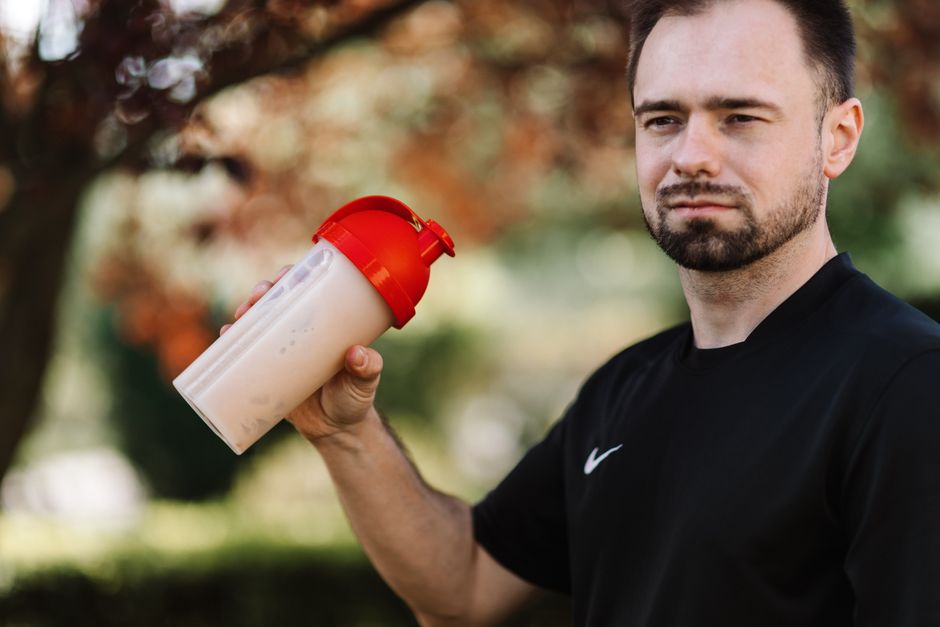
A good protein powder for weight loss is one that helps you eat less overall without adding a lot of extra calories. That usually means a product with a high protein percentage per scoop, minimal added sugar, and few filler ingredients. Whey and casein are the most studied options, but the powder itself does not burn fat — it only helps if it supports a calorie deficit you can actually stick to.
Walk down any supplement aisle and you will see tubs promising lean muscle, faster metabolism, and flat stomachs. Most of that is marketing. Protein powder is a food product, not a fat-loss drug. Its real value is practical: it makes hitting a protein target easier, and protein tends to keep you full longer than carbs or fat do.
Does Protein Powder Actually Help With Weight Loss?
Protein powder can help with weight loss, but only as a tool inside a calorie deficit. It does not melt fat on its own, and no powder will outwork a diet that consistently provides more calories than you burn.
The mechanism is well established. Protein takes longer to digest than refined carbohydrates, and it triggers satiety signals that reduce how much you eat at your next meal. Research consistently shows that higher protein intake supports fullness and helps preserve lean mass during weight loss. Preserving muscle matters because muscle tissue burns more calories at rest than fat tissue does.
Where people go wrong is treating the powder as a magic addition rather than a swap. If you add a 200-calorie shake on top of your normal meals, you have added calories, not removed them. If you replace a 500-calorie breakfast with a 200-calorie shake, you have created a deficit. The powder did not cause the loss — the swap did.
One clarification worth making: protein powder is not required for weight loss. You can meet your protein needs with eggs, chicken, fish, Greek yogurt, beans, and tofu. Powder is simply convenient, portable, and easy to measure. That convenience is its main advantage, not any special fat-burning property.
What Should You Look For in a Good Protein Powder for Weight Loss?
Look at the nutrition label before the front of the tub. The front is designed to sell. The label tells you what you are actually buying.
Four things matter most:
- Protein per scoop. Higher is generally better for a weight-loss context, because you get more satiety per calorie. Many quality products deliver 20 to 25 grams per scoop.
- Added sugar. Check the ingredients list, not just “total sugars.” Some products list 8 grams of sugar or more per scoop, which adds calories with no fullness benefit.
- Calories per serving. A scoop with 110 calories and 24 grams of protein is a different product than one with 200 calories and 15 grams of protein. The first gives you more protein per calorie.
- Ingredient list length. Short is not automatically better, but long lists often mean added thickeners, oils, and sweeteners that add calories without adding protein.
A simple way to compare products is protein density — how many of the calories come from protein. A powder where most of the calories come from protein is doing its job. A powder where a large share of calories come from sugar or added fat is closer to a dessert.
Ignore claims about “fat-burning blends,” “metabolism boosters,” or “thermogenic complexes.” No clinical evidence currently confirms that these added ingredients produce meaningful weight loss in humans. You are paying for a label, not a result.
Whey, Casein, or Plant Protein — Which Is Best?
Whey and casein have the strongest research base for supporting fullness and muscle retention. Plant proteins can work well too, but they vary more in quality and amino acid profile.
Whey is digested quickly and is rich in leucine, an amino acid that plays a direct role in muscle protein synthesis. Casein digests slowly, which some evidence suggests keeps you full longer. Both are dairy-derived. People with lactose intolerance may tolerate whey isolate better than whey concentrate, since isolate contains less lactose.
Plant options include pea, soy, rice, and blends. Soy protein is a complete protein with a solid research record. Pea protein is lower in one amino acid, methionine, so many brands blend pea with rice to fill the gap. Blends are generally a reasonable choice for plant-based eaters.
Here is a comparison of the main types:
| Type | Digestion Speed | Notes |
|---|---|---|
| Whey concentrate | Fast | Contains more lactose; often lower cost |
| Whey isolate | Fast | Higher protein percentage; less lactose |
| Casein | Slow | Often used before bed; thicker texture |
| Soy | Moderate | Complete protein; strong research base |
| Pea | Moderate | Often blended with rice for amino acid balance |
The honest takeaway: the type matters less than the total protein you eat across the day and whether you stay in a calorie deficit. Pick the one you will actually drink consistently.


How Much Protein Do You Need for Weight Loss?
Most adults need more protein during weight loss than during weight maintenance, because a calorie deficit increases the risk of losing muscle along with fat.
The Recommended Dietary Allowance for protein is 0.8 grams per kilogram of body weight per day for generally healthy adults. That figure is set to prevent deficiency, not to optimize body composition during weight loss. Many clinicians and researchers suggest higher intakes during active weight loss, often in the range of 1.2 to 1.6 grams per kilogram per day, to help preserve lean mass. This is common clinical guidance rather than a single universally agreed standard.
For a 70-kilogram (about 154-pound) adult, that range works out to roughly 84 to 112 grams of protein per day. A single scoop of powder typically provides 20 to 25 grams, so it can cover a meaningful portion of that target — but it is rarely the whole story.
People with kidney disease should talk to a doctor before increasing protein intake. For generally healthy adults, higher protein intakes within these ranges are widely considered safe, but anyone with a medical condition should get individual guidance.
Can Protein Powder Slow Weight Loss?
Yes, if you add it without adjusting anything else. Protein powder contains calories, and calories still count.
A shake with 200 calories is a small meal. If you drink it in addition to your normal eating, it contributes to a surplus, not a deficit. This is one of the most common reasons people see no change on the scale despite “adding protein.”
There is also a subtler issue. Some powders are marketed as meal replacements but contain mostly sugar and low protein. These can spike hunger shortly after drinking, which works against you. Checking the label solves this.
Protein powder is not a shortcut. It is a convenience. Used to replace a higher-calorie meal or snack, it helps. Used as an extra, it does not.
Are There Risks or Things to Watch For?
For most healthy adults, protein powder is low risk when used as directed. The bigger concerns are contamination, additives, and using powder to replace whole foods entirely.
Third-party testing matters. Some independent testing programs verify that a product contains what the label claims and is free of heavy metals and banned substances. Not all brands participate. If a product has no testing information, you are trusting the label without verification.
Some powders contain added stimulants, herbal blends, or proprietary mixes. Proprietary blends let a company list ingredients without stating amounts, which makes it impossible to know what you are getting. Products with simple, transparent labels are easier to evaluate.
Protein powder should not replace most of your meals. Whole foods provide fiber, vitamins, and minerals that a powder does not. Using a shake occasionally to hit a protein target is reasonable. Using it as your main food source is not a balanced approach.
Anyone who is pregnant, breastfeeding, or managing a chronic condition should check with a clinician before adding supplements. No clinical guidelines currently exist for protein powder use specifically in pregnancy, so individual guidance from a doctor is the appropriate path.
Frequently Asked Questions
What is the best protein powder for weight loss?
There is no single best product — the best one for you has high protein per scoop, little added sugar, and a short ingredient list. Whey isolate and casein have the strongest research support, but plant blends can work well too.
How much protein powder should I take a day for weight loss?
There is no fixed number, because it depends on how much protein you get from food. Most people use one to two scoops per day to help reach a total protein target of roughly 1.2 to 1.6 grams per kilogram of body weight during weight loss.
Can protein powder help me lose belly fat?
No — protein powder does not target belly fat specifically. Fat loss happens across the whole body when you are in a calorie deficit, and protein helps mainly by supporting fullness and preserving muscle.
Is whey or plant protein better for weight loss?
Neither is clearly better for weight loss itself. Whey digests faster and is rich in leucine, while plant blends can match total protein intake; the type matters less than total daily protein and staying in a calorie deficit.
