
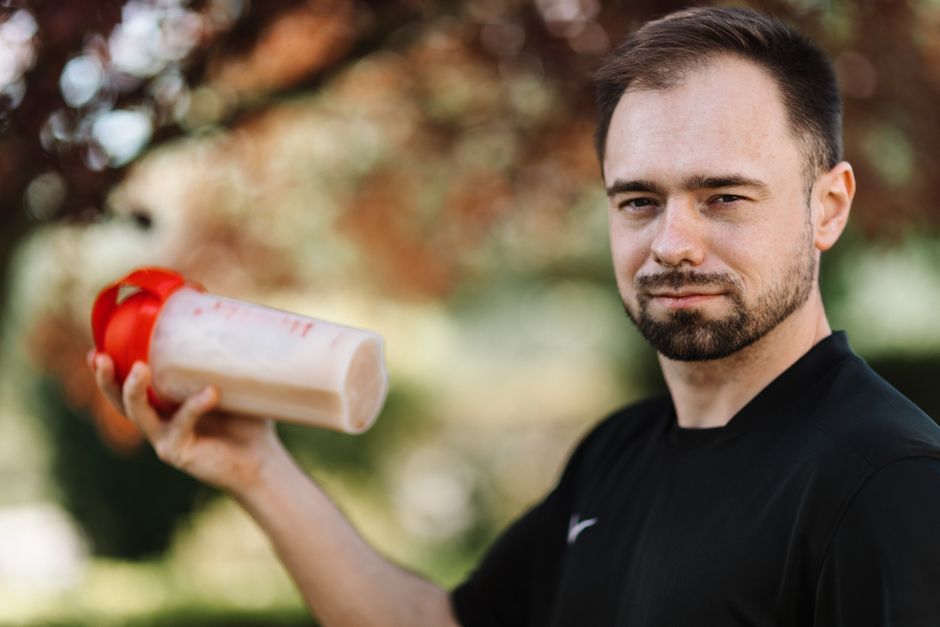
A protein shake is not a weight loss tool on its own. It is a convenient way to add protein to your day, and protein helps you feel full and preserve muscle when you eat fewer calories. The steps that matter are how much protein you actually need, what else is in the shake, and where it fits into your daily eating.
How to Drink Protein Shakes for Weight Loss
Weight loss comes down to a calorie deficit. A protein shake helps only if it supports that deficit without adding more calories than you cut.
Protein does two useful things during weight loss. First, it is the most satiating macronutrient, meaning it tends to keep you fuller than the same calories from fat or carbohydrate. Second, it helps protect lean muscle mass when you are eating less. Muscle burns more calories at rest than fat does, so losing muscle can work against you over time.
That is the established physiology. What is less settled is whether liquid protein works as well as solid food for appetite control. Some studies suggest solid protein may keep you fuller longer than a shake. Other studies find little difference. The evidence is mixed, so treat a shake as a tool that fits your life rather than a superior option.
A shake also will not fix a diet built on processed food and added sugar. Protein is one lever. Total calories, food quality, sleep, and movement are others.
How Much Protein Do You Actually Need?
Most adults need more protein during weight loss than they do at maintenance. That is because a calorie deficit increases the risk of losing muscle along with fat.
General guidance for healthy adults is roughly 0.8 grams of protein per kilogram of body weight per day at baseline. One kilogram equals about 2.2 pounds. For a 150-pound person, that is about 55 grams a day.
During active weight loss, many clinicians recommend higher intake to protect muscle, often in the range of 1.2 to 1.6 grams per kilogram per day for healthy adults. A registered dietitian can tailor this to your body, activity level, and health history.
Here is the part people get wrong. A shake is a supplement, not a replacement for protein from food. If you already eat enough protein, adding a shake just adds calories.
A better approach is to figure out your daily protein target, then use a shake to fill the gap. If you are short 30 grams, one shake covers it. If you are not short, skip it.
People with kidney disease need to discuss protein intake with their doctor before increasing it. Higher protein is not appropriate for everyone.
What Should Be in Your Protein Shake?
The base matters more than the brand. A simple shake is protein powder plus water or unsweetened milk. That is it.
Protein powder types differ in how they are made and how your body handles them:
- Whey is a milk protein. It digests quickly and contains all essential amino acids. It is the most studied type.
- Casein is also from milk. It digests more slowly, which some people prefer before bed.
- Plant blends made from pea, soy, or rice protein can match whey for muscle support when the blend covers all essential amino acids.
- Collagen is not a complete protein. It lacks tryptophan, an essential amino acid, so it is a poor choice as your main protein source.
Watch the label for added sugar. Some powders and ready-to-drink shakes carry as much sugar as a soda. Look for a product where protein is the main ingredient by weight and added sugar is low or absent.
Blending in spinach, frozen berries, or plain Greek yogurt adds nutrients and fiber. Those additions also add calories, so account for them if you are tracking.





When Should You Drink It?
Timing matters far less than total daily protein. The old idea of a narrow “anabolic window” right after a workout has largely been walked back. Research now indicates that total daily protein intake matters more than hitting a precise post-workout minute.
That said, a few timing strategies tend to work well for weight loss:
- Drink it as a meal replacement when you would otherwise skip eating and end up overeating later.
- Drink it as an afternoon snack if that is when cravings hit.
- Drink it after a workout if that fits your routine and helps you hit your protein target.
A shake works best when it replaces something higher in calories, not when it is stacked on top of a full meal. That is the difference between a shake that supports weight loss and one that stalls it.
Common Mistakes That Stall Progress
Most people who do not see results from protein shakes are making one of a few predictable errors.
Drinking shakes on top of normal eating. This is the most common one. A shake adds calories. If you do not cut calories elsewhere, you gain weight, not lose it.
Choosing sugary ready-to-drink shakes. Some products are marketed as weight loss shakes but contain high amounts of added sugar and little protein. Read the nutrition panel, not the front of the bottle.
Relying on shakes instead of food. A shake cannot replace the fiber, vitamins, and minerals in whole foods. Using one to replace a meal occasionally is fine. Replacing most meals with shakes is not a sustainable or well-supported strategy.
Ignoring total calories. Weight loss requires eating fewer calories than you burn. No shake changes that math.
Skipping strength training. Protein helps preserve muscle, but resistance training is what signals your body to keep it. Without it, you are more likely to lose muscle along with fat.
Do Protein Shakes Help With Appetite and Cravings?
Protein tends to reduce appetite more than fat or carbohydrate. That is one of the more consistent findings in nutrition research.
But a liquid shake may not suppress appetite as strongly as a solid meal with the same protein content. Some studies suggest chewing and the physical volume of food play a role in fullness. The evidence is not settled, and results vary between people.
If you find shakes leave you hungry an hour later, try a solid protein source instead. Greek yogurt, eggs, or chicken breast may hold you longer. This is worth testing on yourself rather than assuming either way.
One practical tip: drink your shake slowly. A shake consumed in thirty seconds may not register as a meal the way a slower, seated meal does.
Safety and Who Should Be Careful
Protein shakes are generally well tolerated by healthy adults. Some people experience bloating, gas, or digestive discomfort, particularly with whey or with sugar alcohols used in some powders.
People with lactose intolerance may do better with a whey isolate or a plant-based powder. People with kidney disease should talk to their doctor before increasing protein intake.
Pregnant and breastfeeding women should check with their healthcare provider before using protein powders. Some products contain added herbs, stimulants, or contaminants not listed on the label. No clinical guidelines currently exist for protein powder use in pregnancy, so medical guidance is the right path.
Heavy metal contamination has been found in some protein powders in independent testing. Choosing a product with third-party testing can reduce that risk.
A Simple Starting Plan
Here is a practical way to start without overhauling everything at once.
- Estimate your daily protein target with a dietitian or a reputable calculator.
- Track your normal intake for a few days to see your real gap.
- Choose a powder with protein as the main ingredient and little added sugar.
- Use one shake a day to close your protein gap, not to add on top of it.
- Keep strength training in your week to protect muscle.
- Recheck your progress after a few weeks and adjust.
No single step guarantees results. The shake is a small piece of a larger picture that includes calories, food quality, activity, and consistency over time.
Frequently Asked Questions
Can I drink protein shakes every day for weight loss?
Yes, for most healthy adults one shake a day is fine as part of a balanced diet. It only helps weight loss if it fits inside a calorie deficit rather than adding extra calories.
What is the best time to drink a protein shake for weight loss?
Total daily protein matters more than timing. Many people find it works best as a meal replacement or an afternoon snack when hunger tends to spike.
Do protein shakes build muscle and burn fat at the same time?
Protein supports muscle retention during weight loss, but it does not burn fat on its own. Resistance training plus a calorie deficit is what drives fat loss while preserving muscle.
Are meal replacement shakes safe long term?
Occasional use is generally fine, but replacing most meals with shakes is not well supported and can leave gaps in fiber and micronutrients. Whole foods should make up most of your diet.
