
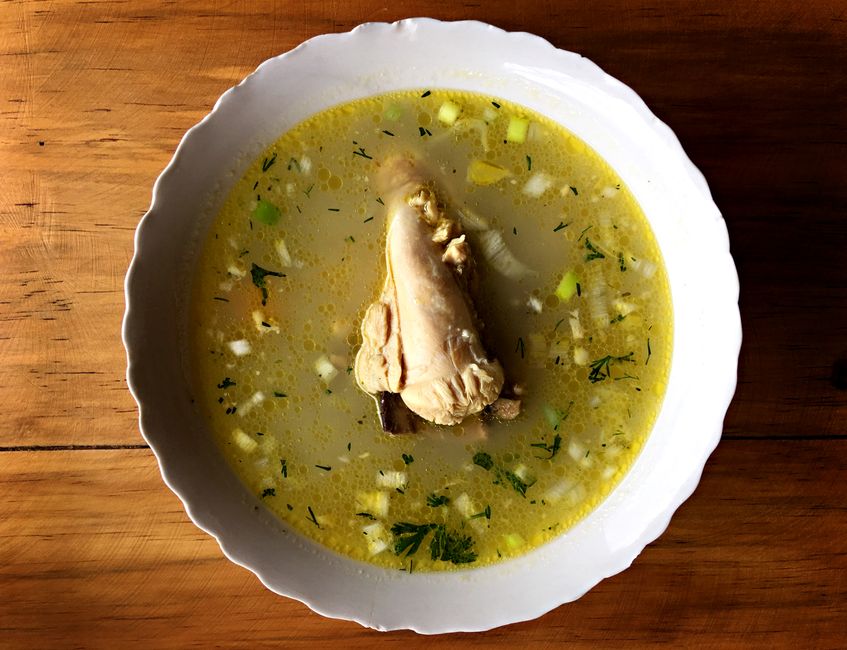
Pho broth does contain collagen, but not in the amounts many people assume. The collagen comes from the connective tissue and bones of beef or chicken used to make the broth. A long simmer does extract some of it. But the final bowl typically delivers far less collagen than a dedicated collagen supplement or a bowl of bone broth made specifically for that purpose.
Here is the key distinction. Pho is a noodle soup first. Collagen is a byproduct of how the broth is made, not the reason it exists. The type of bones, the simmer time, and how much broth you actually drink all determine how much collagen ends up in your bowl.
Does Pho Have Collagen What The Broth Actually Contains?
Collagen is a structural protein found in connective tissue, skin, tendons, ligaments, and bone. When you simmer animal bones and connective tissue in water for a long time, some of that collagen breaks down into gelatin and smaller peptides that dissolve into the liquid.
Traditional pho broth is made by simmering beef bones, sometimes oxtail, and occasionally chicken carcasses for several hours. That process does extract collagen and gelatin into the broth. The broth gets its characteristic body and mouthfeel partly from this dissolved gelatin.
But the amount varies enormously. A broth simmered for three hours will contain less dissolved collagen than one simmered for twelve. A broth made mostly from meat with few bones will contain less than one made from joint bones and knuckles, which are rich in connective tissue.
There is no standard collagen content for pho. Restaurant recipes differ. Home recipes differ. Portion sizes differ. Anyone quoting a specific milligram amount for a bowl of pho is likely estimating, not measuring.
What Is the Difference Between Collagen and Gelatin in Broth?
Collagen and gelatin are closely related but not identical. Collagen is the intact protein as it exists in your body’s connective tissue. Gelatin is what you get after collagen is heated and partially broken down.
When bones and connective tissue simmer, the heat disrupts collagen’s tightly wound structure. It unravels into gelatin, which dissolves in hot water and thickens as it cools. That is why a good broth gels in the refrigerator.
Your digestive system breaks down both collagen and gelatin into amino acids and small peptides before absorption. Eating gelatin is not the same as depositing collagen directly into your joints or skin. The body does not work that way.
This matters for how you interpret any claim about pho and collagen. The collagen in the broth is real. What your body does with it after digestion is a separate question.
How Much Collagen Is Actually in a Bowl of Pho?
No reliable standard measurement exists for the collagen content of a typical bowl of pho. The variables are too many.
- Bone type: Joint bones, knuckles, and oxtail contain more connective tissue than lean meat bones.
- Simmer time: Longer cooking extracts more collagen, up to a point.
- Bone-to-water ratio: More bones in less water means a more concentrated broth.
- How much broth you drink: Many people leave most of the broth behind.
- Restaurant versus homemade: Commercial kitchens often prioritize speed over long simmers.
A concentrated, long-simmered bone broth can contain a meaningful amount of gelatin. A quick restaurant pho broth may contain very little. Without lab testing, you cannot know which you are getting.
If collagen intake is your goal, pho is an unreliable delivery method. You cannot control the variables. A powdered collagen supplement or a carefully made bone broth gives you more consistency.





Does Drinking Pho Broth Help Your Skin or Joints?
The evidence that eating collagen or gelatin directly improves skin or joint health is limited and mixed. Some small studies suggest that collagen peptides may support skin elasticity or reduce joint discomfort. But these studies typically use isolated collagen supplements at specific doses, not broth from a soup.
No clinical trials have tested whether eating pho improves skin, joints, or anything else. The research on collagen supplements does not automatically apply to pho.
Your body synthesizes its own collagen from amino acids. It does not simply absorb collagen from food and deposit it where needed. Getting enough protein, vitamin C, and other nutrients supports your body’s own collagen production. That is well established.
If you enjoy pho and it fits your diet, that is reason enough to eat it. But treating it as a collagen therapy is not supported by evidence.
Is Bone Broth a Better Source of Collagen Than Pho?
Bone broth is made specifically to extract collagen and minerals from bones. It typically uses a higher ratio of bones to water and simmers for longer, often 12 to 24 hours. That generally results in more dissolved gelatin and collagen peptides per cup than a typical pho broth.
But even bone broth varies. There is no standard recipe. Some commercial bone broths are diluted. Some contain very little actual bone-derived protein.
Pho and bone broth are different foods with different purposes. Pho is a meal. Bone broth is often consumed as a supplement-like drink. If your goal is collagen intake, bone broth is the more direct route. If your goal is a satisfying meal, pho works fine.
Neither is a proven treatment for any health condition.
What Nutrients Does Pho Actually Provide?
Pho is a complete meal, not just a collagen delivery system. A typical bowl contains:
- Protein from beef, chicken, or tofu
- Carbohydrates from rice noodles
- Small amounts of vitamins and minerals from garnishes like herbs, bean sprouts, and lime
- Fat, varying by cut of meat and broth richness
- Sodium, often in significant amounts from fish sauce and broth seasoning
The protein content depends on how much meat is included. A bowl with generous beef slices provides more protein than a mostly-broth bowl. The noodles add carbohydrates but little else nutritionally.
Sodium is worth noting. Restaurant pho can be high in sodium because of fish sauce, salt, and broth concentrates. If you are watching your sodium intake, this matters more than collagen content.
Can You Increase the Collagen Content of Pho?
If you make pho at home, you can influence how much collagen ends up in the broth. Use bones with plenty of connective tissue, such as oxtail, knuckles, and leg bones. Simmer longer. Use more bones relative to water.
Adding chicken feet or beef tendons also increases the gelatin content. These cuts are rich in collagen and are traditional in many Asian broths for exactly this reason.
Skimming the broth removes impurities but does not remove dissolved collagen. The gelatin stays in the liquid.
Even with these steps, you will not know the exact collagen content without testing. You can make a broth that gels firmly when cold, which indicates a high gelatin content. That is a practical sign, not a measurement.
Does Collagen From Food Survive Digestion?
Collagen is a protein. Like all proteins, it is broken down in your digestive tract into amino acids and peptides. It does not enter your bloodstream intact and travel to your skin or joints.
Some collagen-derived peptides do appear in the blood after consumption. Research suggests certain peptides may have biological activity. But how much this matters for skin, joints, or other tissues is still being studied.
The amino acids from collagen—glycine, proline, and hydroxyproline—are used throughout the body wherever needed. They are not directed specifically to your joints or skin.
This is why claims that eating collagen directly rebuilds cartilage or erases wrinkles are oversimplified. The body is more complex than that.
Frequently Asked Questions
Does pho broth actually contain collagen?
Yes, pho broth contains some collagen extracted from bones and connective tissue during simmering. The amount varies widely depending on bone type, simmer time, and recipe.
Is pho a good source of collagen?
Pho is an inconsistent source of collagen compared to dedicated bone broth or collagen supplements. You cannot reliably know how much you are getting in any given bowl.
Does drinking pho broth help your skin or joints?
No clinical trials have tested whether pho improves skin or joint health. Research on collagen supplements does not directly apply to pho broth.
What is the difference between collagen in pho and collagen supplements?
Collagen supplements provide a measured, consistent dose of collagen peptides. Pho broth contains variable, unmeasured amounts of gelatin and collagen fragments.
