
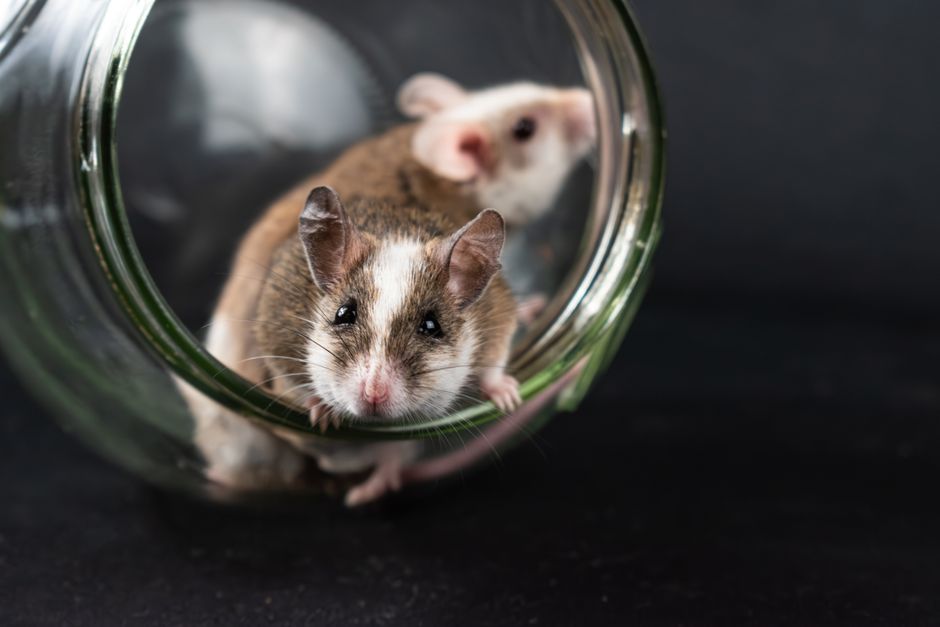
The short answer is no. Mice do not carry rabies in any way that poses a real threat to humans. The Centers for Disease Control and Prevention and the World Health Organization both state that small rodents like mice, rats, squirrels, and hamsters are almost never found to be infected with the rabies virus. In fact, there is no documented case of a mouse transmitting rabies to a human in the United States.
This does not mean you should handle wild mice. They carry other diseases. But when it comes to the specific question of rabies, the evidence is clear and consistent. Understanding why this is true requires a look at how the virus spreads, how it kills its host, and what the bite of a mouse actually looks like compared to other animals.
Why Do Mice Almost Never Carry Rabies?
The biology of the rabies virus explains why mice are not a realistic carrier. Rabies is a virus that attacks the central nervous system. To be transmitted, the virus must be present in the saliva of an infected animal and enter the body of a new host through a bite or an open wound.
Here is the critical detail: a rabid animal becomes infectious only in the final few days of its life. The virus travels from the bite site to the brain, then moves to the salivary glands. Once the virus reaches the saliva, the animal is usually severely ill and dies within days.
Mice are prey animals. They are small, fast, and constantly at risk of being eaten by cats, owls, snakes, and foxes. A mouse sick enough to be in the final stages of rabies would be lethargic, confused, and vulnerable. It would almost certainly be killed and eaten by a predator before it ever had a chance to bite a human. This is not speculation. It is the fundamental reason why rabies surveillance data shows virtually zero infected mice across decades of testing.
What Research and Surveillance Data Show
Public health agencies have tested thousands of small rodents over the years. The results are remarkably consistent. Rabies is found in wild carnivores and bats. It is not found in mice.
Research published in the journal Emerging Infectious Diseases examined rabies cases reported to the CDC. The findings showed that from 1990 through 2018, there were no human rabies cases in the United States attributed to a rodent bite of any kind. The data is not close. It is absolute.
The reason is the “dead-end host” concept. Rabies requires a chain of transmission. The virus needs a reservoir species — an animal population where it can persist and spread. In the United States, the reservoirs are raccoons, skunks, foxes, and bats. These animals are large enough to survive the early stages of infection and live long enough to bite another animal. A mouse is not. When a mouse is bitten by a rabid animal, it dies so quickly that the virus never gets a chance to multiply and move to the salivary glands.
This is why the CDC specifically states that bites from mice, rats, and squirrels do not require rabies post-exposure prophylaxis. The risk is not low. It is effectively zero.
Can a Mouse Bite Spread Other Diseases?
Rabies is not the concern with a mouse bite, but other infections are real. Wild mice can carry bacteria and viruses that cause illness in humans.
One of the most common is Streptobacillus moniliformis, the bacterium that causes rat-bite fever. Despite the name, this infection can also be transmitted by mice. Symptoms typically appear within 3 to 10 days after a bite and include fever, headache, muscle pain, and a rash. Rat-bite fever is treatable with antibiotics, but it can become serious if left untreated.
Mice also shed hantavirus in their droppings, urine, and saliva. This is not transmitted through bites. It is inhaled when dust contaminated with dried mouse droppings is stirred up. Hantavirus pulmonary syndrome is a severe respiratory illness, but it is rare. It occurs primarily in rural areas of the southwestern United States.
Lymphocytic choriomeningitis virus, or LCMV, is another concern. It is carried by house mice and can be transmitted through contact with their droppings or urine. Most healthy adults who contract LCMV experience mild flu-like symptoms or no symptoms at all. It poses a greater risk to pregnant women and people with weakened immune systems.
The practical point is simple: if a mouse bites you, clean the wound thoroughly with soap and water and monitor it for signs of infection. If you develop a fever, spreading redness, or swelling, see a doctor. Rabies will not be the issue. Bacterial infection will be.





Do You Need a Rabies Shot After a Mouse Bite?
No. Post-exposure prophylaxis for rabies is not recommended after a mouse bite. This is the official position of the CDC and the Advisory Committee on Immunization Practices.
The rabies vaccine series is not harmless. It involves multiple doses of vaccine and, in some cases, rabies immune globulin. It carries a risk of allergic reactions and side effects. Giving it to someone who was bitten by a mouse would expose them to unnecessary medical risk for a disease they cannot contract from that animal.
There are rare exceptions to every rule. If a person is bitten by a mouse in a part of the world where rabies is endemic in rodents — which is essentially nowhere — the assessment might differ. In the United States, Canada, and Europe, the guidance is uniform. No rabies shot is needed for a mouse bite.
If the bite is from a wild animal that you cannot identify, the situation changes. A bite from a raccoon, fox, skunk, or bat requires immediate medical evaluation. A bite from a mouse does not.
What About Other Small Rodents Like Rats and Squirrels?
The same logic applies to the entire family of small rodents. Rats, squirrels, chipmunks, guinea pigs, hamsters, and gerbils are all considered negligible rabies risks.
Larger rodents like groundhogs and beavers are technically capable of carrying rabies, but cases are extraordinarily rare. The CDC tracks these incidents, and they account for a tiny fraction of a percent of all animal rabies cases. A groundhog bite should be evaluated by a doctor, but the risk remains very low.
Pet rodents are essentially zero risk. A hamster or guinea pig that has never been outdoors cannot contract rabies. It has no exposure route. A bite from a pet rodent requires standard wound care and nothing more.
How Does a Mouse Bite Compare to a Bat or Raccoon Bite?
The difference comes down to how the virus behaves in different animals. Bats are a major rabies reservoir in the United States. Their bites are small and can go unnoticed, which is why the CDC recommends rabies prophylaxis for anyone who wakes up with a bat in their room, even without a visible bite mark.
Raccoons and skunks are also common carriers. They are large enough to survive the incubation period of the virus and remain mobile while infectious. A bite from one of these animals is a genuine medical emergency that requires immediate evaluation and likely rabies post-exposure prophylaxis.
Mice fall at the opposite end of the spectrum. They are too small and too short-lived to serve as a rabies reservoir. Their immune systems and metabolic rates are also different from those of carnivores, which may play a role in why the virus does not establish itself in rodent populations.
This is not a judgment call. It is a documented pattern across decades of wildlife surveillance and public health data.
What Should You Do If You Find a Mouse in Your Home?
Focus on exclusion and sanitation. Seal cracks and gaps in your foundation, walls, and around pipes. Keep food in sealed containers. Remove clutter where mice can nest.
If you are cleaning up mouse droppings, do not sweep or vacuum them dry. This can aerosolize hantavirus particles. Spray the droppings with a disinfectant solution, wait five minutes, and then wipe them up with a paper towel. Place the waste in a sealed plastic bag and dispose of it.
Wear gloves during cleanup and wash your hands thoroughly afterward. If you have a large infestation, professional pest control is the most effective option.
Frequently Asked Questions
Can a mouse give you rabies?
No. There is no documented case of a mouse transmitting rabies to a human. Small rodents are not a rabies reservoir and the virus does not survive in them long enough to be transmitted.
Do I need a rabies shot if a mouse bites me?
No. Rabies post-exposure prophylaxis is not recommended after a mouse bite. Clean the wound with soap and water and watch for signs of bacterial infection.
Can a house mouse carry rabies?
No. House mice cannot carry rabies in a transmissible form. They die from the virus before it reaches their salivary glands.
What diseases can you get from a mouse bite?
Rat-bite fever is the primary concern from a mouse bite. It is a bacterial infection treatable with antibiotics. Seek medical care if you develop fever, rash, or spreading redness after a bite.
