
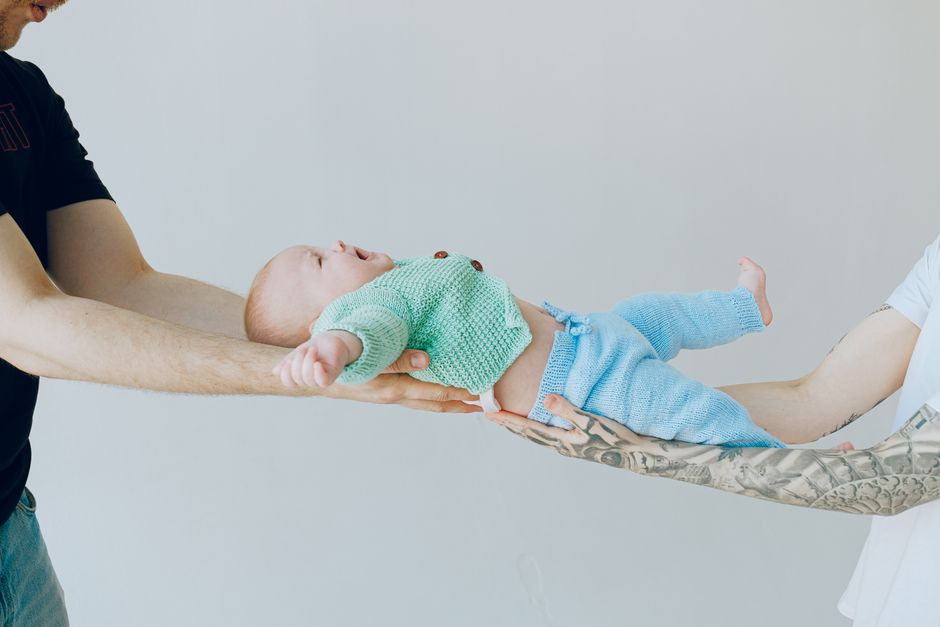
Carrying a newborn correctly is a basic skill that protects a fragile spine and prevents accidents. The safest approach is to always support the head and neck, keep the baby close to your chest, and use holds that maintain a natural, rounded position. This guide covers the safest holds, common mistakes, and how to pick the right carry for each situation.
Why Head and Neck Support Matters So Much
A newborn’s head is large and heavy compared to the rest of the body. The neck muscles are not strong enough yet to hold it up on their own. This is normal and expected until about 3 to 4 months of age when the baby gains better head control.
Until that control develops, the neck and upper spine are vulnerable. If the head snaps backward or forward without support, it can strain the neck muscles or, in rare but serious cases, cause injury to the cervical spine. Supporting the head is not about being overly cautious. It is about matching your support to the baby’s current physical abilities.
Always place one hand under the head and neck and the other under the bottom when lifting or lowering a newborn. This two-point support keeps the spine in a straight, neutral line.
The Cradle Hold: The Most Common and Safest Start
The cradle hold is the hold most people picture when they think of holding a baby. It is also one of the safest for everyday use.
To do it correctly, slide one hand under the baby’s head and neck and the other under the bottom. Lift the baby to your chest level, then gently slide the baby’s head into the crook of your elbow. Let the baby’s body rest along your forearm with the bottom supported by your hand.
The baby’s head should be slightly elevated, not flat. The baby’s tummy should face yours. This position allows the baby to hear your heartbeat and feel your breathing, which is calming for a newborn. Keep the baby’s legs in a natural bent position. Do not force the legs straight or press them tightly together.
The Shoulder Hold: For Burping and Bonding
The shoulder hold is essential for burping and is also a favorite for many babies who like to be upright.
Lift the baby to your shoulder height with your hand supporting the head and neck. The baby’s head should rest on your shoulder, turned to one side so the nose and mouth are clear. One of your hands supports the head and neck while the other supports the bottom.
Your body should be slightly leaned back, not hunched forward. This gives the baby a stable platform to rest against. The baby’s legs can hang naturally or be tucked. This position is often the most effective for bringing up a burp because the gentle upright pressure helps release trapped air.





The Football Hold: Useful for Bathing and Small Tasks
The football hold is a practical option, especially for parents who need one hand free or for mothers recovering from a C-section who need to keep pressure off their abdomen.
In this hold, the baby lies along your forearm like a football. The baby’s head rests in your hand, and the baby’s body extends back toward your elbow. The baby’s legs dangle on either side of your arm or tuck against your side.
This hold keeps the baby’s weight off your stomach and chest. It is commonly used during bathing because it allows you to wash the baby safely with one hand while the other supports the head above the water line. Some parents also find it useful for carrying the baby short distances while doing light tasks, but the baby must always be fully supported and never dangle by the hips.
The Face-Down or “Tummy” Hold: Not for Sleep
The face-down hold, sometimes called the “colic hold” or “tummy time carry,” involves laying the baby face-down along your forearm with the head supported in your hand or the crook of your elbow.
This position can be soothing for babies with gas or colic. The gentle pressure on the tummy may help relieve discomfort. The baby’s head must always be turned to the side so the nose and mouth are not blocked.
This hold is only for awake time. Never use this position for sleep. The American Academy of Pediatrics and other safe-sleep organizations are clear that babies should always be placed on their back for sleep, whether in a crib, bassinet, or on a person.
How To Pick Up and Put Down a Newborn Safely
Lifting and lowering are the moments when accidents are most likely to happen. The same two-point support rule applies.
To pick up a baby from a crib or flat surface, bend at your knees, not your waist. Slide one hand under the baby’s head and neck and the other under the bottom. Lift the baby straight up toward your chest. Do not pull the baby by the arms or wrists. A newborn’s joints are not stable enough for that.
To put a baby down, reverse the process. Lower the baby until the bottom touches the surface first, then gently slide the head and body down. Keep one hand on the baby until both hands are free. Never let go of the baby while the baby is still in mid-air above the surface.
Always communicate with the baby while lifting and lowering. A calm voice and slow movements reduce the startle reflex, which can cause sudden arm and leg jerks that make a baby harder to hold.
How To Carry A Newborn Safe Holds And Positions: Key Rules
Beyond the specific holds, a few universal rules apply to every way you carry a newborn.
- Always support the head. This is non-negotiable until the baby has consistent head control.
- Keep the baby close to your body. A baby held close feels more secure and is easier to control than one held at arm’s length.
- Never shake a baby. Shaking can cause severe brain injury or death. This is true even in moments of frustration or play.
- Avoid carrying a baby in a car seat outside of the car. Car seats are for vehicles. Carrying a baby in a car seat handle places the baby in a semi-reclined position that can compress the airway, especially in young infants.
- Do not use baby slings or wraps unless you know the correct positioning. The baby’s face must be visible and clear of fabric at all times. The chin should not be tucked into the chest.
If you are using a carrier or wrap, follow the “TICKS” guidelines: Tight, In view at all times, Close enough to kiss, Keep chin off the chest, Supported back. These guidelines are promoted by babywearing safety organizations and help prevent positional asphyxia.
What To Avoid When Holding a Newborn
Some common habits are risky and should be avoided entirely.
Do not hold a baby with one hand while doing something else. Even for a moment, a baby can squirm or startle and slip. If you need both hands, put the baby down in a safe place like a crib or bassinet.
Do not bounce a baby vigorously. Gentle rocking is fine. Hard bouncing can cause the head to whip back and forth, which can injure the neck or brain.
Do not carry a baby while cooking, holding hot drinks, or walking on slippery surfaces. These situations create a high risk of burns or falls that you cannot prevent while holding a baby.
Do not let siblings carry a newborn without close supervision. An older child may not understand the need for head support or may lose balance. If a sibling wants to hold the baby, have them sit on the floor or a couch with pillows around them and a supervising adult right next to them.
How To Know If Your Baby Has Head Control
Head control develops gradually, not all at once. Most babies can hold their head steady when held upright by about 4 months. Some reach this milestone earlier, some later.
Signs of developing head control include the baby lifting their head during tummy time, turning their head side to side while lying on their back, and holding their head up without bobbing when supported in a sitting position.
Until the baby can hold their head steady without support, you must continue to support the head every time you pick the baby up. Even after head control develops, it is wise to keep one hand behind the head when lifting or lowering. Babies can regress during illness or tiredness and lose temporary control.
Frequently Asked Questions
How long do I need to support my newborn’s head?
Support the head until the baby has consistent head control, which typically develops between 3 and 4 months of age. Continue supporting the head during lifts and lowers even after that, because tired or sick babies can lose temporary control.
Is it safe to hold a newborn in an upright position?
Yes, upright positions like the shoulder hold are safe as long as the head and neck are fully supported. The baby’s head should rest against your shoulder or in your hand so it cannot flop backward.
Can I carry my newborn facing outward?
Facing-out carries are not recommended for newborns because they do not provide enough head and neck support. Wait until the baby has strong head control, usually around 5 to 6 months, before using a facing-out position in a carrier.
What is the safest way to hold a newborn while sitting?
The cradle hold is the safest and most natural sitting position. Sit with the baby cradled in your arms, head elevated in the crook of your elbow, with the baby’s body facing yours and the head supported at all times.
