
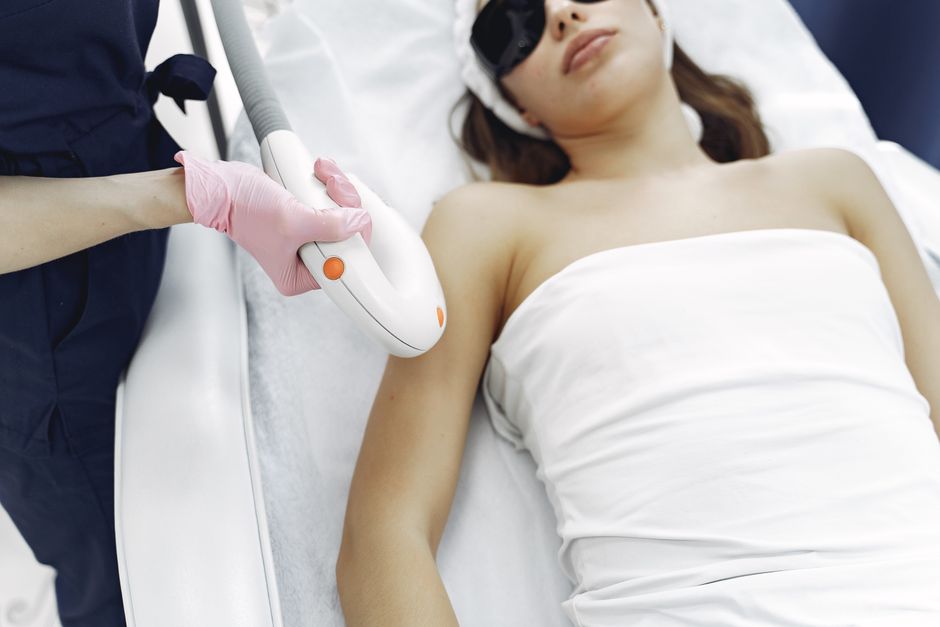
Laser hair removal works by targeting the dark pigment, called melanin, inside the hair follicle. Red hair contains a different form of melanin that does not absorb laser energy the same way dark hair does. Because of this, most traditional lasers are not effective on red hair, and the results are often disappointing.
Why Does Laser Hair Removal Struggle With Red Hair?
The technology behind laser hair removal depends on a simple principle. The laser emits a specific wavelength of light. That light is absorbed by melanin in the hair shaft and follicle. When the melanin absorbs the light, it heats up and damages the follicle, which slows or stops future hair growth.
There are two main types of melanin in human hair. Eumelanin produces brown and black colors. Pheomelanin produces red and yellow colors. Standard lasers used for hair removal are designed to target eumelanin because it absorbs light very well. Pheomelanin does not absorb that same light energy efficiently.
This is the core problem. The laser light passes through red hair without generating enough heat to destroy the follicle. The result is that the hair remains intact and continues to grow.
What About The Skin Around The Hair?
Laser hair removal also depends on contrast between the hair and the skin. Dark hair on light skin provides a strong target for the laser. The laser can focus on the dark hair without affecting the lighter skin.
Red hair is often paired with fair skin. Fair skin contains less melanin, which is actually helpful for safety. The issue is not the skin. The issue is that the red hair itself does not absorb the laser energy well enough to be destroyed.
In some cases, a person with very dark red hair might see partial results. The small amount of eumelanin present in dark auburn hair may absorb some energy. However, the response is typically inconsistent and rarely matches the results seen with black or brown hair.
Are There Any Lasers That Work On Red Hair?
Research has explored whether certain wavelengths of light can target pheomelanin. Some studies suggest that longer wavelengths, such as those used in Nd:YAG lasers, may have some effect. However, the evidence is limited and results vary widely.
The problem is that pheomelanin has a very weak absorption profile in the spectrum used by hair removal lasers. To generate enough heat to damage the follicle, the laser would need to deliver much higher energy. That higher energy increases the risk of burning or scarring the skin.
No laser currently approved for hair removal is specifically designed to target pheomelanin. Some clinics advertise “red hair lasers” but the clinical evidence does not support these claims. No large human trials have confirmed consistent, safe, and effective removal of red hair with any laser system.





What Are The Alternatives For Red Hair Removal?
If laser treatment is not a reliable option, there are other methods that work well for red hair.
Electrolysis is the most effective permanent solution. This method uses a tiny needle inserted into each hair follicle. A small electrical current destroys the follicle directly. Electrolysis does not depend on pigment at all, which makes it suitable for red, blonde, gray, and white hair. The downside is that it treats one hair at a time, so sessions are lengthy and multiple appointments are required.
Intense Pulsed Light (IPL) devices are often confused with lasers. IPL uses a broad spectrum of light rather than a single wavelength. In most cases, IPL is not effective on red hair for the same reason lasers are not. The light is not absorbed well by pheomelanin.
Topical creams such as eflornithine can slow hair growth but do not remove hair permanently. They require ongoing use and are not a permanent solution.
Waxing, threading, and shaving remain reliable temporary options. These methods physically remove the hair and are not affected by pigment type.
Does Laser Hair Removal Work On Red Hair Not Really — What Do Studies Show?
Clinical research consistently shows that laser hair removal is most effective on dark hair. Studies on light-colored hair, including red, report poor response rates. The mechanism is well understood and explains these results.
Some research published in dermatology journals has examined the use of specific laser settings for lighter hair colors. These studies typically report partial or temporary reduction at best. The hair often regrows, and repeated treatments do not improve the long-term outcome.
It is important to understand that clinical practice sometimes differs from what is advertised. Some clinics may offer laser treatment to red-haired clients. The honest position is that the evidence does not support this as an effective permanent hair removal method. You may see some temporary thinning, but you should not expect the same results as someone with dark hair.
Is It Worth Trying Laser Treatment For Red Hair?
Most dermatologists would advise against spending money on traditional laser hair removal for red hair. The likelihood of a satisfactory outcome is low. The cost of multiple sessions adds up quickly, and the disappointment is common.
If you have very dark red or auburn hair, you might consider a consultation. A specialist can assess your hair color and skin tone. They can give you an honest opinion about whether you are a candidate. However, be skeptical of any clinic that guarantees results for red hair.
If your goal is permanent hair removal, electrolysis is the evidence-based choice. It is slower and more tedious, but it works regardless of hair color. If your goal is temporary removal, standard methods like waxing or shaving are effective and far less expensive.
Does Red Hair Respond Differently To At-Home Devices?
At-home laser and IPL devices use the same technology as professional machines but with lower energy output. They are even less likely to work on red hair. The lower energy means less heat is generated in the follicle, and red hair already absorbs light poorly.
Manufacturers of at-home devices often list hair color compatibility charts. Red and light blonde hair are typically excluded from the recommended usage. This is not a marketing decision. It reflects the physical limitation of the technology.
Using an at-home device on red hair is unlikely to cause harm, but it is also unlikely to produce meaningful results. You would be spending money on a device that cannot do the job.
What About Red Hair On The Face?
Facial hair in people with red hair presents the same challenge. The pigment issue is identical regardless of where the hair grows. Laser treatment on the face carries additional risks, including skin irritation and changes in pigmentation.
For facial hair, electrolysis is often the preferred method. It is precise and can be used safely on small areas like the upper lip or chin. The sessions are short, but multiple treatments are needed because the electrical current only affects hairs in the active growth phase.
Frequently Asked Questions
Can anyone with red hair get laser hair removal?
Technically yes, but the results are usually poor. Most people with red hair will not achieve permanent hair reduction with laser treatment.
Is electrolysis better than laser for red hair?
Yes. Electrolysis destroys the follicle directly and does not rely on pigment, making it the only permanent solution for red hair.
Will IPL work on red hair?
No. IPL uses broad-spectrum light and faces the same absorption problem as lasers when targeting red hair.
Can laser hair removal damage skin with red hair?
The risk is low because the laser is not strongly absorbed by red hair. However, any laser carries a risk of burns or pigmentation changes if settings are too high.
