
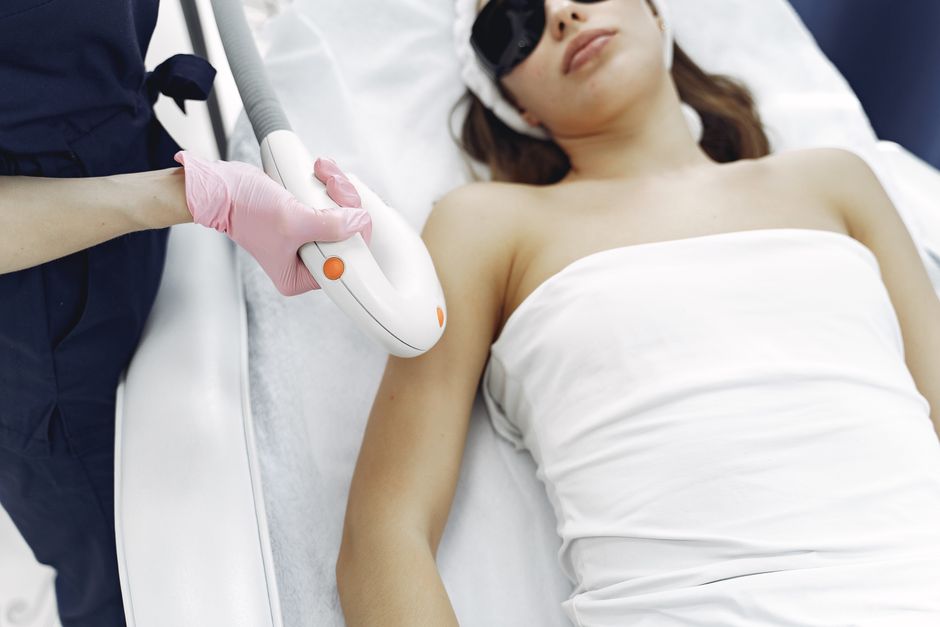
IPL laser hair removal uses intense pulses of broad-spectrum light to target hair follicles and reduce hair growth. Unlike a true laser, which emits a single wavelength of light, IPL devices release a range of light wavelengths that are absorbed by the pigment (melanin) in your hair. This light energy converts to heat, which damages the hair follicle and slows down or stops future hair growth. IPL is a popular at-home and in-clinic option for people looking to reduce unwanted body hair over time.
What Is IPL Laser Hair Removal And How Does It Work?
IPL stands for Intense Pulsed Light. It is a technology used to treat a variety of skin conditions, but it is most commonly marketed for hair reduction. The device emits a broad spectrum of light, typically ranging from 400 to 1200 nanometers. This light is filtered so that only specific wavelengths reach your skin.
The light targets melanin in the hair shaft and follicle. When the melanin absorbs this light, it heats up rapidly. This heat damages the hair follicle, specifically the bulb and the stem cells that help regrow hair. If the follicle is damaged enough, it cannot produce new hair as quickly, or it stops producing hair altogether.
It is important to understand that IPL is not a true laser. A laser uses one specific wavelength of light, which is very precise. IPL is more like a flashlight with a filter—it emits many wavelengths at once. This makes IPL less targeted than a laser, but it is still effective for many people when used consistently over time.
How Is IPL Different From a True Laser?
The main difference comes down to the type of light used. A true laser, such as an Alexandrite or Nd:YAG laser, produces a single, coherent wavelength of light. This allows the energy to be focused on one specific target, like melanin, with high precision.
IPL, on the other hand, produces a range of wavelengths. Because the light is scattered across a broader spectrum, it is absorbed by different structures in the skin, not just the hair follicle. This is why IPL is often considered less powerful than a laser for permanent hair reduction. However, the broader spectrum also means IPL devices can be designed with larger treatment windows, making them faster for treating large areas like legs or arms.
For clinical treatments, lasers are generally considered the gold standard because they are more precise and can be adjusted for different skin types. IPL devices are widely used at home because they are cheaper and easier to operate, but they typically require more sessions to achieve similar results.
Who Is a Good Candidate for IPL Hair Removal?
The most important factor for IPL success is the contrast between your hair color and your skin tone. IPL works by targeting melanin. If you have dark hair and light skin, the light energy will be absorbed strongly by the hair pigment, leaving the surrounding skin relatively unaffected. This is the ideal combination for IPL.
People with dark skin or tanned skin have more melanin in their skin itself. This means the IPL light may be absorbed by the skin before it reaches the hair follicle. This can cause burns, blisters, or changes in skin pigmentation. Similarly, IPL does not work well on blonde, red, gray, or white hair because these hair colors contain very little melanin to absorb the light.
If you have a darker skin tone, a professional laser specifically designed for darker skin, such as an Nd:YAG laser, is a safer and more effective option. At-home IPL devices are generally only recommended for light to medium skin tones with dark hair. Check the device packaging carefully—most manufacturers clearly state which skin tones they are safe for.





What Results Can You Expect and How Long Do They Last?
IPL does not remove hair permanently in one session. Hair grows in cycles—anagen (growth), catagen (transition), and telogen (resting). IPL only affects hairs that are in the active growth phase (anagen). At any given time, only a portion of your hair follicles are in this phase. This is why multiple sessions are required to catch each follicle during its growth phase.
Most clinical guidelines and device instructions recommend a series of treatments spaced about four to six weeks apart. After the initial series, many people see a significant reduction in hair density. However, IPL is best described as long-term hair reduction rather than permanent removal. Some hair will eventually grow back, especially if hormone levels change, such as during pregnancy or menopause.
Maintenance sessions may be needed once or twice a year to keep the area smooth. The results vary from person to person based on hair color, skin type, and hormonal factors. Some studies suggest that IPL can reduce hair growth by up to 80% after a full course of treatment, but individual results vary widely.
Does IPL Hurt? What Are the Side Effects?
Most people describe the sensation of IPL as a quick, sharp snap, similar to a rubber band hitting the skin. At-home devices generally feel milder than professional machines because they use lower energy levels. The discomfort is brief and usually well tolerated without numbing cream.
Common side effects include temporary redness and mild swelling around the treated hair follicles. These symptoms usually resolve within a few hours to a day. Some people experience a slight darkening or lightening of the skin in the treated area, but this is usually temporary.
Serious side effects are rare but possible, especially if the device is used incorrectly or on unsuitable skin tones. Burns, blisters, and scarring can occur. Changes in skin pigmentation—either hyperpigmentation (darkening) or hypopigmentation (lightening)—are the most common complications reported. These are more likely to occur in people with darker skin or in people who have recently tanned. Always do a patch test on a small area of skin before treating a larger area.
How to Use an At-Home IPL Device Safely
If you decide to use an at-home IPL device, follow the manufacturer’s instructions exactly. Start by shaving the area you plan to treat. Shaving removes the hair above the skin while leaving the hair shaft in the follicle intact, which is what the light needs to target. Do not wax or pluck before IPL, because you need the hair root present to absorb the light.
Clean and dry your skin completely before treatment. Do not apply lotions, creams, or deodorants to the area, as these can interfere with the light or increase the risk of burns. Hold the device flat against your skin and press the button to release the pulse. Move systematically across the area, making sure you do not overlap pulses too much, as this can cause burns.
Never use IPL on tattoos, moles, freckles, or dark spots. The light will target the dark pigment in these areas, which can cause burns or change their appearance. Avoid treating areas with active infections, cuts, or rashes. Also, avoid using IPL on the face near the eyes, and never use it on the eyelids or eyebrows, as this can cause serious eye damage.
What Are the Best Areas to Treat With IPL?
IPL works best on large areas of the body where hair is dark and skin is light. Common treatment areas include legs, arms, underarms, and the bikini line. These areas are easy to reach and respond well to the broad treatment window of IPL devices.
The face is a more delicate area. At-home IPL devices are generally not recommended for the upper lip or chin because the skin is thinner and more sensitive. If you do treat the face, use the lowest energy setting and be very careful to avoid your eyes. Professional treatments are available for facial hair, but a consultation with a dermatologist is recommended first.
Men often use IPL for back and chest hair. These areas can be large, but they respond well if the hair is dark and the skin is light. However, treating large areas at home takes significant time and patience. Many people find that professional treatments are more efficient for large areas because the machines are more powerful.
When Should You Avoid IPL?
You should avoid IPL if you have a tan, either from the sun or from a tanning bed. The extra melanin in your skin will absorb the light and increase the risk of burns and pigmentation changes. Wait until your tan fades completely before using IPL.
Pregnant women are generally advised to avoid IPL, not because it is proven harmful, but because there is no clinical evidence confirming its safety during pregnancy. Hormonal changes can also affect hair growth and skin sensitivity, making results unpredictable. No clinical guidelines currently exist for IPL use during pregnancy, so most clinicians recommend waiting until after delivery.
If you have a history of keloid scarring, active skin infections, or photosensitivity disorders, talk to a doctor before using IPL. Certain medications, including some antibiotics and acne treatments, can make your skin more sensitive to light. Check with a pharmacist or dermatologist if you are taking any medication that causes photosensitivity.
Frequently Asked Questions
How many IPL sessions do you need to see results?
Most people need between 6 and 8 sessions spaced 4 to 6 weeks apart to see significant hair reduction. You may notice slower hair growth after just 2 or 3 sessions.
Can IPL be used on all skin tones?
No. IPL is only safe for light to medium skin tones with dark hair. Darker skin tones have too much melanin in the skin, which increases the risk of burns and pigmentation changes.
Is IPL hair removal permanent?
IPL provides long-term hair reduction, not permanent removal. Some hair will eventually grow back, and maintenance sessions may be needed once or twice a year to maintain results.
