
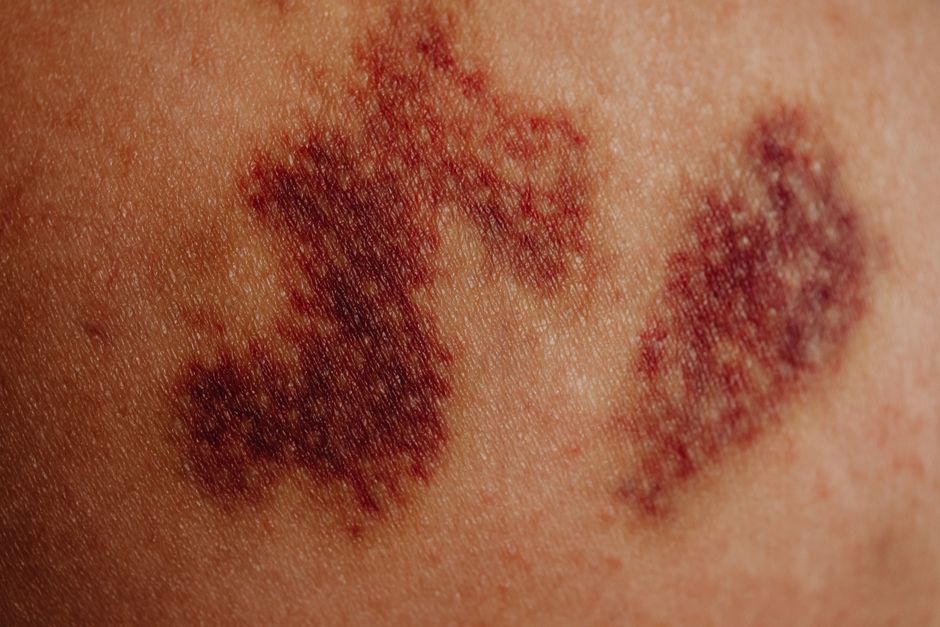
Massaging a bruise is a common home remedy, but the science is clear on one thing: you should not massage a bruise right after it forms. Doing so can break more blood vessels under the skin, making the bruise larger and more painful. The safest approach is to avoid massaging a fresh bruise entirely, and instead focus on proven methods like cold therapy in the first 48 hours. Gentle massage may have a role days later, but only after the initial swelling has subsided, and even then, the evidence supporting its benefit is limited.
What exactly is a bruise?
A bruise, medically called a contusion, happens when small blood vessels called capillaries break under your skin. Blood leaks out into the surrounding tissue. That pooled blood is what creates the familiar black-and-blue mark.
Your body then works to break down that blood and clear it away. This process takes time, usually one to two weeks. The color changes you see — from red to purple to green to yellow — are different stages of your body breaking down the blood cells.
The pain you feel is from swelling and pressure. Blood in the tissue irritates nerve endings. This is why bruises are often tender to the touch.
Does rubbing a bruise help it heal faster?
No. Rubbing or massaging a fresh bruise does not speed up healing. In fact, it can make things worse.
When you press on a bruise, you apply force to already-damaged blood vessels. That pressure can cause more capillaries to break. The result is a larger bruise with more pooled blood and increased pain.
Some people believe that massaging helps “break up” the clotted blood and spread it out. That idea is not supported by evidence. You cannot massage blood back into your bloodstream. The blood is already in your tissue, and your body needs time to clear it through normal biological processes.
Research consistently shows that the standard treatment for a fresh bruise is the RICE method — rest, ice, compression, and elevation. Massage is not part of that protocol. Cold therapy narrows blood vessels and reduces the amount of blood that leaks out. That is the only intervention with strong evidence for reducing bruise severity in the first two days.
When could gentle massage help a bruise?
There is a narrow window where light massage might offer some benefit. This is only after the acute phase has passed, typically 48 to 72 hours after the injury.
At that point, the bleeding has stopped. The blood under your skin is stable. Gentle massage in this later stage may help reduce stiffness in the surrounding muscles and improve local circulation. Improved blood flow can help your lymphatic system clear waste products from the area.
However, the evidence for this is not strong. Some physical therapists use a technique called manual lymphatic drainage after injuries, but this is a specific, trained method — not casual rubbing. It involves very light pressure and specific hand movements. It is also typically used for swelling, not for bruises specifically.
If you choose to massage a bruise after 48 hours, keep it very light. Use your fingertips with minimal pressure. Stop immediately if it hurts. Pain is a sign you are pressing too hard.





What does science actually recommend for bruises?
The most effective approach for a bruise is well established. It comes down to four simple steps, and you should start them as soon as possible after the injury.
- Rest: Avoid using the injured area for the first day or two. Movement increases blood flow, which can increase bleeding under the skin.
- Ice: Apply a cold pack for 15 to 20 minutes at a time, several times a day, for the first 48 hours. Always wrap the ice pack in a cloth — never place it directly on skin.
- Compression: An elastic bandage wrapped snugly around the area can help limit swelling. It should be firm but not tight enough to cut off circulation.
- Elevation: Raise the injured area above heart level when possible. This uses gravity to help fluid drain away from the injury site.
After 48 hours, heat can be helpful. A warm compress can increase blood flow to the area, which may help your body clear the remaining blood faster. Some studies suggest that topical treatments containing arnica or vitamin K may reduce bruise appearance, but the evidence is mixed and these are not considered standard medical treatment.
Are there any risks to massaging a bruise?
Yes. The main risk is making the bruise worse. Pressing on damaged blood vessels can cause additional bleeding, leading to a larger and more painful bruise.
There is also a risk of causing a more serious condition called compartment syndrome, though this is rare. This happens when pressure builds up inside a muscle compartment, restricting blood flow. It is a medical emergency. Symptoms include severe pain that gets worse, numbness, and a feeling of tightness or fullness in the area.
Another concern is that you might mistake a more serious injury for a simple bruise. A deep muscle injury, a bone fracture, or a ligament tear can all look like a bruise at first. If you massage these injuries, you can cause significant harm. If you have any doubt about the severity of your injury, see a healthcare provider before trying any home treatment.
When should you see a doctor about a bruise?
Most bruises are minor and heal on their own. But some situations require medical attention.
See a doctor if you have a bruise that:
- Grows larger while you watch it
- Does not improve after two weeks
- Is accompanied by severe pain or swelling
- Occurs after a serious injury, like a fall from height or a car accident
- Appears without any known cause, especially if you have multiple unexplained bruises
- Is located on your head, especially if you also have confusion, dizziness, or nausea
- Is accompanied by fever or feels warm to the touch, which could indicate infection
You should also be cautious if you take blood thinners. People on anticoagulant medications bruise more easily and can develop larger bruises from minor injuries. If you take these medications and sustain a significant bruise, it is worth mentioning to your healthcare provider.
Does it help to massage a bruise in the long run?
The short answer is no, not in any meaningful way. Massaging a bruise does not speed up the healing process. Your body will clear the pooled blood at its own pace, regardless of whether you massage the area.
Some people report that gentle massage feels good and reduces muscle tension around the bruise. That is a real effect, but it is different from healing the bruise itself. Feeling better is not the same as healing faster.
If you want to reduce the appearance of a bruise, the most reliable strategies are time and the RICE method. Ice in the first 48 hours limits the size of the bruise. After that, your body does the rest of the work.
There is no scientific evidence that any type of massage, whether deep tissue or light touch, accelerates the breakdown and removal of blood from a bruise. The claim that massage “breaks up” a bruise is a myth. The blood is not a solid clot that can be dispersed by pressure — it is already absorbed into your tissue, and your immune system is handling it.
Frequently Asked Questions
Can you massage a bruise to make it go away faster?
No, massaging a bruise will not make it heal faster. It can actually make it worse by breaking more blood vessels and increasing the size of the bruise.
How long should you wait before massaging a bruise?
If you want to massage a bruise, wait at least 48 to 72 hours after the injury. By that point the bleeding has stopped, and gentle pressure is less likely to cause additional damage.
What is the fastest way to get rid of a bruise?
Apply ice in the first 48 hours to limit the size of the bruise, then switch to heat to promote circulation. Elevation and compression also help reduce swelling.
Why does massaging a bruise hurt?
Massaging a bruise hurts because the tissue is already inflamed and sensitive. Pressure on damaged blood vessels and irritated nerve endings causes pain, which is a sign to stop.
