
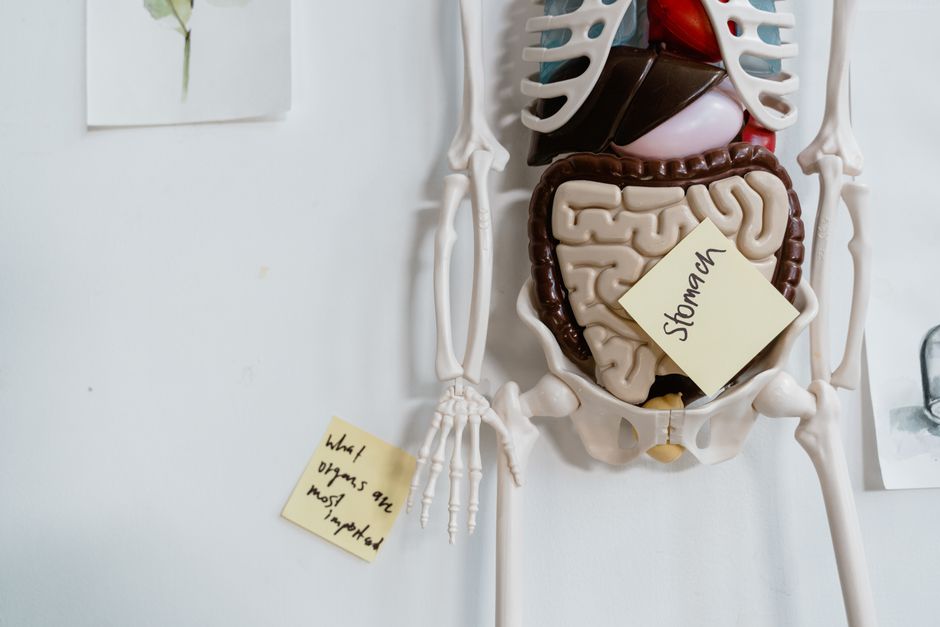
The connection between your gut and your brain is real, and it works in both directions. Research shows that the bacteria living in your digestive tract can influence your mood, stress levels, and even how you process emotions. This does not mean that mental health conditions are “all in your gut,” but it does mean that what happens in your digestive system matters for how you feel mentally.
What Is the Gut-Brain Connection?
The gut-brain connection is a two-way communication system. Your brain sends signals to your gut, which is why stress can cause stomach cramps or nausea. Your gut also sends signals back to your brain, and those signals can influence your mental state.
This communication happens through several pathways. The vagus nerve is the main physical connection, running directly from your brainstem to your abdomen. The gut also produces many of the same neurotransmitters that your brain uses, including serotonin and dopamine. In fact, most of the body’s serotonin is made in the gut, not the brain.
Your gut bacteria, collectively called the microbiome, play a major role in this system. These trillions of microorganisms help digest food, produce vitamins, and train your immune system. They also produce chemicals that can interact with your nervous system. When the balance of these bacteria shifts, the messages sent to your brain can shift too.
How Do Gut Bacteria Affect the Brain?
Gut bacteria produce a wide range of compounds that travel through your bloodstream or stimulate nerve endings in your gut lining. Some of these compounds are precursors to neurotransmitters. For example, certain bacteria help convert tryptophan into serotonin, which regulates mood, sleep, and appetite.
Other bacterial products influence inflammation. A healthy gut lining acts as a barrier, keeping bacteria and toxins inside the digestive tract. When that barrier becomes more permeable, sometimes called “leaky gut,” bacterial fragments can enter the bloodstream and trigger an immune response. Chronic low-grade inflammation has been linked to depression in some studies, though the exact relationship is still being worked out.
Short-chain fatty acids are another important group of bacterial products. These are produced when gut bacteria ferment fiber. Butyrate, one of the most studied short-chain fatty acids, provides fuel for cells lining your colon and also appears to influence brain function. Some animal studies show that butyrate can cross the blood-brain barrier and affect gene expression in brain cells.
Does Gut Health Affect Mental Health Conditions?
Studies have found differences in the gut microbiomes of people with depression and anxiety compared to people without those conditions. This does not prove that gut bacteria cause depression or anxiety. It shows an association, and researchers are still trying to understand the direction of that relationship.
Some clinical trials have tested whether altering gut bacteria can improve mood. Probiotics have been the most studied approach. The evidence is mixed. Some trials show modest improvements in depressive symptoms, while others show no benefit over placebo. The strains used, the doses, and the duration of treatment vary widely between studies, which makes it hard to draw firm conclusions.
One area with more consistent evidence is the use of certain probiotics alongside standard antidepressant treatment. Some research suggests that adding a probiotic may enhance the effect of medication, but this is not yet a standard clinical recommendation. If you are taking antidepressants, talk to your doctor before adding any supplement.





Can Diet Improve Your Mental Health?
Diet is the most direct way to influence your gut bacteria. What you eat determines which bacteria thrive and which ones decline. A diet rich in fiber supports bacteria that produce beneficial short-chain fatty acids. Ultra-processed foods and high sugar intake tend to support a less diverse microbiome.
Some research has tested whether dietary changes alone can treat depression. The SMILES trial, published in 2017, was one of the first randomized controlled trials to test this. It found that a modified Mediterranean diet improved depressive symptoms in adults with moderate to severe depression. The effect was significant, but the study was small and has not been replicated on the same scale.
A Mediterranean-style diet emphasizes vegetables, fruits, legumes, whole grains, nuts, fish, and olive oil. It limits red meat, processed foods, and added sugar. This pattern of eating is associated with lower rates of depression in observational studies, but observational studies cannot prove cause and effect. People who eat well may have other habits that protect their mental health.
If you want to support your gut health through diet, the practical steps are straightforward. Eat a variety of plant foods to increase microbial diversity. Include fermented foods like yogurt, kefir, sauerkraut, or kimchi, which contain live bacteria. And eat enough fiber, aiming for the general guideline of 25 to 30 grams per day from food sources. Most Americans fall well short of this.
What About Probiotics and Supplements?
Probiotic supplements are widely marketed for gut health and mental well-being. The reality is more complicated than the marketing suggests. Probiotics are live microorganisms, and different strains have different effects. A probiotic that helps one person may do nothing for another.
Some specific strains have been studied for mental health effects, including Lactobacillus and Bifidobacterium species. Several small trials have reported mood improvements with these strains. However, the overall evidence base is not strong enough to recommend a specific probiotic for depression or anxiety. No regulatory agency has approved a probiotic for treating any mental health condition.
Prebiotics are another option. These are types of fiber that feed beneficial gut bacteria. They do not contain live organisms, so they have fewer safety concerns than probiotics. Some studies suggest prebiotics may influence stress responses, but again, the evidence is preliminary.
No clinical guidelines currently exist for using probiotics or prebiotics to treat mental health conditions. If you choose to try them, treat them as an experiment. Track your symptoms, give it at least four to six weeks, and be honest with yourself about whether anything changed.
What Are the Limits of the Gut-Brain Research?
The gut-brain connection is a young field, and much of the evidence comes from animal studies. Mice and rats are not people. Their microbiomes differ from ours, and their diets and environments are completely controlled. What works in a mouse does not always work in a human.
Human studies are difficult to design well. The microbiome varies from person to person based on genetics, diet, medications, and environment. This makes it hard to isolate the effect of any single factor. Many studies are small, short-term, and not adequately controlled.
There is also a risk of oversimplifying mental illness. Depression and anxiety are complex conditions with genetic, psychological, social, and environmental contributors. Reducing them to a gut problem ignores this complexity. The gut-brain connection is one piece of the puzzle, not the whole picture.
Fecal transplants, where stool from a healthy donor is placed into a patient’s colon, are being studied for various conditions. Some small trials have explored them for depression, but the evidence is extremely limited. This is an experimental treatment with real risks, and it is not approved for mental health conditions anywhere in the world.
How Can You Support Your Gut Health Safely?
Start with food, not supplements. Eat more plants, more fiber, and more fermented foods. These are safe, affordable, and supported by broad evidence for overall health, even if the specific mental health benefits are still being studied.
Exercise also appears to support a healthy microbiome. Regular physical activity is associated with greater microbial diversity, and it has well-established benefits for depression and anxiety. Sleep matters too. Poor sleep disrupts the microbiome, and microbiome disruption can worsen sleep quality, creating a cycle.
Be cautious with antibiotics. Antibiotics are life-saving medications, but they kill beneficial bacteria along with harmful ones. Take them only when prescribed, and talk to your doctor if you have concerns about repeated courses. Some research suggests that a diet rich in fiber during and after antibiotic treatment can help your microbiome recover faster.
If you are experiencing persistent low mood, anxiety, or other mental health symptoms, talk to a healthcare provider. Therapy and medication are the treatments with the strongest evidence for mental health conditions. Diet and gut health can be part of a broader approach, but they should not replace proven treatments.
Frequently Asked Questions
Can fixing your gut health cure depression?
No. No evidence shows that improving gut health alone can cure depression. Diet and gut health may support mental well-being, but depression treatment should follow established approaches like therapy and medication.
How long does it take for gut health to affect mood?
Studies that show mood changes from dietary or probiotic interventions typically run for at least four to eight weeks. Individual results vary, and some people notice no change at all.
Are probiotics safe to take for mental health?
Probiotics are generally safe for healthy adults, but they are not regulated as drugs and no specific strain is approved for mental health treatment. People with weakened immune systems should talk to a doctor before taking them.
What foods are best for the gut-brain connection?
High-fiber plant foods, fermented foods, and foods rich in omega-3 fatty acids like fish are the most consistently supported by research. A Mediterranean-style diet pattern is associated with better gut and mental health in observational studies.
