
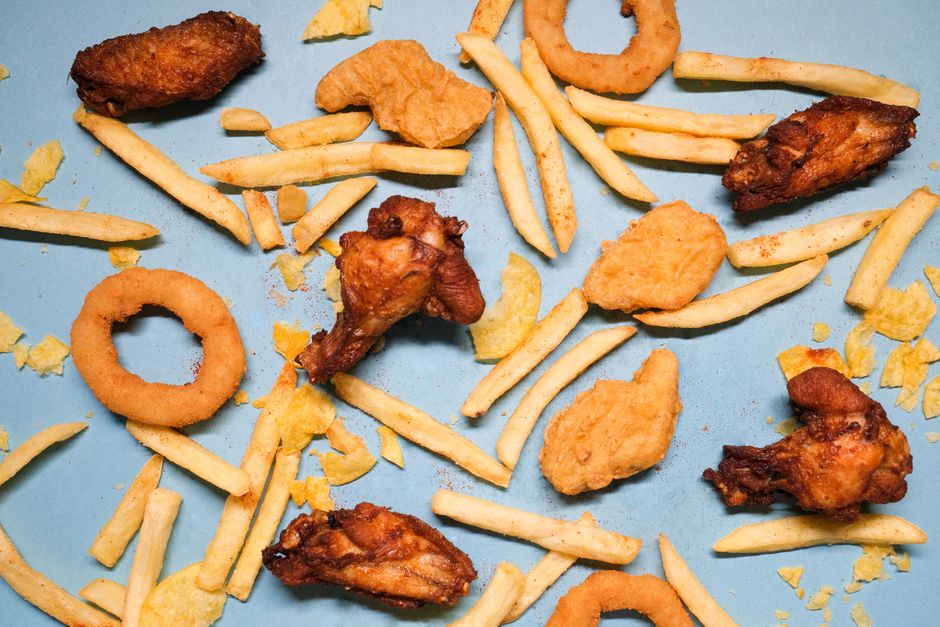
Fried food can absolutely contribute to weight gain, but calories are only part of the story. A fried chicken breast and a grilled one can start as the same piece of meat — the difference is what happens during frying. Oil adds fat and calories, and the cooking process changes the food itself in ways that affect how your body responds to it.
The short answer: fried food tends to be calorie-dense, highly palatable, and easy to overeat. Those three factors together make weight gain more likely if fried food is a regular part of your diet. But the relationship is not as simple as “fried food equals fat.” Genetics, overall diet quality, activity level, and how often you eat fried food all matter.
How Many Extra Calories Does Frying Actually Add?
A lot depends on the food, the oil, and the cooking method. When food is submerged in hot oil, it absorbs some of that oil. The amount varies widely — a light pan-fry absorbs far less than a deep-fry, and porous foods like breaded items soak up more than dense ones.
Consider a medium potato. A plain baked potato has roughly 160 calories. Cut that same potato into fries and deep-fry it, and you are looking at 300 or more calories, depending on how much oil it absorbs and how thick the cut is. The potato itself did not change much. The oil did.
This is the core issue. Frying is not just a cooking method — it is a calorie delivery system. Every gram of oil adds about 9 calories. If a serving of fried food absorbs even 10 grams of oil, that is 90 extra calories. Over time, small daily surpluses add up.
Research published in the American Journal of Clinical Nutrition and other journals has found associations between frequent fried food consumption and higher body weight, though these are observational studies. They show a link, not proof that frying alone causes obesity.
Why Fried Food Is So Easy to Overeat
Fried food hits multiple reward pathways at once. Fat carries flavor. Frying creates a crispy exterior and a soft interior — a texture combination humans tend to find highly satisfying. Salt is usually added. The result is food that tastes good and goes down fast.
There is also a hormonal angle. Fat slows digestion, which can affect satiety signals like leptin and ghrelin. But the calorie density of fried food means you can eat a large number of calories before your body registers fullness. A 500-calorie portion of fried food takes up far less stomach space than 500 calories of vegetables, lean protein, and whole grains.
Some research suggests that ultra-processed and high-fat foods may interfere with normal appetite regulation. The evidence here is still developing. What is clear is that fried food is calorie-dense and hyperpalatable — two traits that make overeating more likely regardless of the exact mechanism.
Does the Type of Oil Matter for Weight Gain?
For weight gain specifically, the type of oil matters less than the amount. All oils contain roughly 9 calories per gram. Olive oil, canola oil, peanut oil, and vegetable oil all deliver the same calories per gram.
Where oil type does matter is in health effects beyond weight. Oils high in polyunsaturated fats, like sunflower and safflower oil, can break down into harmful compounds when heated to very high temperatures repeatedly. Olive oil and avocado oil are more stable at high heat. This is more relevant to heart health and inflammation than to weight gain directly.
Reusing frying oil is common in restaurants and home kitchens. Repeated heating degrades oil quality and can produce trans fats and other compounds. Some studies link these to increased inflammation and cardiovascular risk. The weight gain connection is indirect — these compounds do not add calories, but they may affect metabolic health over time.





Is It the Frying or the Food Being Fried?
This is where the conversation gets more nuanced. Many foods that get fried are already calorie-dense before they hit the oil. Chicken wings, mozzarella sticks, onion rings, and doughnuts are not health foods in their unfried form.
But frying a vegetable does not make it equivalent to frying a candy bar. A fried zucchini slice still contains some of the zucchini’s fiber and nutrients. The oil adds calories, but the base food still matters.
The bigger issue is what typically accompanies fried food. Fried chicken often comes with fries, soda, and dipping sauces. Fish and chips come with tartar sauce and malt vinegar on a pile of fries. The meal as a whole — not just the fried component — drives the calorie total.
Studies that look at dietary patterns rather than single foods consistently find that people who eat more fried food tend to have higher body weight and higher rates of metabolic syndrome. But these same people often eat fewer vegetables, drink more sugary beverages, and get less exercise. Isolating the effect of frying alone is difficult.
What Does the Evidence Actually Show About Fried Food and Weight?
The evidence is consistent in direction but limited in certainty. Observational studies from multiple countries have found that people who eat fried food more frequently tend to weigh more and have larger waist circumferences. These findings hold even after adjusting for total calorie intake in some studies, which suggests frying may have effects beyond just adding calories.
One proposed explanation involves advanced glycation end products, or AGEs, which form when food is cooked at high heat. Some research suggests AGEs may contribute to inflammation and insulin resistance. The evidence is not yet strong enough to say this is a primary driver of weight gain from fried food.
What we can say with confidence: fried food is calorie-dense, palatable, and associated with weight gain in large population studies. Whether the frying process itself has effects independent of calories remains an open question.
Can You Eat Fried Food and Still Manage Your Weight?
Yes, but context matters. Occasional fried food within an otherwise balanced diet is unlikely to cause significant weight gain. The problem is frequency and portion size.
If fried food is a daily staple, the calorie math becomes hard to manage. If it is a once-a-week treat, the impact is minimal for most people.
Some practical considerations that rest on well-established nutrition principles:
- Portion size matters more than frequency for a single meal — a small serving of fries is not the same as a large one.
- Pairing fried food with high-fiber vegetables and lean protein can improve satiety and reduce how much you eat overall.
- Home frying with fresh oil and controlled temperature absorbs less oil than deep-frying at low heat.
- Baking, air-frying, or grilling can reduce calorie content substantially while keeping some of the texture people enjoy.
Air frying deserves a specific note. It uses hot air rather than oil to create a crispy exterior. It does not produce identical results, but it can cut calories significantly compared to deep-frying. Some research suggests air-fried foods retain more nutrients than deep-fried versions, though the differences are modest.
Does Fried Food Affect More Than Just Weight?
Weight is not the only concern. Regular fried food consumption has been linked in observational studies to increased risk of type 2 diabetes, heart disease, and high blood pressure. These associations are consistent across multiple large studies.
The mechanisms are not fully understood. Contributors likely include higher calorie intake, increased saturated and trans fat intake, inflammation, and effects on blood vessel function. Again, these are associations — not proof of causation.
What is clear is that fried food fits into a dietary pattern that, when followed long-term, tends to produce worse health outcomes. Whether the frying itself is the culprit or the overall lifestyle that surrounds it is still being studied.
Frequently Asked Questions
Does fried food make you fat?
Fried food can contribute to weight gain because it is high in calories and easy to overeat. Whether it makes you gain weight depends on how often you eat it and what else you eat.
How many calories does frying add to food?
Frying typically adds 50 to 150 calories per serving, depending on the food and how much oil it absorbs. Oil contains about 9 calories per gram, so even a small amount adds up.
Is air-fried food healthier than deep-fried food?
Air frying uses little to no oil, so it usually results in fewer calories and less fat than deep-frying. It is not calorie-free, but it is a lower-calorie cooking method.
Can I eat fried food and still lose weight?
Yes, if it fits within your overall calorie needs and you do not eat it often. Occasional fried food is unlikely to derail weight loss, but daily fried food makes it much harder.
