
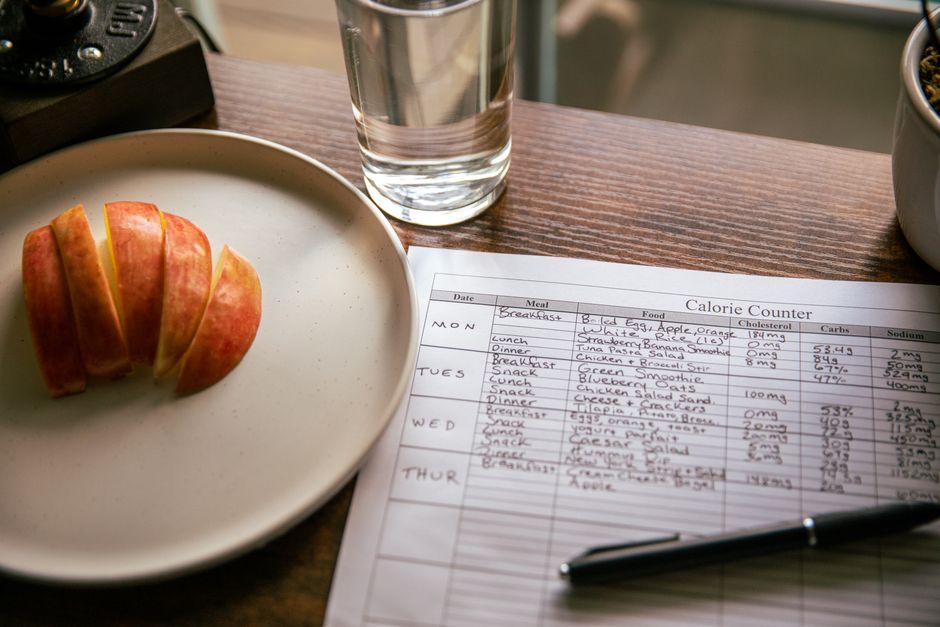
You don’t need a nutrition label to know how many calories you’re eating. You can calculate it using the same data that food manufacturers use. The most accurate method is weighing your food and using a calorie database. For foods with a known recipe, you can add up the calories of each ingredient. For whole foods like fruits and vegetables, reliable public data exists. The math is simple: calories equal the weight of the food multiplied by its calorie density per gram.
Why Do You Need To Know This?
Labels are not always available. You might be at a restaurant, eating at a friend’s house, or cooking from a recipe you wrote yourself. Packaged food labels can also be off by as much as 20 percent under FDA rules, so knowing how to do this yourself gives you more control.
Learning to estimate calories is a practical skill. It helps with weight management, meal planning, and understanding what you actually eat. It is not about being perfect. It is about being accurate enough to make informed decisions.
What Is A Calorie, Really?
A calorie is a unit of energy. In nutrition, we talk about kilocalories, but everyone calls them calories. One calorie is the energy needed to raise the temperature of one kilogram of water by one degree Celsius.
Your body gets this energy from three macronutrients. Carbohydrates and protein each provide 4 calories per gram. Fat provides 9 calories per gram. Alcohol provides 7 calories per gram. These numbers are the foundation of every calorie calculation you will do.
Fiber is a special case. It is a carbohydrate, but your body cannot fully digest it. Many databases subtract fiber calories from the total. This is why a food label might list 20 grams of carbs but only 15 grams of “net” digestible carbs.
The Basic Formula: Weight Times Density
The core calculation is simple. You need two pieces of information: the weight of the food and its calorie density. Calorie density is the number of calories per gram of food.
Here is an example. A cooked chicken breast has about 165 calories per 100 grams. That is a calorie density of 1.65. If you eat 150 grams of chicken, the math is 150 multiplied by 1.65, which equals 247 calories.
You can do this for any food. The challenge is knowing the calorie density. That is where databases come in. The USDA FoodData Central database is free and publicly available. It lists thousands of foods with their calorie content per 100 grams. You can also use reputable calorie tracking apps, which pull from the same data.





Weigh Your Food For Accuracy
A kitchen scale is the most reliable tool you can buy. It costs about $15 and takes the guesswork out of portions. Weighing in grams is easier than ounces because calorie databases use metric units.
Weigh food after cooking, not before. Meat loses water when cooked, so its weight changes. A raw chicken breast weighing 200 grams might weigh 150 grams after cooking. The calories stay the same, but the density changes. If you use a database entry for cooked chicken, weigh it cooked. If you use the raw entry, weigh it raw. Mixing them up will give you wrong numbers.
This is one of the most common mistakes people make. A database that lists “chicken breast, roasted” is for cooked meat. Using that entry with the raw weight of the meat will overestimate calories significantly.
How To Handle Recipes And Mixed Dishes
For a recipe, you calculate each ingredient separately. Weigh every ingredient before cooking. Look up the calories for each one. Add them all together. Then divide by the number of servings.
For example, a soup might have 200 grams of carrots, 300 grams of potatoes, and 500 grams of broth. Look up each ingredient, add the calories, and you have the total for the whole pot. If you eat one quarter of the pot, you get one quarter of the total calories.
This method works for any dish you cook at home. The more ingredients you weigh, the more accurate your final number. You do not need to weigh the finished dish. You just need to know what fraction of the total you ate.
Estimating Without A Scale
Sometimes you do not have a scale. You can still estimate using visual cues and hand measurements. These are less accurate, but they are better than nothing.
A palm-sized portion of meat is roughly the size of your palm, about 3 ounces cooked. A fist is about one cup. A thumb is about one tablespoon. These measurements are personal, so they vary with your body size. They are starting points, not precise measurements.
Restaurant portions are a common challenge. Many restaurants serve two to three times a standard portion. If you are estimating, assume the portion is larger than you think. Research consistently shows that people underestimate portion sizes, especially at restaurants.
Using Calorie Databases Correctly
The USDA FoodData Central database is the gold standard in the United States. It is free, searchable, and updated regularly. You can find raw and cooked foods, branded products, and generic entries.
Calorie tracking apps are convenient, but they have a problem. Anyone can add foods to their databases. This means some entries are wrong. A “banana” entry might be for a small banana, a large one, or something entirely different. Always check the serving size and weight listed in the entry. Compare it to what you actually have.
When in doubt, use the USDA entry. It is the most reliable source for whole foods. For packaged foods, the label is usually accurate enough, but the USDA database also has many branded products.
What About Fruits And Vegetables?
Fruits and vegetables are the easiest foods to calculate. They are whole foods with consistent calorie content. A medium apple has about 95 calories. A medium banana has about 105 calories. A cup of cooked broccoli has about 55 calories.
These are estimates because produce varies. A large apple has more calories than a small one. Weighing is the only way to be exact. But for most people, counting a medium apple as about 95 calories is accurate enough.
Be careful with preparation methods. A plain baked potato has about 160 calories. A loaded baked potato with butter, cheese, and sour cream can easily have 400 or more. The cooking method and added ingredients change the calorie count far more than the potato itself.
Why Labels Can Be Wrong
Food labels in the United States are allowed a 20 percent margin of error. This is a legal allowance, not a manufacturing flaw. It means a label that says 200 calories could actually be anywhere from 160 to 240 calories.
This matters for processed foods. A packaged snack might claim 100 calories per serving, but the actual number could be higher. If you are tracking calories closely, this margin of error can add up over a day.
The solution is not to obsess over exact numbers. It is to understand that all calorie counting has some uncertainty. Weighing your food and using reliable data gives you the most accurate estimate. But even the best estimate is still an estimate.
Common Mistakes To Avoid
- Mixing raw and cooked weights. Always match your weight to the database entry you are using.
- Forgetting cooking oils and sauces. A tablespoon of olive oil has about 120 calories. That is easy to forget and can add hundreds of calories to a meal.
- Using “per serving” without checking the serving size. A bag of chips might list 150 calories per serving, but the bag might contain three servings.
- Trusting app entries blindly. Check the weight and serving size listed in the app against what you actually ate.
- Ignoring drinks. Beverages can have significant calories. A large soda or sweetened coffee drink can contain 300 or more calories.
How To Calculate Calories In Food Without Labels Step By Step
Here is a simple process you can follow every time.
First, weigh your food in grams. Second, identify the food in a reliable database. Third, note the calories per 100 grams. Fourth, multiply the weight by the calories per 100 grams, then divide by 100.
For example, if the database says cooked rice has 130 calories per 100 grams, and you weighed out 200 grams, the math is 200 times 130 divided by 100, which equals 260 calories.
For recipes, repeat this for each ingredient and add the totals. Then divide by the number of servings you ate. This is the same math used by nutrition professionals, and it works for any food you can weigh.
Frequently Asked Questions
How accurate is weighing food for calories?
Weighing food is the most accurate method available without laboratory analysis. It is accurate to within a few percent when you use a reliable calorie database and match raw or cooked weights correctly.
Can I count calories without a food scale?
Yes, but with less accuracy. Using hand measurements and visual estimates can get you in the right range, but you will likely be off by 20 to 30 percent or more on some foods.
Are calorie labels on packaged foods accurate?
Labels are legally allowed a 20 percent margin of error in the United States. The actual calorie content can be higher or lower than what the label states, so weighing and calculating yourself is often more accurate.
What is the easiest way to calculate calories for a homemade recipe?
Weigh every ingredient before cooking, look up the calories for each, add them all together, and divide by the number of servings. This gives you a reliable per-serving calorie count.
