
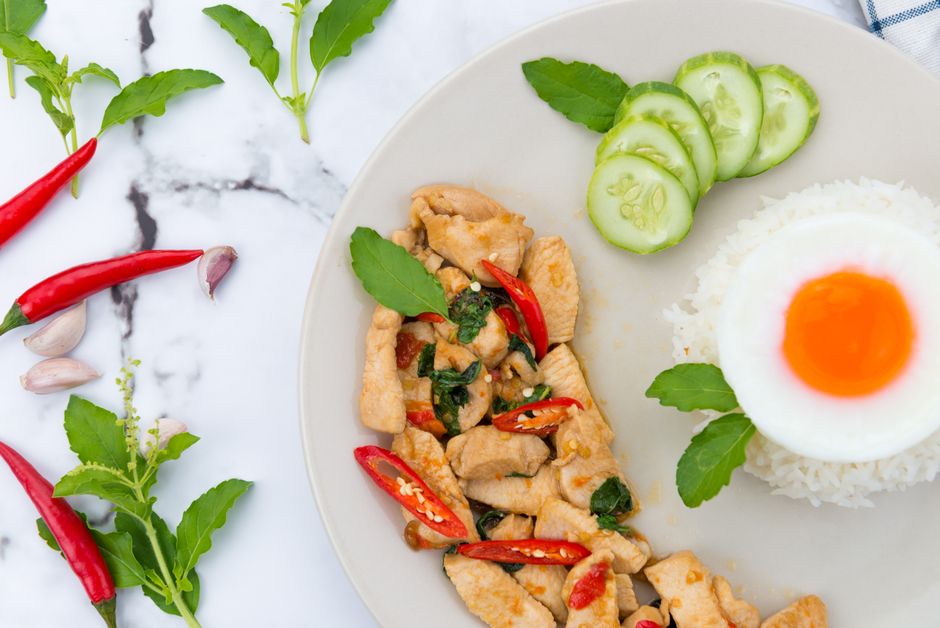
Thai food can be high in calories, but it does not have to be. The calorie count depends almost entirely on the dish you choose and how it is prepared. Coconut milk, sugar, and fried ingredients push calories up quickly. Dishes like Pad Thai and Massaman Curry can pack 700 to 1,100 calories per serving, while broth-based soups like Tom Yum and grilled dishes like Gai Yang often stay under 400 calories. The difference is not about Thai food as a whole—it is about specific dishes and portions.
Why Some Thai Dishes Are High In Calories
The main calorie drivers in Thai cooking are coconut milk, palm sugar, and oil. Coconut milk is a staple in many curries and is very energy-dense. A single cup of canned coconut milk contains roughly 450 calories, most of it from saturated fat.
Fried items also add up fast. Many Thai appetizers and stir-fries start with deep-fried or heavily oiled ingredients. Noodles and rice absorb oil during cooking, which raises the calorie count without changing the portion size. Palm sugar and fish sauce add flavor but also add sugar and sodium.
Portion size matters more than most people realize. Many restaurant servings are double what a standard portion should be. A dish that looks reasonable on the plate can easily deliver 800 calories before you add rice or a side dish.
Is Thai Food High In Calories Dishes Ranked
If you want to know exactly where your meal falls, here is a practical ranking based on typical restaurant servings. These are estimates, not exact numbers, because recipes vary widely between restaurants.
| Dish | Typical Calories Per Serving | Main Calorie Source |
|---|---|---|
| Massaman Curry | 900–1,100 | Coconut milk, peanuts, potatoes, oil |
| Pad Thai | 700–1,000 | Noodles, oil, sugar, peanuts |
| Panang Curry | 650–850 | Coconut milk, meat, oil |
| Red or Green Curry | 600–800 | Coconut milk, meat, oil |
| Pad See Ew | 650–900 | Wide noodles, oil, egg |
| Drunken Noodles (Pad Kee Mao) | 600–850 | Noodles, oil, basil, sometimes sugar |
| Thai Fried Rice | 550–750 | Rice, oil, egg, sometimes meat |
| Tom Yum Soup (with shrimp) | 250–350 | Shrimp, small amount of oil, chili paste |
| Gai Yang (grilled chicken) | 300–400 | Chicken, marinade |
| Som Tum (green papaya salad) | 150–250 | Dressing, peanuts, dried shrimp |
| Larb (minced meat salad) | 200–350 | Ground meat, toasted rice powder, lime |
The pattern is clear. Coconut milk curries and oil-heavy noodle dishes are the highest in calories. Grilled meats, soups, and salads are much lighter. This ranking reflects typical restaurant preparation. Homemade versions often use less oil and sugar, which can lower the calorie count significantly.
What Makes Pad Thai So Calorie-Dense
Pad Thai is often considered a healthier takeout option, but it is one of the most calorie-heavy Thai dishes. The noodles themselves are not the main problem. The issue is how they are cooked.
Pad Thai is typically stir-fried with a generous amount of oil. Restaurants often use two to three tablespoons of oil per serving, which adds 240 to 360 calories before anything else. Then comes palm sugar, which is added to balance the sour, salty, and spicy flavors. A typical serving can contain two to three tablespoons of sugar, adding another 100 to 150 calories.
Peanuts, egg, and sometimes tofu or meat add protein but also more calories. The final dish often lands between 700 and 1,000 calories. That is a full meal for many people, not a light lunch.
Ordering Pad Thai with extra vegetables and asking for less oil and sugar can reduce the calorie count, but you are still eating a calorie-dense dish. If you are watching calories, this is not the best choice on a Thai menu.





Coconut Milk Curries Are The Highest-Calorie Option
Thai curries rely heavily on coconut milk for their creamy texture and rich flavor. That creaminess comes at a cost. Coconut milk is roughly 15 to 20 percent fat by weight, and most of that fat is saturated.
Massaman Curry is the most calorie-dense because it also contains potatoes and peanuts. These add carbohydrates and additional fat on top of the coconut milk base. A restaurant serving of Massaman Curry with rice can easily exceed 1,000 calories.
Green, red, and Panang curries are slightly lighter but still high. A typical bowl of green curry with chicken and rice ranges from 600 to 800 calories. The meat itself is not the issue—the coconut milk and oil are.
If you want curry but want fewer calories, choose a broth-based soup instead. Tom Yum has the same aromatic herbs and chili heat as curry but uses a clear broth instead of coconut milk. The calorie difference is substantial.
Lighter Thai Dishes That Are Lower In Calories
Thai cuisine includes many dishes that are naturally low in calories. The key is choosing dishes that are grilled, steamed, or broth-based rather than fried or coconut-heavy.
Grilled chicken (Gai Yang) is marinated in garlic, pepper, and coriander root, then grilled over open flame. A serving is roughly 300 to 400 calories. It is often served with a spicy dipping sauce, which adds minimal calories.
Larb is a minced meat salad seasoned with lime juice, fish sauce, chili, and toasted rice powder. It is high in protein and relatively low in calories. A serving of chicken or pork larb is about 200 to 350 calories.
Som Tum, or green papaya salad, is shredded unripe papaya mixed with tomatoes, green beans, lime, fish sauce, and chili. It is crunchy, refreshing, and low in calories—around 150 to 250 per serving. The main calorie contributors are the peanuts and a small amount of palm sugar in the dressing.
Tom Yum soup is another excellent choice. The broth is flavored with lemongrass, galangal, kaffir lime leaves, and chili. Shrimp adds protein without many calories. A bowl is typically 250 to 350 calories.
Steamed rice is not the problem. A cup of steamed jasmine rice is about 180 to 200 calories. The problem is when rice is fried or served alongside an already calorie-dense main dish.
How To Order Lower-Calorie Thai Food At A Restaurant
You can eat Thai food and keep calories in check. The strategy is simple: choose the right dishes and make specific requests.
Ask for less oil and less sugar. Most Thai restaurants cook to order, and they will accommodate these requests. Saying “less oil, less sugar, extra vegetables” is usually enough. Some restaurants will also make curries with light coconut milk if you ask.
Skip the fried appetizers. Spring rolls, crab rangoon, and fried wontons add 200 to 400 calories before your main course. Start with Tom Yum soup or Som Tum instead.
Order broth-based soups and grilled dishes as your main. These are the lowest-calorie options on the menu. Pad Thai and curries are treats, not everyday meals, if you are watching your weight.
Be careful with portions. Restaurant servings are often double what you need. Consider sharing a dish or taking half home. A single Pad Thai order can easily feed two people if you add a side of vegetables.
Watch the rice. A large serving of jasmine rice adds 300 or more calories. Ask for a small portion or skip it entirely if your main dish is already substantial.
Is Thai Food Healthier Than Other Takeout Options
Thai food can be healthier than many other takeout cuisines, but only if you choose wisely. The cuisine uses fresh herbs, vegetables, and lean proteins. Lemongrass, galangal, and chili provide flavor without extra calories.
Compared to American fast food, Thai food generally has more vegetables and less processed meat. Compared to Chinese takeout, Thai food often uses less heavy sauce and fewer fried items. But compared to a home-cooked meal with grilled chicken and steamed vegetables, Thai food is not automatically healthier.
The healthiest approach is to treat Thai food like any other cuisine. Some dishes are excellent choices. Others are calorie bombs. The cuisine itself is not inherently high or low in calories—the specific dish and how it is prepared determine the outcome.
Frequently Asked Questions
Is Pad Thai high in calories?
Yes, Pad Thai is typically 700 to 1,000 calories per restaurant serving because it is stir-fried with oil and sweetened with palm sugar. Asking for less oil and sugar can lower the count, but it remains a calorie-dense dish.
What is the lowest calorie Thai dish?
Som Tum (green papaya salad) is among the lowest at 150 to 250 calories per serving. Tom Yum soup and larb are also good low-calorie options.
Is Thai food good for weight loss?
Some Thai dishes support weight loss, but others do not. Broth-based soups, grilled meats, and salads are low in calories, while coconut milk curries and fried noodles are not. The cuisine can fit into a weight-loss plan if you choose dishes carefully.
Why is Thai food so high in calories?
Coconut milk, palm sugar, and cooking oil are the main calorie sources in Thai food. These ingredients are used generously in curries and stir-fried noodle dishes, which drives up the calorie count.
