
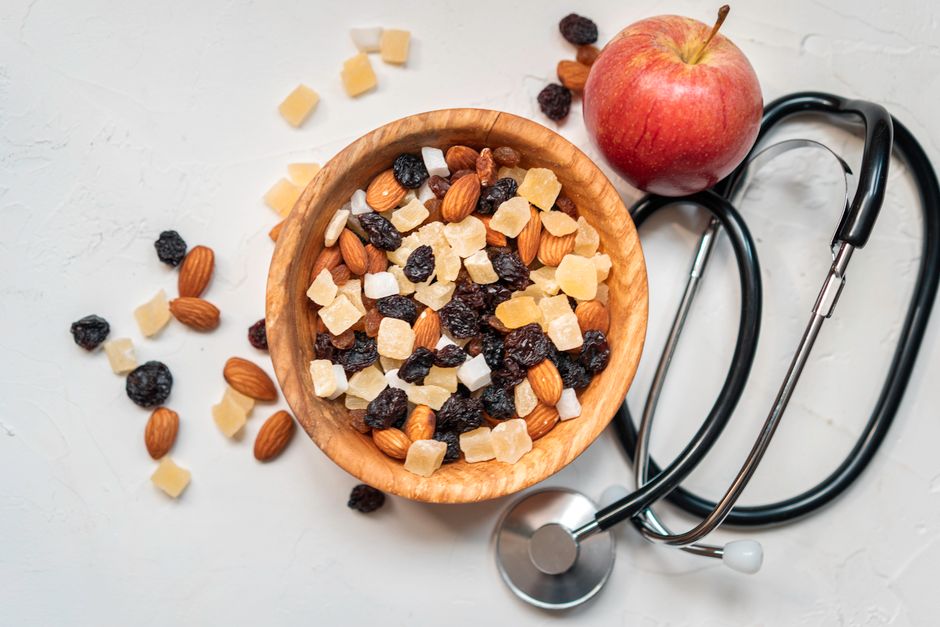
Freeze-dried food does not inherently have fewer calories than its fresh counterpart. The calorie count stays essentially the same because freeze-drying only removes water, not calories, fat, protein, or carbohydrates. What changes is the weight and volume — a freeze-dried strawberry weighs far less than a fresh one, but if you rehydrate it and eat the same amount of original food, you consume the same number of calories.
What Happens During Freeze-Drying?
Freeze-drying works in three stages. First, the food is frozen solid. Then it goes into a vacuum chamber where the pressure drops. Finally, gentle heat causes the ice to turn directly into vapor without ever becoming liquid water — a process called sublimation.
The result is food that keeps its shape, color, and most of its nutrients, but loses about 95 to 99 percent of its water content. That water loss is why freeze-dried food is so light and shelf-stable. It is also the reason people sometimes assume the food has fewer calories. It does not. The calories are concentrated into a smaller, lighter package.
Why Freeze-Dried Food Seems Lower in Calories
If you compare weights, freeze-dried food appears to have more calories, not fewer. A 30-gram serving of fresh strawberries has about 10 calories. A 30-gram serving of freeze-dried strawberries has roughly 110 calories. That is because 30 grams of freeze-dried fruit contains far more actual fruit than 30 grams of fresh fruit.
The confusion works the other way too. People see a small bag of freeze-dried fruit and assume it is a light snack. But that small bag may contain the equivalent of several servings of fresh fruit. The calories are dense because the water is gone. Portion control becomes more important, not less.
Does Freeze-Drying Change the Nutritional Value?
Freeze-drying preserves nutrients better than most other preservation methods. Heat-based methods like canning or dehydrating can destroy heat-sensitive vitamins. Freeze-drying uses low temperatures, so vitamin C and B vitamins survive better than they do with traditional drying.
Some nutrient loss still occurs. Research suggests freeze-dried foods retain most of their vitamins and minerals, but levels can decline during storage. Over months or years, vitamin C and some antioxidants gradually break down. The longer the food sits on a shelf, the more nutrients it loses.
Fiber, protein, fat, and carbohydrates remain largely unchanged. These are structural components of the food, not fragile vitamins. Freeze-drying does not alter the macronutrient profile in any meaningful way.





Are Freeze-Dried Snacks Healthier Than Chips or Candy?
Freeze-dried fruit snacks are often marketed as a healthy alternative to chips and candy. In some ways, that is fair. They contain no added sugar, no artificial flavors, and no preservatives. They keep the fiber and antioxidants of the original fruit.
But they are not calorie-free, and they are easy to overeat. A single-serve pouch of freeze-dried mango can contain the equivalent of two or three whole mangoes. People rarely eat two or three fresh mangoes in one sitting, but they will finish a small pouch without thinking about it.
The same logic applies to freeze-dried vegetables. A cup of fresh green beans has about 30 calories. A cup of freeze-dried green beans has close to 150 calories because it contains several times more bean material. The vegetable is still healthy. The calorie density is just higher.
Does Freeze-Dried Food Help With Weight Loss?
Freeze-dried food can support weight loss, but not because it has fewer calories. It can help because it is lightweight, portable, and shelf-stable. People who plan meals ahead — like hikers or busy professionals — may find it easier to control portions when they use pre-measured freeze-dried meals.
Some freeze-dried meal companies design products specifically for calorie control. These meals list exact calorie counts on the package, which makes tracking intake straightforward. But the same calorie math applies: a 400-calorie freeze-dried meal is still 400 calories once rehydrated.
There is no metabolic advantage to eating freeze-dried food. Your body digests it the same way it digests fresh food. The only real difference is water content, and water has zero calories.
Freeze-Dried vs. Dehydrated: Is There a Calorie Difference?
Freeze-dried and dehydrated foods are often confused, but they are different processes. Dehydrating uses heat to remove water over several hours. Freeze-drying uses cold and vacuum pressure. Both remove water, and neither removes calories.
The calorie difference between freeze-dried and dehydrated versions of the same food is negligible. If anything, dehydrated food can sometimes have slightly more calories per gram because it retains a tiny bit less moisture. But the difference is so small it does not matter in practical terms.
What matters more is what is added during processing. Some dehydrated fruits are coated in sugar or sulfur dioxide. Some freeze-dried snacks have added flavorings or salt. Always check the ingredient list. Added ingredients change the calorie count, not the preservation method itself.
How to Read Nutrition Labels on Freeze-Dried Food
Nutrition labels on freeze-dried food can be confusing because serving sizes are listed by weight. A label might say one serving is 40 grams. That 40 grams is dry weight. Once rehydrated, it becomes much heavier — sometimes three or four times heavier — but the calorie count stays the same.
The key is to compare calorie counts per serving, not per gram. A 40-gram serving of freeze-dried corn has about 150 calories. A 40-gram serving of fresh corn has about 40 calories. Both are one serving of corn, but the freeze-dried version is much more concentrated.
If you are tracking calories, weigh or measure your freeze-dried portions before eating. Do not assume a small bag equals one serving. Many snack pouches contain two or three servings even though they look like a single portion.
Practical Tips for Using Freeze-Dried Food
- Rehydrate freeze-dried food according to package instructions if you want to eat it as a meal. The calories do not change when you add water.
- Eat freeze-dried fruit as a snack, but treat it like a concentrated food. A handful is often enough.
- Use freeze-dried ingredients in cooking — they work well in soups, oatmeal, and baked goods. Just account for the calories in your recipe.
- Store freeze-dried food in a cool, dark place to slow nutrient loss over time.
- Check the ingredient list for added sugar, salt, or oil. These additions change the calorie content.
Freeze-dried food is a convenient, nutritious option. It is not a calorie-free option, and it is not a magic tool for weight loss. It is simply food with the water removed. Treat it like any other food: pay attention to portions, read labels, and eat it as part of a balanced diet.
Frequently Asked Questions
Does freeze-dried fruit have more calories than fresh fruit?
Yes, by weight. A 30-gram serving of freeze-dried fruit has more calories than 30 grams of fresh fruit because it contains more actual fruit per gram. If you compare equal amounts of the original food, the calories are the same.
Is freeze-dried food good for weight loss?
It can be, because it is portable and easy to portion. But freeze-dried food does not burn more calories or suppress appetite on its own. Weight loss still depends on total calorie intake.
Does rehydrating freeze-dried food add calories?
No. Water has no calories. Rehydrating food with plain water changes the weight and texture but does not change the calorie content.
Is freeze-dried food healthier than dehydrated food?
Freeze-dried food generally retains more vitamins because it uses lower temperatures. In terms of calories, there is no meaningful difference between the two methods.
