
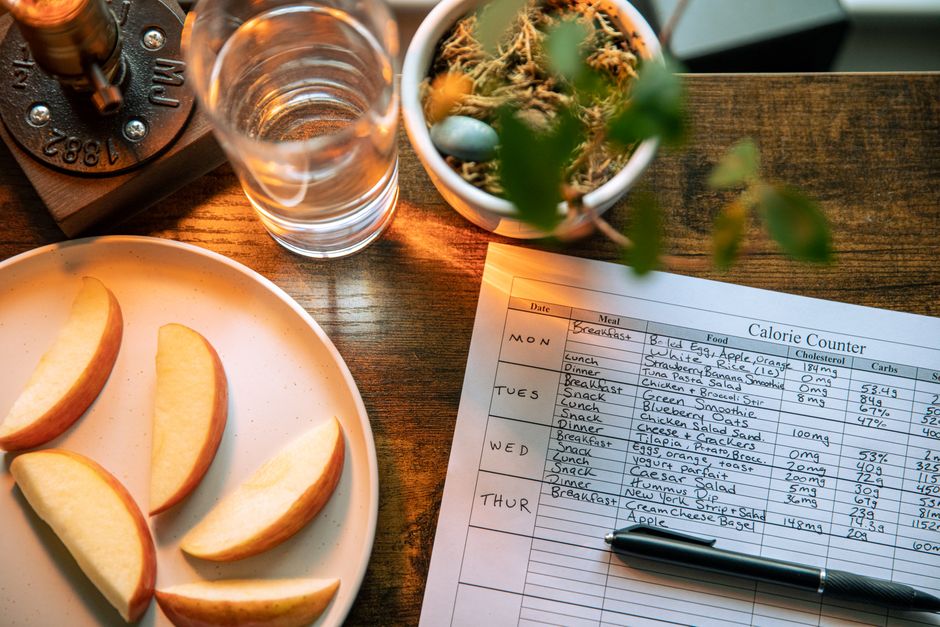
To calculate calories in homemade food, you weigh each ingredient using a kitchen scale, record the amount, and multiply it by the calorie density from a trusted database like the USDA FoodData Central. Then you add all the ingredient calories together and divide by the number of servings the dish makes. This gives you the calories per portion. It is the same math used by packaged food manufacturers, just done at home with real ingredients.
Most people skip this step because it takes a few extra minutes during cooking. But without it, you are guessing. And guessing is where most people lose track of their actual intake. If you have ever wondered why your homemade chili seems to have more calories than you expected, this is likely the reason.
What Is the Most Accurate Way To Calculate Calories In Homemade Food?
The most accurate method is the weight-based method. You weigh every ingredient in grams before cooking. Then you look up the calorie value per gram for each item. Multiply weight by calorie density. Add everything up. Divide by the number of servings.
Volume measurements like cups and tablespoons are less accurate. A cup of flour can vary by 20% or more depending on how tightly it is packed. A kitchen scale removes that guesswork. The USDA FoodData Central is the best free database for accurate calorie values because it is government-run and regularly updated.
For example, 100 grams of cooked chicken breast has about 165 calories according to USDA data. If you use 150 grams, you multiply 1.5 by 165 and get 247.5 calories. Do this for every ingredient and total them. That is your dish total.
This method works for everything from soups to casseroles to baked goods. The only exception is deep-fried foods where oil absorption varies wildly. Even then, weighing the oil you add gives a reasonable estimate.
How Do You Handle Cooking Oil and Fats in Homemade Food?
Cooking oil is the most commonly underestimated ingredient in homemade food. One tablespoon of olive oil has about 119 calories. If you pour oil straight from the bottle into a pan, you can easily use two to three times that without noticing. Weigh the bottle before and after pouring to know exactly how much oil you used.
Butter and ghee are similar. A tablespoon of butter has about 102 calories. If you sauté vegetables in butter, those calories count toward the final dish. Many people forget to add oil to their calorie calculations because they think of it as a cooking tool rather than an ingredient. It is an ingredient.
One trick that helps is to log the oil or fat first before you start cooking. Open your tracking app or notebook and enter the oil weight immediately. Do not wait until after the meal. You will forget the exact amount by then.
For pan-frying, you can estimate that about half the oil is absorbed by the food and half stays in the pan. But the safest approach is to count all the oil you add. This overestimates slightly but is better than underestimating by a large margin.
Should You Weigh Food Before or After Cooking?
Weigh ingredients before cooking whenever possible. Water evaporates during cooking. Meat loses moisture. Vegetables shrink. Pasta absorbs water. These changes mean the weight after cooking is different from the weight before cooking, and the calorie density changes.
For example, 100 grams of raw chicken breast has about 165 calories. After cooking, that same piece might weigh 75 grams but still has 165 calories. If you weigh it after cooking and look up the raw value, you will underestimate calories by about 25 percent.
Some foods like rice and pasta double or triple in weight when cooked. A cup of cooked rice has fewer calories than a cup of uncooked rice because the uncooked rice absorbed water. Always use the raw weight and the raw calorie value from your database.
If you must weigh after cooking because you are meal prepping, use the cooked weight and look up the cooked calorie value in your database. The USDA FoodData Central provides values for both raw and cooked forms of most foods.





What Tools Do You Need To Calculate Calories In Homemade Food?
You need three things: a kitchen scale, a calorie database, and a way to record your totals. A digital kitchen scale that measures in grams costs around 15 to 30 dollars. Do not buy one that only measures in ounces. Grams give you more precision.
For the calorie database, the USDA FoodData Central is free and reliable. No app subscription required. You can access it through a web browser on your phone. If you prefer an app, MyFitnessPal and Cronometer both use USDA data as their base. Cronometer tends to be more accurate because it has fewer user-submitted entries.
A simple notebook works for recording totals. Or use the notes app on your phone. The key is consistency, not complexity. You do not need a fancy system. You need a system you will actually use.
| Tool | Purpose | Cost |
|---|---|---|
| Digital kitchen scale | Weigh ingredients in grams | $15–$30 |
| USDA FoodData Central | Calorie values per gram | Free |
| Notebook or app | Record totals and servings | Free |
Measuring cups and spoons are optional. They are less accurate but better than nothing. If you do not have a scale yet, use level measurements and be consistent. Upgrade to a scale as soon as you can.
How Do You Calculate Calories Per Serving for a Large Batch?
For a large batch like soup, stew, or casserole, you first calculate the total calories for the entire dish. Then you weigh the finished dish in grams. Divide the total calories by the total weight. That gives you the calories per gram. Then multiply by the weight of your portion.
For example, your chili has 2,500 total calories. The finished chili weighs 1,200 grams. That is about 2.08 calories per gram. If you eat 300 grams of chili, you get 624 calories. This method works for any recipe where the ingredients are mixed together.
If you cannot weigh the finished dish because it is in a heavy pot, weigh the pot empty first. Then weigh the pot with the food. Subtract the pot weight. That gives you the food weight. This is the most accurate way to handle large batches.
Dividing by number of servings is less accurate because servings are rarely equal. One bowl might be 20 percent larger than another. Weighing each portion removes that error. It takes 10 extra seconds per meal.
What Are Common Mistakes When Calculating Calories In Homemade Food?
The biggest mistake is forgetting ingredients. Oil, butter, cream, cheese, nuts, seeds, and dressings are often left out. These are calorie-dense. Forgetting them can underestimate your meal by 200 to 500 calories.
Another mistake is using volume measurements instead of weight. A cup of shredded cheese can vary by 30 percent depending on how tightly it is packed. A cup of flour can vary by 20 percent. Weighing eliminates this.
- Forgetting cooking oil or butter
- Using cups instead of grams
- Weighing food after cooking and using raw calorie values
- Not accounting for taste-testing while cooking
- Assuming restaurant-style recipes have the same calories as homemade
Taste-testing is a hidden source of extra calories. A pinch of this, a nibble of that. Over a whole cooking session, it can add 100 to 200 calories. If you are tracking strictly, log those bites too. Or accept that your calculation is off by that amount.
Some people also assume that homemade food is automatically lower in calories than restaurant food. That is not always true. A homemade pasta dish with cream sauce and cheese can be just as calorie-dense as a restaurant version. The only difference is you control the ingredients.
Frequently Asked Questions
How do I calculate calories in a recipe with no nutrition label?
Weigh each ingredient in grams. Look up the calorie value per gram using the USDA FoodData Central. Multiply weight by calorie density for each item. Add all totals together and divide by the number of servings.
Is it better to weigh food raw or cooked for calories?
Weigh food raw before cooking whenever possible. Cooking changes weight due to water loss or gain. Using raw weight with raw calorie values gives the most accurate result.
Can I use a phone app to calculate homemade food calories?
Yes. Apps like Cronometer and MyFitnessPal use USDA data. Weigh your ingredients and enter them into the app. The app calculates the total and per-serving calories for you.
How do I count calories in a soup or stew with multiple ingredients?
Weigh every ingredient raw. Calculate total calories for the whole batch. Weigh the finished soup in grams. Divide total calories by total weight to get calories per gram. Multiply by your portion weight.
