
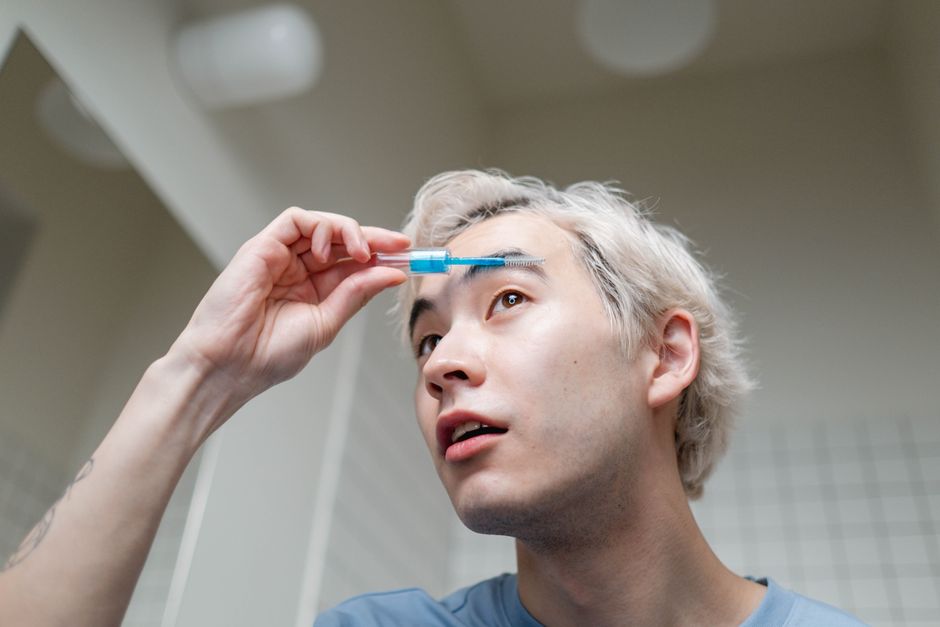
If you pluck or wax an eyebrow hair, it usually grows back in a few weeks. If the loss comes from a medical cause, scarring, or repeated trauma to the follicle, regrowth can take months or may not happen at all. The speed depends almost entirely on why the hair fell out and whether the follicle itself is still healthy.
Eyebrow hair grows more slowly than scalp hair. Each follicle cycles through growth, rest, and shedding phases on its own schedule. Understanding that cycle explains why some hairs return quickly and others seem to disappear for good.
How Fast Does Eyebrow Hair Actually Grow Back?
Eyebrow hair grows at roughly half the speed of scalp hair. Scalp hair grows about half an inch per month, while eyebrow hairs grow considerably slower and only reach a fraction of that length before the growth phase ends. A single eyebrow hair’s growth phase lasts a few months, not years like scalp hair.
After plucking, a new hair typically emerges within two to four weeks. Full visible regrowth to the previous length often takes longer — commonly six to eight weeks. That estimate applies to a healthy follicle that was removed cleanly.
Waxing or threading removes hair at or near the surface. Plucking pulls the entire hair shaft out of the follicle, including the root. Both allow regrowth, but plucking can take slightly longer because the follicle needs to rebuild a full shaft from the base.
The most important variable is the follicle. As long as the follicle is intact and the growth cycle resumes normally, the hair returns. If the follicle has been destroyed or permanently damaged, no amount of time will bring it back.
What Causes Eyebrow Hair Loss?
Eyebrow hair loss has several distinct causes, and they do not all behave the same way. Some are temporary and self-correcting. Others are progressive and may be permanent.
Common causes include:
- Over-plucking or over-waxing — repeated trauma can damage follicles over time
- Normal aging — eyebrow hair thins naturally with age in many people
- Nutritional deficiencies — low iron, low zinc, or thyroid problems can affect hair growth
- Alopecia areata — an autoimmune condition that can target eyebrow hair
- Frontal fibrosing alopecia — a scarring form of hair loss that can permanently destroy follicles
- Chemotherapy and certain medications — often cause temporary loss
- Skin conditions — eczema, psoriasis, or infections in the brow area
- Hormonal changes — including thyroid disorders and menopause
Two of these deserve special attention because they look similar but behave very differently. Alopecia areata is not scarring. The follicle stays alive, and hair can regrow, sometimes on its own. Frontal fibrosing alopecia is scarring. The follicle is progressively destroyed, and lost hair typically does not return.
That distinction matters enormously for anyone trying to predict regrowth. A doctor can usually tell the difference through examination and sometimes a small skin biopsy.
Does Plucking Make Eyebrow Hair Stop Growing Back?
Occasional plucking does not permanently stop hair growth. The follicle remains intact, and the hair returns. But repeated plucking over many years can gradually damage the follicle, and some hairs may eventually stop returning.
This is why people who over-plucked their brows in their teens and twenties sometimes find those hairs never came back. The damage is cumulative, not immediate. There is no fixed number of plucks that triggers permanent loss — it varies by person and by follicle.
Traction, the constant pulling of hair, can cause a similar pattern. It is well documented on the scalp in people who wear tight hairstyles. The same principle applies to eyebrows subjected to years of aggressive grooming.
The practical takeaway: if you want your brows to keep growing back, go easy on them. Give follicles time to recover between sessions.




How Long Does Regrowth Take After Different Causes?
Timelines vary widely depending on the underlying cause. The table below reflects general patterns, not guarantees. Individual results differ.
| Cause | Typical Regrowth Timeline | Permanent Loss Possible? |
|---|---|---|
| Plucking or waxing | 2–8 weeks | Only with years of repeated trauma |
| Nutritional deficiency | Several months after correcting the deficiency | No, if treated |
| Thyroid disorder | Months after hormone levels normalize | No, if treated |
| Alopecia areata | Unpredictable — can regrow spontaneously or not | Usually not, but can be persistent |
| Frontal fibrosing alopecia | Lost hair typically does not return | Yes |
| Chemotherapy | Usually regrows within months after treatment ends | Rarely |
A key point about this table: timelines for medical causes assume the underlying condition is being treated. If a thyroid problem goes unaddressed, hair may not return regardless of how much time passes.
Also worth noting — eyebrow hair often regrows more slowly than scalp hair after chemotherapy. Some people see scalp hair return first, with brows and lashes following weeks or months later.
Can You Speed Up Eyebrow Hair Growth?
No product has been proven to make eyebrow hair grow faster in a healthy person. The hair growth cycle runs on its own timeline, and nothing reliably accelerates it.
That said, some approaches have evidence for supporting growth in specific situations:
Bimatoprost is a prescription medication approved by the FDA for treating inadequate eyelashes. It is sometimes used off-label on eyebrows. Some studies suggest it can increase hair growth in that area, but it is not FDA-approved for eyebrows, and it requires a prescription. It can also cause side effects like skin darkening and eye irritation.
Minoxidil, available over the counter for scalp hair loss, is sometimes applied to eyebrows. The evidence for eyebrow use is limited. No large human trials have confirmed it works reliably for this purpose.
Latisse and similar products contain bimatoprost and carry the same caveats — effective for some, not approved for eyebrow use, and not without risks.
What about biotin, collagen, or “eyebrow growth serums”? Most of these have no clinical evidence supporting eyebrow regrowth. Biotin supplements are widely marketed for hair, skin, and nails, but research has not shown they help unless a person has an actual biotin deficiency, which is uncommon.
If you have a nutritional deficiency, correcting it can help. If you do not, adding supplements is unlikely to change anything.
When Should You See a Doctor About Eyebrow Hair Loss?
See a doctor if eyebrow hair loss is sudden, patchy, or accompanied by other symptoms. Also see one if the loss continues despite stopping all plucking and waxing.
Warning signs that warrant medical attention:
- Loss of hair in patches on the eyebrows or elsewhere on the body
- Redness, scaling, itching, or pain in the brow area
- Loss of the outer third of the eyebrows, which can be associated with thyroid disease
- Hair loss that continues for months without explanation
- Signs of a scarring condition, such as shiny, smooth skin where hair used to be
The “outer third” pattern is worth knowing about. Thinning of the outer eyebrows has historically been linked to an underactive thyroid, though it is not a definitive sign on its own. Many people without thyroid disease have naturally sparse outer brows.
A doctor can check for thyroid problems, nutritional deficiencies, and autoimmune conditions with blood tests. If a scarring condition is suspected, a biopsy may be needed. Early treatment matters most for scarring alopecia, because once a follicle is destroyed, it cannot be replaced.
What About Microblading and Other Cosmetic Options?
If eyebrow hair does not grow back, cosmetic options can fill in the look. Microblading, tattooing, and eyebrow extensions are all used for this purpose. They do not restore hair, but they can create the appearance of fuller brows.
Microblading is a form of semi-permanent tattooing. Results typically last one to three years before fading. It carries some risk of infection, allergic reaction, and scarring, especially if done by an inexperienced technician.
Eyebrow extensions involve attaching synthetic or natural hairs to existing brow hair. They are temporary and require maintenance. They also put some tension on the natural follicles, which is worth considering if you are trying to preserve the hair you have.
These options are cosmetic, not medical. They do not treat the underlying cause of hair loss. If you have a medical condition causing brow loss, you still need to address that separately.
What Should You Realistically Expect?
For most people, eyebrow hair grows back after plucking or waxing. Two to eight weeks is a reasonable expectation for visible regrowth. Full return to previous density may take longer.
If the loss has a medical cause, the timeline depends on treating that cause. Some conditions allow full regrowth. Others, particularly scarring alopecias, can cause permanent loss.
There is no reliable way to speed up eyebrow hair growth in a healthy person. Products marketed for this purpose mostly lack evidence. The best thing you can do is avoid further trauma to the area and see a doctor if the loss is unexplained or persistent.
Frequently Asked Questions
How long does it take for eyebrow hair to grow back after plucking?
Most people see new growth within two to four weeks, with fuller regrowth taking six to eight weeks. The exact timeline depends on your individual hair growth cycle and how much trauma the follicle experienced.
Can eyebrow hair stop growing back permanently?
Yes, repeated plucking or waxing over many years can damage follicles enough that some hairs never return. Scarring conditions like frontal fibrosing alopecia can also cause permanent loss.
Does biotin help eyebrow hair grow back?
Biotin only helps if you have a biotin deficiency, which is uncommon. No strong evidence supports biotin supplements for eyebrow regrowth in people who are not deficient.
When should I worry about eyebrow hair loss?
See a doctor if the loss is sudden, patchy, or continues for months without a clear cause. Also seek care if you notice redness, scaling, or smooth shiny skin where hair used to be.
