
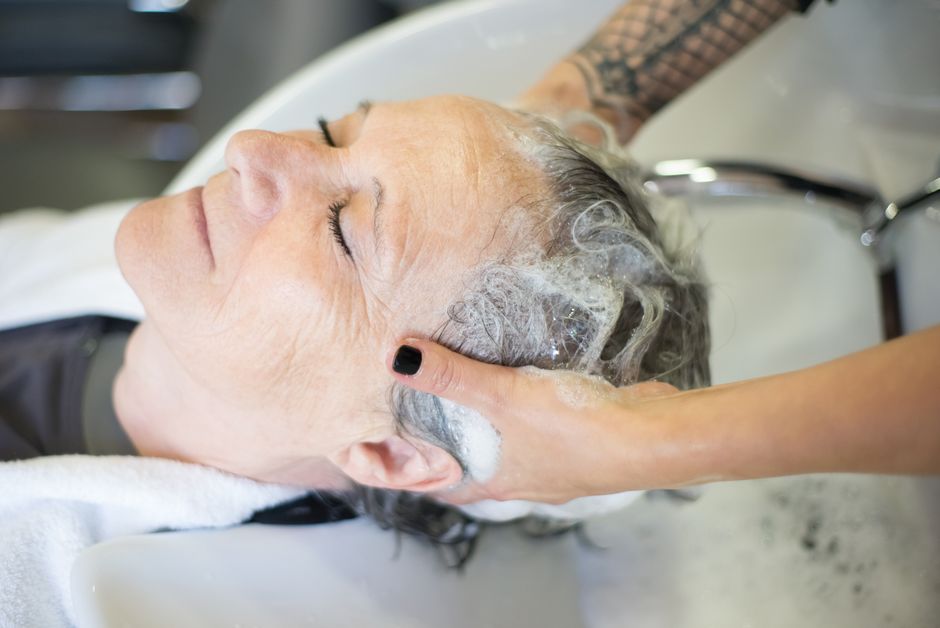
Many women notice their hair thinning during menopause and worry it will never come back. The short answer is yes, some hair loss from menopause can grow back, but it depends on the cause, how long it has been happening, and what you do about it. Hair loss during menopause is usually linked to hormonal shifts, particularly the drop in estrogen. This type of shedding is often temporary, but the regrowth may be slower and finer than before. This article explains what the research actually says, what treatments have real evidence behind them, and what is likely a waste of your time and money.
What Causes Hair Loss During Menopause?
Hormones are the main driver. Estrogen and progesterone levels fall during menopause. These hormones help keep hair in its growing phase for longer. When they drop, more hair follicles enter the resting phase, and hair falls out sooner than it used to. Testosterone, which is still present, can then have a stronger effect. This can shrink hair follicles, especially on the top of the scalp.
This is not the same as male pattern baldness, but it looks similar. The American Academy of Dermatology explains that female pattern hair loss usually involves thinning along the top of the scalp, not a receding hairline. Stress also plays a role. The physical stress of menopause itself, along with life changes common at this age, can trigger a type of shedding called telogen effluvium. This condition causes sudden hair loss about three months after a stressful event. It is usually temporary.
Genetics matter too. If your mother or grandmother had thinning hair after menopause, you are more likely to as well. There is no single cause. It is usually a combination of hormones, genetics, aging, and stress.
Will Hair Loss from Menopause Grow Back Naturally?
For some women, yes. If the hair loss is caused by telogen effluvium from stress or a temporary hormone imbalance, it often grows back once the trigger is removed. This can take six to twelve months. The hair that grows back may be thinner or have a different texture. That is normal.
For female pattern hair loss, the picture is less hopeful. This condition is progressive. Without treatment, it typically continues to worsen over time. Research published in the Journal of the American Academy of Dermatology found that about 40 percent of women over 50 have some degree of hair thinning. For these women, natural regrowth without any intervention is unlikely. The hair follicles shrink gradually, and once they are gone, they do not come back.
The key difference is timing. If you are shedding more hair than usual but still have good coverage, the chances of regrowth are higher. If you have visible thinning that has been the same or worse for several years, regrowth without treatment is less likely.
What Treatments Have Real Evidence for Regrowth?
Several treatments have solid research behind them. They do not work for everyone, but they are the best options currently available.
| Treatment | What It Does | Evidence Level |
|---|---|---|
| Minoxidil (Rogaine) | Stimulates hair follicles and extends the growing phase | Strong — FDA-approved for women |
| Low-level laser therapy | Increases blood flow to the scalp | Moderate — several small studies show benefit |
| Spironolactone | Blocks androgen hormones that shrink follicles | Moderate — used off-label for women |
| Topical finasteride | Reduces DHT, a hormone that damages follicles | Growing — newer but promising for women |
| Platelet-rich plasma (PRP) | Injects your own concentrated blood into the scalp | Moderate — results vary widely |
Minoxidil is the only treatment approved by the FDA specifically for women with hair loss. You apply it to the scalp once or twice a day. It takes about four to six months to see results. Some women report increased shedding in the first few weeks. That is a sign the treatment is working, as old hairs are pushed out to make room for new ones.
Spironolactone is a pill originally used for high blood pressure. It blocks androgens, which can help slow hair loss and sometimes stimulate regrowth. A study in the Journal of the American Academy of Dermatology found that spironolactone improved hair density in about 70 percent of women after one year. It is not FDA-approved for this use, but many dermatologists prescribe it off-label.





What About Supplements, Oils, and Natural Remedies?
The supplement market for hair loss is enormous and mostly unregulated. Most products make claims that go far beyond what the evidence supports. A few ingredients have some research behind them, but the effects are usually small.
- Vitamin D — Low levels are linked to hair loss. If you are deficient, supplementation may help. If you are not deficient, extra vitamin D will not make your hair grow.
- Iron — Iron deficiency is a known cause of hair loss, especially in women with heavy periods. A simple blood test can tell you if this applies to you.
- Biotin — Very popular in hair supplements. Strong evidence is limited to people with a biotin deficiency, which is rare. For most women, biotin supplements do not help.
- Saw palmetto — Some studies suggest it may block DHT, similar to finasteride. The evidence is weak and inconsistent. Results are modest at best.
Essential oils like rosemary and peppermint are widely promoted. Rosemary oil has been compared to minoxidil in one small study, but the study had limitations. The effect was real but smaller than advertised. These oils may improve scalp circulation, but they are unlikely to reverse significant hair loss on their own.
Be cautious with anything that promises rapid results. Hair grows about half an inch per month. Any product claiming visible regrowth in weeks is either lying or using misleading before-and-after photos.
What Common Mistakes Make Hair Loss Worse?
Some habits can accelerate hair loss or prevent regrowth. Avoiding them is as important as using the right treatments.
Tight hairstyles — Ponytails, buns, and braids that pull on the hair can cause traction alopecia. This is a form of hair loss from mechanical stress. Over time, it can damage follicles permanently. Loosen your hairstyles, especially at night.
Heat styling and chemical treatments — Flat irons, curling wands, bleach, and perms weaken the hair shaft. They do not cause hair loss from the root, but they make existing hair more brittle and prone to breakage. This makes thinning hair look even thinner.
Overwashing or underwashing — Washing too often can strip the scalp of natural oils. Washing too rarely can allow oil and dead skin to build up, which may clog follicles. A simple routine of washing every two to three days with a gentle shampoo is usually fine.
Ignoring thyroid issues — Thyroid disorders are common in women over 40. Both hypothyroidism and hyperthyroidism can cause hair loss. If you have other symptoms like fatigue, weight changes, or temperature sensitivity, ask your doctor for a thyroid test. Treating the thyroid problem often resolves the hair loss.
Starting and stopping treatments — Hair treatments take months to show results. Many women try a product for a few weeks, see no change, and quit. This is the most common reason for treatment failure. If you start something, commit to it for at least six months before judging its effectiveness.
When Should You See a Doctor?
You should see a dermatologist if your hair loss is sudden, patchy, or accompanied by itching or burning. These could be signs of an autoimmune condition like alopecia areata, which requires different treatment.
You should also see a doctor if you have been losing hair for more than six months and have not noticed any regrowth. A dermatologist can perform a scalp biopsy to confirm the diagnosis. They can also run blood tests for iron, vitamin D, and thyroid function. Treating an underlying deficiency is often the simplest fix.
Do not wait until the thinning is severe. Hair follicles that have been dormant for years are harder to revive. Early treatment gives you the best chance of preserving what you have and stimulating regrowth.
Frequently Asked Questions
How long does it take for menopausal hair loss to grow back?
If the cause is temporary, regrowth usually starts within three to six months. Full recovery can take up to a year.
Can HRT help hair loss from menopause?
Hormone replacement therapy may slow hair loss for some women, but it is not FDA-approved for this purpose. The evidence is mixed.
Does biotin really help with menopausal hair loss?
Biotin only helps if you are deficient in it, which is rare. Most women will not see any benefit from taking biotin supplements.
Is hair loss from menopause permanent?
It can be if it is female pattern hair loss left untreated. Early intervention improves the chances of regrowth.
