
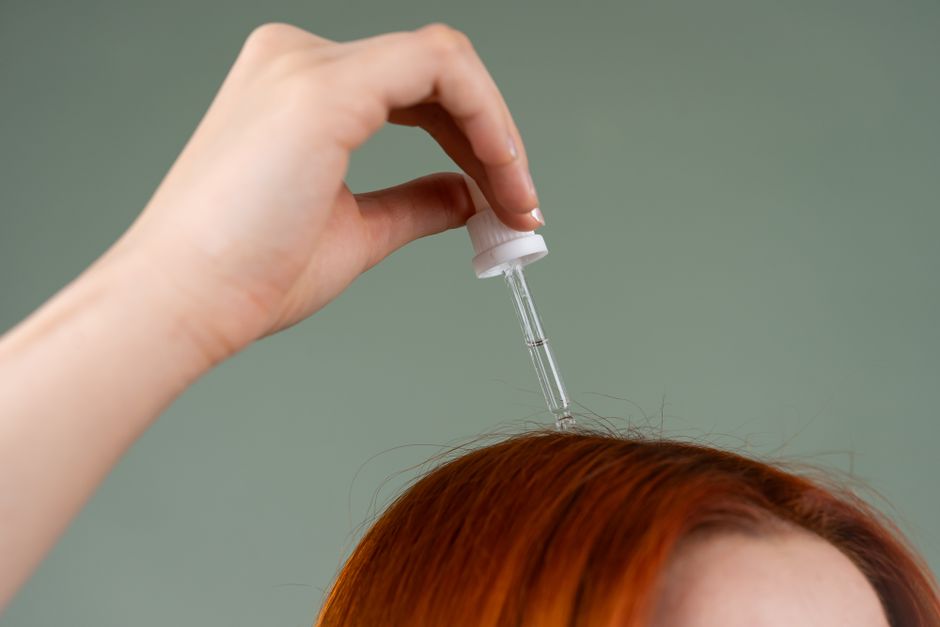
DHEA is a hormone your adrenal glands make naturally, and it sits near the top of the chain that eventually produces testosterone and DHT. Men who take DHEA supplements sometimes worry about hair loss because of that position in the pathway. The honest answer: DHEA can raise androgen levels in some men, and androgens drive male pattern hair loss — but whether a supplement actually causes visible shedding depends on your genetics, your dose, and how your body converts the hormone.
Does DHEA Cause Hair Loss in Men?
DHEA does not directly attack hair follicles. It works indirectly, by serving as a raw material your body can convert into stronger androgens.
Here is the chain. DHEA converts to androstenedione, which converts to testosterone, which can then convert to dihydrotestosterone (DHT) through an enzyme called 5-alpha reductase. DHT is the androgen most strongly linked to androgenetic alopecia — male pattern baldness.
So the theoretical risk is real. If a supplement raises your DHT, and your follicles are genetically sensitive to DHT, shedding could follow. But the evidence that DHEA supplements reliably cause hair loss in men is thin. Most human studies on DHEA have looked at body composition, mood, or metabolic markers — not hair counts. No large trial has tracked hair loss as a primary outcome in men taking DHEA.
What we can say with confidence: DHEA affects the same hormonal pathway that drives pattern baldness. What we cannot say is that it causes hair loss in every man who takes it, or even in most. The effect, if any, appears to depend heavily on individual factors.
How DHEA Affects DHT and Androgens in Men
DHEA is often called the “mother hormone” because it can be converted into both testosterone and estrogen. In men, that conversion matters for how the supplement might affect hair.
Oral DHEA raises blood levels of DHEA and its sulfate form, DHEA-S. Whether it meaningfully raises testosterone or DHT is less consistent. Some studies in men show modest increases in testosterone. Others show little change. The response varies with age, baseline hormone levels, dose, and how efficiently each person’s tissues convert the hormone.
Age is a big variable. DHEA levels peak in the mid-20s and decline steadily after that. Older men start from a lower baseline, so a supplement may shift their numbers more than it would in a younger man with already-high levels.
An important point that gets lost: raising a hormone precursor does not guarantee a proportional rise in the end product. The body regulates these conversions with feedback loops. If testosterone is already adequate, extra DHEA may not translate into extra DHT.
DHT and Genetics: Why Some Men Lose Hair and Others Don’t
Genetics decide whether DHT harms your hair. Two men can have identical DHT levels and completely different hairlines.
Androgenetic alopecia depends on how sensitive your hair follicles are to DHT. That sensitivity is inherited, and it is strongly associated with variations in the androgen receptor gene on the X chromosome — which is one reason pattern baldness often runs through the mother’s side of the family, though it is not that simple and involves multiple genes.
In genetically susceptible men, DHT binds to receptors in the hair follicle and gradually miniaturizes it. The growth phase shortens. Hairs become thinner and shorter until the follicle stops producing visible hair. This is a slow process measured in years, not days.
If you are not genetically predisposed, DHT does not appear to cause the same damage. This is why some men with high testosterone and high DHT keep a full head of hair, while others with normal levels go bald. The hormone is necessary but not sufficient — the genetics decide the outcome.





What the Evidence Actually Shows About DHEA and Hair
Direct research on DHEA supplements and hair loss in men is limited. That gap matters, because a lot of what circulates online is extrapolation from the hormone pathway rather than observed results.
What exists:
- Studies confirm DHEA is a precursor to androgens, including DHT, in the body.
- Some studies show DHEA supplements can raise androgen levels in certain men, particularly older men or those with low baseline levels.
- DHT is well established as the primary driver of androgenetic alopecia in genetically susceptible men.
What does not exist:
- No large controlled trial has shown that DHEA supplements cause hair loss in men.
- No study has established a dose at which hair loss becomes likely.
- No research confirms that DHEA-related shedding is common or predictable.
So the logical chain is plausible but unproven at the last step. A man taking DHEA who notices thinning hair has a reasonable question — but the thinning could equally be ordinary pattern baldness progressing on its own schedule.
DHEA Supplements: What Men Should Know Before Taking Them
DHEA is sold as a dietary supplement in the US, which means it does not go through the same approval process as prescription drugs. That affects purity, dosing accuracy, and what claims can legally be made.
DHEA is not a benign “natural” hormone. It has real hormonal effects, and those effects come with real considerations:
- It can raise testosterone and estrogen, which may affect mood, prostate tissue, and breast tissue.
- In men, conversion to estrogen can cause breast tenderness or enlargement in some cases.
- It may interact with other hormones and medications.
- Long-term safety data in healthy men are limited.
DHEA is sometimes prescribed by clinicians for specific conditions, such as adrenal insufficiency, where the body does not produce enough of its own. That is a different situation from taking it for general wellness or anti-aging, where the evidence for benefit is weak.
If you are considering DHEA and you already have concerns about hair loss, that is worth raising with a doctor. It is also worth knowing your family history, since genetics will influence whether any hormonal shift matters for your hair.
Other Causes of Hair Loss in Men Besides DHEA
Blaming DHEA for hair loss can distract from more common causes. Pattern baldness alone accounts for the large majority of hair loss in men, and it happens with or without any supplement.
Other contributors include:
- Telogen effluvium — temporary shedding triggered by illness, stress, surgery, or major weight loss.
- Nutritional deficiencies, including low iron or low vitamin D.
- Thyroid disorders.
- Certain medications.
- Scalp conditions such as fungal infections or inflammatory disorders.
Timing is a useful clue. Telogen effluvium typically shows up a few months after the trigger and often reverses. Pattern baldness is gradual and progressive, following a recognizable pattern at the temples and crown.
If shedding is sudden, patchy, or accompanied by scalp itching, scaling, or pain, that points away from ordinary pattern loss and toward something a doctor should evaluate. Hair loss can also reflect an underlying medical issue that has nothing to do with DHEA.
Should You Stop Taking DHEA If You Notice Hair Loss?
If you suspect a supplement is affecting your hair, stopping it is a reasonable step — but do not expect instant answers. Hair cycles run on a scale of months, so changes in shedding lag well behind changes in what you take.
Talk to a doctor rather than self-diagnosing. A clinician can look at your pattern of loss, review your medications and supplements, and check for other causes. In some cases, blood tests for hormones, iron, thyroid, and vitamin levels are useful.
One clarification worth making: hair loss from androgenetic alopecia does not reverse simply by stopping a supplement, because the underlying genetic process continues. If DHEA contributed to a temporary shed, that may recover. If the cause is pattern baldness, stopping DHEA will not regrow hair that genetics were already taking.
This is not medical advice, and it is not a recommendation to start or stop any supplement. Decisions about hormones are best made with a clinician who knows your history.
Frequently Asked Questions
Does DHEA raise DHT in men?
DHEA is a precursor that the body can convert into testosterone and then DHT, so it can raise DHT in theory. Whether it does so meaningfully varies by person, dose, age, and baseline hormone levels, and studies show inconsistent results.
Can DHEA cause male pattern baldness?
DHEA does not cause the genetic predisposition that defines male pattern baldness, but it can feed the androgen pathway that drives it in men who are already susceptible. No large trial has confirmed that DHEA supplements directly cause hair loss.
How long after taking DHEA would hair loss show up?
Hair cycles move slowly, so any supplement-related shedding would likely appear months after starting, not days. There is no established timeline, because no study has measured this directly.
Is DHEA safe for men to take?
DHEA has real hormonal effects, including possible rises in testosterone and estrogen, and long-term safety data in healthy men are limited. It is sometimes prescribed for specific medical conditions, but that differs from general use.
