
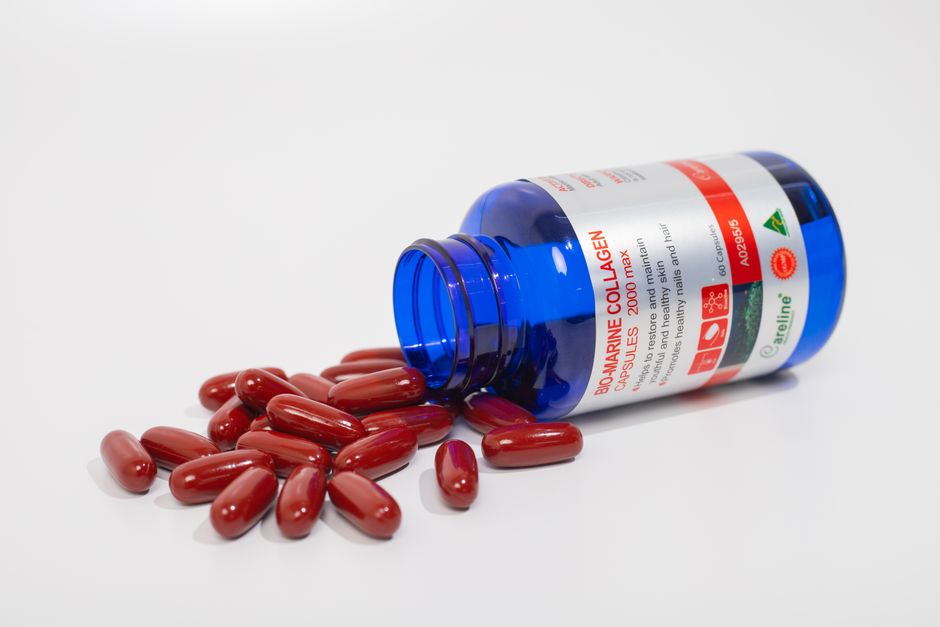
Collagen supplements do not have a well-established direct interaction with blood-thinning medications. No major clinical trial has confirmed that collagen peptides meaningfully change how drugs like warfarin or apixaban behave in the body, though a few indirect concerns are worth understanding.
The question matters because collagen supplements have become common, and so have anticoagulant and antiplatelet prescriptions. Millions of people take both at the same time. The honest position is that the direct interaction risk appears low, but the indirect factors — what else is in the supplement, why you are taking collagen, and how your medication is monitored — deserve real attention.
This guide explains what is known, what is not, and where genuine caution applies.
Does Collagen Affect Blood Thinners?
There is no established pharmacological interaction between collagen peptides and anticoagulant or antiplatelet drugs. That is the clearest answer available from current evidence.
Collagen supplements are typically hydrolyzed collagen — protein fragments broken into short chains of amino acids. Once swallowed, these peptides are digested further into individual amino acids and small peptides. They enter the bloodstream as nutrients, not as drugs. They do not act on the same liver enzymes that metabolize warfarin, and they do not appear to directly affect platelet function or clotting factor production.
That said, the absence of a documented interaction is not the same as proof of safety in every situation. Most collagen studies have been short, focused on skin or joint outcomes, and did not specifically track bleeding risk in people taking anticoagulants. So the evidence is reassuring but incomplete.
One practical point: collagen is a protein. Protein intake itself does not thin blood or thicken it. The body breaks dietary protein into amino acids and uses them for many purposes. There is no mechanism by which eating more protein would change your INR or your bleeding time.
What Is Actually in Your Collagen Supplement?
The bigger concern with collagen and blood thinners is usually not the collagen itself. It is the other ingredients in the bottle.
Collagen powders and capsules are often blended with vitamins, herbs, and extracts. Some of those ingredients do have known or suspected effects on clotting.
- Vitamin E — at high doses, can increase bleeding risk, particularly with anticoagulants.
- Fish oil and omega-3s — high doses may prolong bleeding time, though evidence at typical supplement doses is mixed.
- Turmeric or curcumin — has antiplatelet activity in some studies; concern is mainly at high supplemental doses.
- Ginkgo, garlic, ginger, and ginseng — each has been associated with altered platelet function or bleeding risk in some reports.
- Vitamin K — not usually in collagen, but if present, it can interfere with warfarin specifically.
This is where the real risk lives. A plain collagen peptide powder with no additives is a very different product from a “beauty blend” with ten extra ingredients. Read the label. If you cannot identify every ingredient, that is a reason to pause.
Also worth noting: dietary supplements in the United States are not reviewed by the FDA for safety or effectiveness before they are sold. What is on the label is not always what is in the bottle. Independent testing has repeatedly found products that did not match their labels.
Which Blood Thinners Are We Talking About?
Blood thinners fall into two broad groups, and the concerns are not identical for each.
Anticoagulants slow the clotting process itself. Examples include warfarin, apixaban, rivaroxaban, edoxaban, dabigatran, and heparin. Warfarin is the most sensitive to diet and drug interactions because it works by interfering with vitamin K–dependent clotting factors. Anything that changes vitamin K intake or liver enzyme activity can shift its effect.
Antiplatelet drugs make platelets less sticky. Examples include aspirin, clopidogrel, ticagrelor, and prasugrel. These are more affected by substances that alter platelet function — like some herbs and high-dose fish oil.
Collagen peptides do not fit neatly into either interaction category. They are not known to affect vitamin K, liver enzymes, or platelet aggregation. But because warfarin is so sensitive, anyone on it should treat any new supplement as something to discuss with their clinician first.
For the newer direct oral anticoagulants, food and supplement interactions are generally less of a problem than with warfarin, but they still exist. The general principle holds: tell your prescriber about anything new you are taking.




Why Some People Take Collagen With Blood Thinners
There is an overlap in the populations. Older adults are more likely to be on anticoagulants, and they are also more likely to take collagen for joint comfort, skin, or general nutrition.
Collagen is also a structural protein in blood vessel walls and in the connective tissue that supports them. This has led some people to assume collagen supplements might strengthen blood vessels or reduce bleeding risk. That reasoning is not supported by clinical evidence. Eating collagen does not direct it to your arteries. The body breaks it down and rebuilds proteins according to its own signals.
There is one clinical situation where collagen and bleeding genuinely intersect, and it is not about supplements. It is about collagen in the body itself. Certain inherited conditions affect collagen structure and can make blood vessels or connective tissues more fragile. Examples include vascular Ehlers-Danlos syndrome and some types of osteogenesis imperfecta. In these conditions, bleeding and vessel fragility are managed by specialists. Oral collagen supplements are not a treatment for any of them.
Should You Stop Collagen Before Surgery or Dental Work?
Many surgeons and dentists ask patients to stop certain supplements before procedures. Whether collagen is on that list varies by provider.
Because there is no confirmed interaction between collagen peptides and clotting, a blanket recommendation to stop is not strongly evidence-based. But some clinicians advise stopping all non-essential supplements one to two weeks before surgery as a precaution. This is common practice rather than a rule grounded in strong trial data.
The most important step is disclosure. Tell your surgeon, anesthesiologist, and dentist about every supplement you take, including collagen. They can make a judgment based on your specific medications and procedure. Do not stop a prescribed blood thinner on your own — that decision belongs to your prescriber.
What About Collagen and Bruising or Bleeding?
If you bruise more easily after starting collagen, the collagen is unlikely to be the cause. But it is worth investigating.
Common causes of increased bruising include:
- Changes in your anticoagulant dose or a new medication added to your regimen
- Another ingredient in your collagen product, such as high-dose fish oil or turmeric
- Alcohol intake, which can affect platelet function and liver processing of some drugs
- An unrelated health issue affecting platelets or clotting factors
Bring any new or worsening bruising, nosebleeds, gum bleeding, or blood in urine or stool to a clinician promptly. These can be signs that your anticoagulation is stronger than intended, regardless of what supplements you take.
How to Approach Collagen Safely If You Take a Blood Thinner
You do not need to avoid collagen based on current evidence. But a few sensible steps reduce the chance of surprises.
- Choose a plain collagen peptide product with the shortest ingredient list you can find.
- Check the label for vitamin K, vitamin E, fish oil, turmeric, ginkgo, garlic, ginger, or ginseng.
- Tell your prescriber before you start, especially if you take warfarin.
- If you take warfarin, keep your overall diet steady rather than making big changes all at once.
- Watch for unusual bleeding or bruising and report it.
- Do not use collagen as a substitute for any prescribed treatment.
If you take warfarin and your clinic checks your INR regularly, a new supplement is a reasonable moment to ask whether your testing schedule should be adjusted. For most other anticoagulants, routine monitoring is not part of care, so the conversation with your prescriber carries more weight.
One more thing worth saying plainly: collagen supplements are not a treatment for any bleeding disorder, and they are not a substitute for medical care. If you have a diagnosed clotting or bleeding condition, follow your specialist’s guidance, not supplement marketing.
Frequently Asked Questions
Does collagen interact with blood thinners?
No established interaction between collagen peptides and anticoagulant or antiplatelet drugs has been documented in clinical research. The larger concern is usually other ingredients in the supplement, such as vitamin E, fish oil, or turmeric.
Can I take collagen while on warfarin?
Collagen itself is not known to interfere with warfarin, but warfarin is highly sensitive to diet and supplements, so you should check with your prescriber before starting. Avoid any collagen product that contains vitamin K or herbal additives.
Does collagen thin your blood?
No. Collagen peptides are digested into amino acids and do not act on platelets or clotting factors in any documented way. Claims that collagen thins blood are not supported by clinical evidence.
Should I stop collagen before surgery?
Some clinicians recommend stopping all non-essential supplements one to two weeks before surgery as a precaution, though this is common practice rather than a strongly evidence-based rule. Always tell your surgical team what you are taking and never stop a prescribed blood thinner on your own.
