
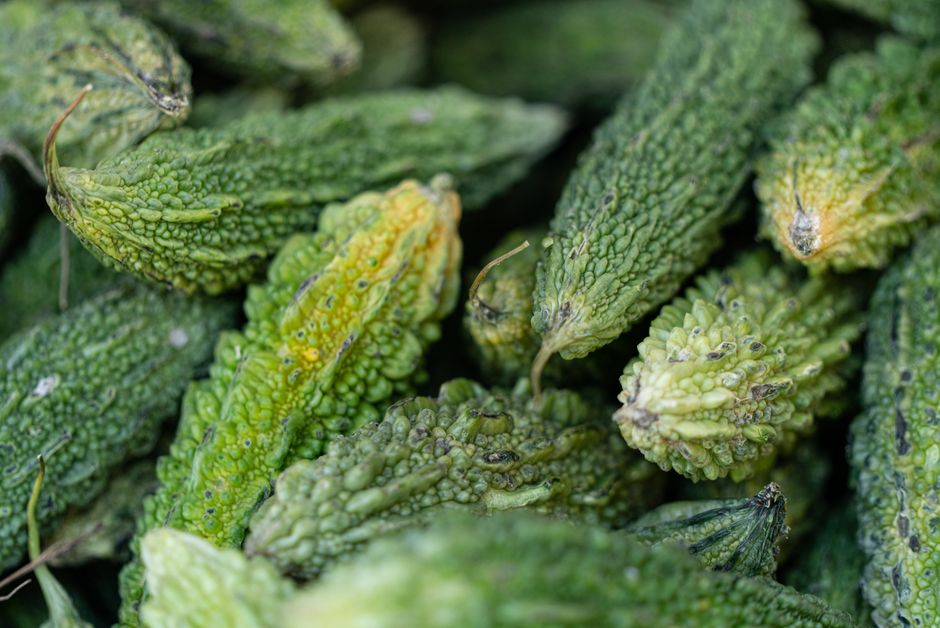
Bitter melon is a green, bumpy vegetable used in stir-fries, soups, and teas across Asia, Africa, and the Caribbean. It has a long history in traditional medicine for treating diabetes. Modern research has looked at whether that traditional use holds up. The short answer: some small studies show modest blood sugar reductions, but the evidence is not strong enough to call it a proven treatment. It is not a substitute for diabetes medication.
Does Bitter Melon Lower Blood Sugar?
Some studies suggest it might, but the evidence is limited and the results are inconsistent.
Several small human trials have reported modest reductions in fasting blood glucose after taking bitter melon in various forms — as juice, as dried powder in capsules, or as an extract. Other trials have found no meaningful difference compared to placebo.
The studies that exist tend to be small, short in duration, and varied in how much bitter melon was used and in what form. That makes it hard to draw firm conclusions. When researchers have tried to combine the results of multiple studies, they have generally noted that the overall quality of evidence is low.
What does that mean in practice? It means bitter melon is not a proven blood sugar treatment. It is a vegetable with some interesting biological activity that has not been confirmed in large, well-designed human trials.
How Is Bitter Melon Thought to Lower Blood Sugar?
Bitter melon contains compounds that have shown glucose-lowering activity in laboratory and animal studies. Several mechanisms have been proposed.
One involves charantin, a compound found in the fruit. In animal studies, charantin has been shown to have insulin-like effects — meaning it may help move glucose from the blood into cells. Another compound called polypeptide-p has also shown insulin-like properties in some laboratory research. A third group of compounds, called cucurbitane-type triterpenoids, may affect how the body metabolizes glucose.
These findings come mostly from test-tube experiments and animal studies. Biological activity in a petri dish or in rats does not automatically translate to meaningful effects in humans. Many substances that look promising in early research fail to show benefits in human trials. The gap between laboratory findings and real-world clinical benefit is wide.
It is also worth noting that the amount of these active compounds varies widely depending on the variety of bitter melon, how it is prepared, and whether it is eaten as a vegetable or concentrated into an extract. No standardized dose exists.
What Does the Research Actually Show?
Human research on bitter melon and blood sugar falls into a few categories.
Small clinical trials: Several trials with fewer than 100 participants have tested bitter melon against placebo or against standard diabetes medication. Some have shown small reductions in fasting blood glucose. Others have shown none. The trials vary in the type of bitter melon used, the dose, and the duration of treatment.
Combination studies: Some research has looked at bitter melon alongside conventional diabetes drugs. These studies are even harder to interpret because it is difficult to separate the effect of bitter melon from the effect of the medication.
Reviews and meta-analyses: When researchers pool the available studies, they consistently note that the evidence is weak. The studies are too few, too small, and too different from each other to produce a reliable answer.
One important limitation: many studies use different preparations of bitter melon. A cup of cooked bitter melon is not the same as a concentrated capsule extract. Results from one form cannot be assumed to apply to another.




Can Bitter Melon Replace Diabetes Medication?
No. Bitter melon should not be used as a replacement for prescribed diabetes medication.
Type 2 diabetes is a serious condition that, when poorly controlled, can lead to complications affecting the heart, kidneys, eyes, and nerves. The medications used to treat it have been tested in large trials and have established safety and effectiveness profiles. Bitter melon has not.
If you have diabetes and are considering adding bitter melon to your diet or taking it as a supplement, talk to your doctor first. This is especially important if you take blood sugar-lowering medication. Combining bitter melon with diabetes drugs could potentially cause blood sugar to drop too low, though this interaction has not been well studied in humans.
Some people with diabetes eat bitter melon as part of a balanced diet. That is reasonable — it is a low-calorie vegetable with fiber and several vitamins. But eating it as a food is different from relying on it as a treatment.
What Are the Risks and Side Effects?
Bitter melon is generally considered safe when eaten as a food in normal amounts. Side effects from eating it are uncommon but can include stomach discomfort, diarrhea, and nausea.
Bitter melon supplements are a different situation. They are not regulated the same way medications are, so the amount of active compound in a capsule may not match what the label says. Some supplements have been found to contain contaminants or to differ from their stated contents.
Certain groups should be especially cautious:
- People with diabetes on medication: The combination could lower blood sugar too much, though this has not been well studied.
- Pregnant women: Bitter melon has traditionally been used to induce menstruation and abortion in some cultures. Animal studies suggest it may affect fertility and pregnancy. It should not be used in medicinal amounts during pregnancy.
- People with G6PD deficiency: This is a genetic condition affecting red blood cells. Bitter melon seeds have been associated with a dangerous condition called favism in some case reports involving children with G6PD deficiency. This is a serious concern.
- People scheduled for surgery: Because bitter melon may affect blood sugar, some clinicians recommend stopping it before surgery. This is a precaution based on its potential effects, not on confirmed surgical outcomes.
No clinical guidelines currently exist for using bitter melon as a treatment for any condition.
Should You Try Bitter Melon for Blood Sugar?
That is a decision to make with your doctor, not based on what you read online.
If you are curious about bitter melon as a food, there is little harm in cooking with it. It is a nutritious vegetable. If you are considering it as a supplement to lower blood sugar, the evidence does not support that use. No large trial has confirmed it works, and no guideline recommends it.
The most effective approaches for managing blood sugar remain well established: eating a balanced diet, getting regular physical activity, taking prescribed medications as directed, and monitoring blood sugar as your doctor recommends. These are supported by decades of research.
Bitter melon is not a shortcut. It is a vegetable with some interesting laboratory findings and a lot of unanswered questions.
What About Other Natural Remedies for Blood Sugar?
Bitter melon is not the only natural product marketed for blood sugar control. Cinnamon, fenugreek, berberine, and alpha-lipoic acid are among the others.
The evidence for these varies. Berberine has shown some promising results in small trials, though larger studies are needed. Cinnamon has been studied extensively, but results are mixed and the effect, if any, appears small. Fenugreek and alpha-lipoic acid have some supportive research but are not established treatments.
None of these should replace prescribed medication. The pattern is consistent: small studies show possible benefits, but the evidence is not strong enough to recommend them as treatments.
Frequently Asked Questions
Does bitter melon actually lower blood sugar?
Some small studies show modest reductions, but results are inconsistent and the overall evidence is weak. It is not a proven treatment for high blood sugar.
How much bitter melon do you need to lower blood sugar?
No established dose exists. Studies have used different forms and amounts, and there is no reliable guideline for how much to take.
Can I take bitter melon with diabetes medication?
Talk to your doctor first. Combining them could potentially cause blood sugar to drop too low, though this interaction has not been well studied.
Is bitter melon safe for everyone?
It is generally safe as a food, but pregnant women, people with G6PD deficiency, and those on diabetes medication should be cautious. Supplements are not regulated like medications.
