
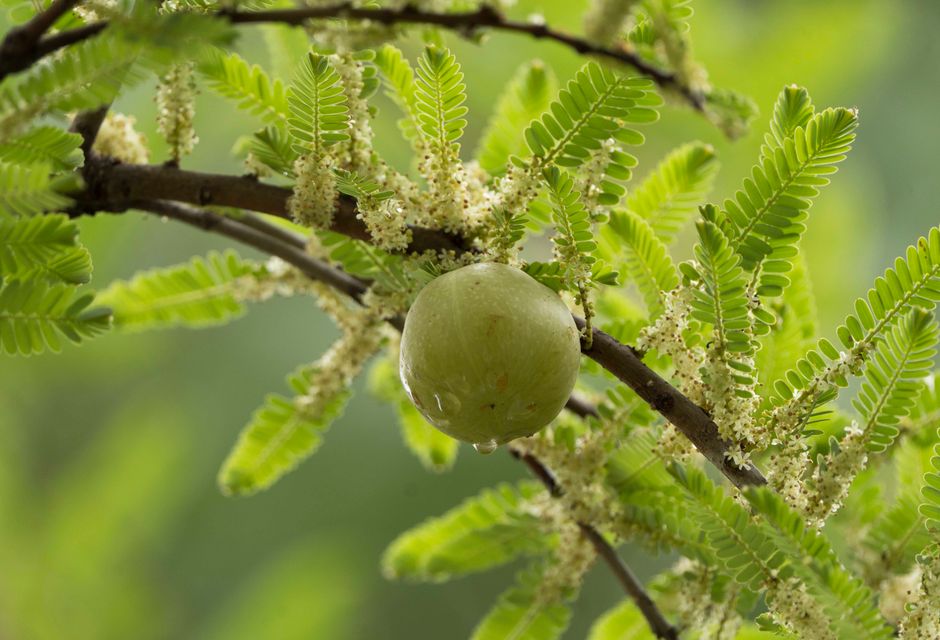
Amla powder does not reliably darken hair in the way most people hope. It is a traditional ingredient used in Indian hair care, and it may support scalp and hair health, but the evidence that it restores pigment to gray or white hair is weak. If you use it expecting your natural color to return, you will likely be disappointed. If you use it as part of general hair care, you may notice softer, less brittle hair over time.
What Is Amla Powder and Why Is It Used on Hair?
Amla is the fruit of the Indian gooseberry tree, known scientifically as Phyllanthus emblica. In traditional Indian medicine and hair care, the dried fruit is ground into a powder and mixed with water, oil, or other herbs to make a paste. People apply it to the scalp and hair, leave it for a while, then rinse it out.
The fruit is genuinely rich in vitamin C and contains tannins, flavonoids, and other plant compounds. These compounds have antioxidant properties in laboratory studies. That is a real finding. But antioxidant activity in a petri dish does not automatically translate to visible changes on a human scalp.
Amla has been used for centuries in Ayurvedic traditions for hair. That history is worth acknowledging. It is not the same as clinical proof. Traditional use tells us people found it helpful enough to keep using it. It does not tell us what it actually does at the biological level in human hair follicles.
Does Amla Powder Darken Hair? What To Expect
Amla powder will not turn gray hair black. It does not contain a pigment that deposits color the way henna or chemical dye does. Some people report that regular use makes their hair look slightly darker or less dull, but this is likely due to the powder coating the hair shaft or reducing buildup, not changing the hair’s natural pigment.
Hair color comes from melanin, produced by cells called melanocytes inside the hair follicle. As we age, these cells gradually produce less melanin, and eventually many stop altogether. Once a hair grows out without melanin, it is gray or white. No topical powder can restart those cells. Only the follicle itself can do that, and once melanocytes are lost, they generally do not come back.
So what can you realistically expect from amla powder?
- Cleaner-feeling scalp for some people
- Hair that feels softer or looks shinier
- Less oiliness if you have an oily scalp
- Possibly less breakage over time if hair is well moisturized
- No reliable change in the actual color of gray or white hair
Some people mix amla with henna, which does deposit color. In that case, the color change comes from the henna, not the amla. If you see darkening from a henna-amla blend, the henna is doing the work.
What Does Research Actually Say About Amla and Hair?
Research on amla and hair is limited. Most studies have been done in laboratories or on animals, not on large groups of people. Some research suggests amla extracts may support hair growth in certain conditions, but the studies are small and the results have not been consistently replicated in humans.
The evidence for hair darkening specifically is very weak. No well-designed human trial has shown that amla powder restores pigment to gray hair. Claims that it does are based on traditional use and anecdotal reports, not clinical data.
Some research indicates amla has antimicrobial and anti-inflammatory properties. This could theoretically help with scalp conditions, but again, laboratory findings do not always hold up in real-world use.
None of this means amla is useless. It means the evidence is not there to support the specific claim that it darkens hair.




Why Do People Believe Amla Darkens Hair?
The belief comes from several places. Traditional Ayurvedic texts describe amla as a hair tonic that promotes dark, healthy hair. That tradition has been passed down for generations, and in many communities it is simply accepted as true.
There is also a logical-sounding argument: amla is high in vitamin C, vitamin C supports collagen production, collagen is part of the hair follicle, therefore amla supports hair health. This chain of reasoning sounds convincing but skips several steps. Eating vitamin C or applying it to your scalp does not necessarily increase collagen in your hair follicles. And even if it did, collagen production is not the same as melanin production.
Another factor is confirmation bias. People who use amla and notice their hair looks a bit darker may attribute it to the amla. They may not consider that their hair also looks darker because it is cleaner, less dry, or coated with a thin film of powder.
None of this is to say people are lying about their experiences. It is to say that personal experience is not the same as evidence, and the plural of anecdote is not data.
How Is Amla Powder Used on Hair?
If you want to try amla powder, the usual approach is to mix it with warm water to form a paste. Some people add yogurt, coconut oil, or other ingredients. The paste is applied to the scalp and hair, left on for 20 to 30 minutes, then rinsed out thoroughly.
There are no official guidelines for how often to use it or how much to use. Traditional practices vary widely. Some people use it weekly, others monthly. Without clinical guidelines, any specific recommendation would be guesswork.
A few practical notes:
- Amla powder can be drying for some hair types. If your hair is already dry or brittle, you may want to mix it with a moisturizing ingredient.
- Rinsing thoroughly matters. Leftover powder can leave a dull residue.
- Patch test first if you have sensitive skin or a history of reactions to plant products.
- If you have a scalp condition like psoriasis or seborrheic dermatitis, talk to a dermatologist before applying anything new.
Amla is generally considered safe for most people when used topically. Allergic reactions are possible with any plant product. If you notice redness, itching, or swelling, stop using it.
What Actually Darkens Gray Hair?
If your goal is darker hair, amla is not the answer. Here is what actually works:
Hair dye is the most reliable option. Permanent dyes deposit color and can cover gray completely. Semi-permanent and demi-permanent dyes deposit less color and wash out over time.
Henna deposits a reddish-brown color. It can darken hair and cover gray, but the result is not black. It also builds up over repeated use and can be difficult to remove.
Indigo is sometimes used after henna to achieve darker brown or black tones. It works for some people but results vary.
There is no topical product that restores natural melanin production in hair follicles that have stopped making it. Some research has explored whether certain compounds can stimulate melanocytes, but nothing has been proven effective and safe for widespread use.
If you are concerned about premature graying, talk to a doctor. In some cases, graying is linked to underlying conditions like thyroid disorders, vitamin B12 deficiency, or certain autoimmune conditions. These are worth ruling out, especially if graying happens early or suddenly.
Is Amla Powder Worth Trying?
Amla powder is not harmful for most people, and it may have mild benefits for scalp and hair condition. If you enjoy using it and your hair feels good, there is no strong reason to stop.
But if your goal is darker hair, amla will not get you there. The evidence does not support it, the biology does not support it, and the anecdotes are not reliable enough to build expectations on.
Think of amla as a traditional hair treatment with possible mild benefits, not a hair color solution. If you want to change your hair color, use products designed for that purpose. If you want to support overall hair health, focus on things with stronger evidence: a balanced diet, gentle handling, and treating any underlying scalp or medical conditions.
Frequently Asked Questions
Does amla powder darken gray hair permanently?
No. Amla powder does not restore melanin or permanently change hair color. Any darkening people notice is usually temporary and likely due to residue or improved hair condition, not pigment change.
Can amla powder turn white hair black naturally?
No. Once hair follicles stop producing melanin, no topical powder can restart that process. Only hair dye or henna can visibly change gray or white hair color.
How long does it take for amla powder to show results on hair?
There are no clinical guidelines for how long amla takes to show any effect. Some people report softer hair within a few uses, but this is anecdotal and not supported by controlled studies.
Is amla powder safe to use on hair every day?
There are no established guidelines for frequency of use. Traditional practices vary, and daily use may be drying for some hair types. A patch test is recommended before first use.
