
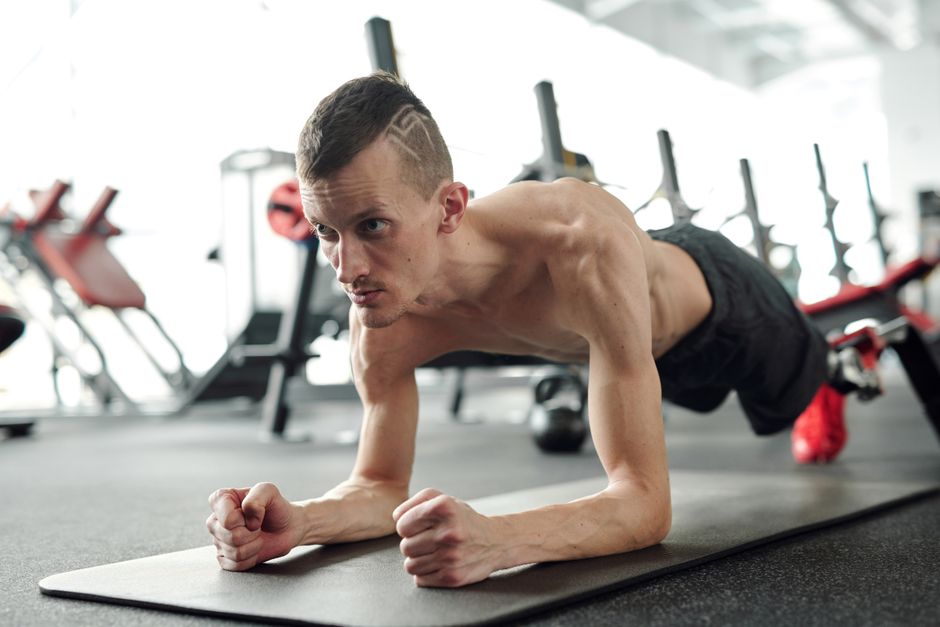
Planks are an excellent exercise for building core strength, but they are not a shortcut to losing belly fat. No exercise, including planks, can target fat loss from a specific area of your body. To lose belly fat, you need to reduce your overall body fat through a calorie deficit, and planks alone are not intense enough to drive that process.
Why Planks Do Not Spot-Reduce Belly Fat
The idea that you can burn fat from one specific area by exercising that area is a myth. This concept, known as spot reduction, has been studied extensively. The research is clear: when you exercise a specific muscle group, you burn calories from your entire body, not just from the area you are working.
Your body stores fat in specific places based on genetics, hormones, and age. For many people, the belly is a primary storage site. When you do a plank, you are strengthening the muscles underneath that fat, but the energy for that contraction comes from fat stores throughout your body, not directly from the fat sitting on top of the muscle.
Some studies suggest that exercising a specific muscle group may increase blood flow to that area, which could theoretically increase fat mobilization there. However, the effect is too small to produce visible, localized fat loss. You cannot plank your way to a flat stomach.
What Planks Actually Do for Your Body
Planks are a top-tier isometric exercise. This means you hold a position without moving your joints. The primary benefit is building endurance and strength in your core, which includes the rectus abdominis, obliques, transverse abdominis, and the muscles of your lower back and hips.
A stronger core translates into better posture, improved balance, and a more stable spine. This can reduce lower back pain during daily activities and make other exercises, like squats and deadlifts, safer and more effective. Planks also work your shoulders, glutes, and legs to a degree, making them a solid full-body stability exercise.
However, building muscle and burning fat are two different physiological processes. Planks build muscular endurance. They do not elevate your heart rate enough or burn enough calories to create the energy deficit required for significant fat loss.
The Calorie Math of a Plank
To lose one pound of body fat, you need to burn roughly 3,500 more calories than you consume. A single plank held for one minute burns only a small number of calories—typically between 2 and 5, depending on your weight and intensity. Compare that to running, swimming, or cycling, which can burn hundreds of calories in the same timeframe.
The math is simple. You would have to hold a plank for hours every day to create a meaningful calorie deficit from the exercise itself. That is not realistic or practical. The caloric burn from planks is a tiny fraction of your total daily energy expenditure, which is dominated by your resting metabolic rate and regular daily movement.
For fat loss, the most effective exercises are those that involve large muscle groups moving continuously, like brisk walking, jogging, rowing, or jumping rope. These activities burn significantly more calories per minute than static holds.




How to Actually Lose Belly Fat
Belly fat, specifically visceral fat, responds best to a combination of dietary changes and regular physical activity. Visceral fat is the fat stored deep inside your abdomen around your organs. It is metabolically active and linked to higher risks of heart disease, type 2 diabetes, and other conditions.
Creating a consistent calorie deficit is the foundation. This means eating fewer calories than your body uses each day. Reducing intake of refined carbohydrates, sugary drinks, and ultra-processed foods while increasing protein, fiber, and vegetables is a proven approach. No single food or supplement targets belly fat specifically.
For exercise, a mix of aerobic activity and resistance training is most effective. Aerobic exercise burns calories and directly reduces visceral fat. Resistance training builds muscle, which increases your resting metabolic rate and helps you maintain muscle mass while losing weight. Some research shows that high-intensity interval training (HIIT) can reduce visceral fat more efficiently than moderate-intensity steady-state cardio, but both work.
Sleep and stress management also matter. Poor sleep and chronic stress raise cortisol levels, a hormone that encourages fat storage in the abdominal area. Aiming for seven to nine hours of quality sleep per night and managing daily stress are practical steps that support fat loss efforts.
Where Planks Fit in a Fat Loss Routine
Planks should not be your primary fat-burning tool, but they absolutely belong in a well-rounded fitness program. A strong core improves your performance in other exercises, which allows you to work harder and burn more calories overall. It also helps prevent injury, keeping you consistent with your training.
Think of planks as a support exercise, not a main event. Use them at the end of a workout or as part of a warm-up. Focus on holding a perfect form for 30 to 60 seconds rather than holding a sloppy plank for several minutes. Quality matters more than duration.
To build a routine that burns fat, prioritize compound movements like squats, lunges, push-ups, and rows. Add cardiovascular work you enjoy, and maintain a moderate calorie deficit through your diet. Planks can be the finishing touch that ties your core stability together.
Common Plank Mistakes That Reduce Effectiveness
Form is everything with planks. A common mistake is letting your hips sag toward the floor. This places unnecessary strain on your lower back and reduces the work your core muscles are doing. Keep your body in a straight line from your head to your heels.
Another mistake is holding your breath. Breathing steadily while holding the position is essential. Holding your breath spikes your blood pressure and prevents your muscles from getting the oxygen they need. Inhale and exhale slowly and rhythmically.
Lifting your hips too high also reduces the challenge. This shifts the work away from your core and onto your shoulders and arms. If you cannot maintain a straight line, drop to your knees or shorten the hold time. A correct plank for 20 seconds beats a poor plank for 90 seconds.
Alternatives to Planks for Core Strength
If planks cause wrist or shoulder discomfort, or you simply want variety, several exercises build core strength without the static hold. Dead bugs are excellent for learning to stabilize your spine while moving your limbs. Bird dogs, performed on all fours, improve balance and lower back stability.
Pallof presses, using a resistance band or cable, train your core to resist rotation. This is highly functional for real-world movements. Hanging knee raises and reverse crunches target the lower abdominal muscles more directly than planks do.
Each of these exercises challenges your core differently. Rotating through them prevents boredom and ensures you are strengthening all the muscles of your midsection, not just the ones used in a plank.
Frequently Asked Questions
How long should I hold a plank to see results?
Holding a plank for 30 to 60 seconds with perfect form is sufficient for most people. Longer holds add little extra benefit once you can maintain proper form.
Can I do planks every day?
Yes, doing planks daily is generally safe for healthy individuals. However, your core muscles need recovery time to grow stronger, so taking at least one rest day per week is recommended.
Will planks give me a six-pack?
Planks will strengthen your abdominal muscles, but a visible six-pack only appears when your body fat is low enough. Diet and overall fat loss determine visibility, not just core exercises.
What is the best exercise to burn belly fat?
No single exercise burns belly fat exclusively. A combination of a calorie-controlled diet, aerobic exercise, and resistance training is the most effective approach for reducing overall body fat.
