
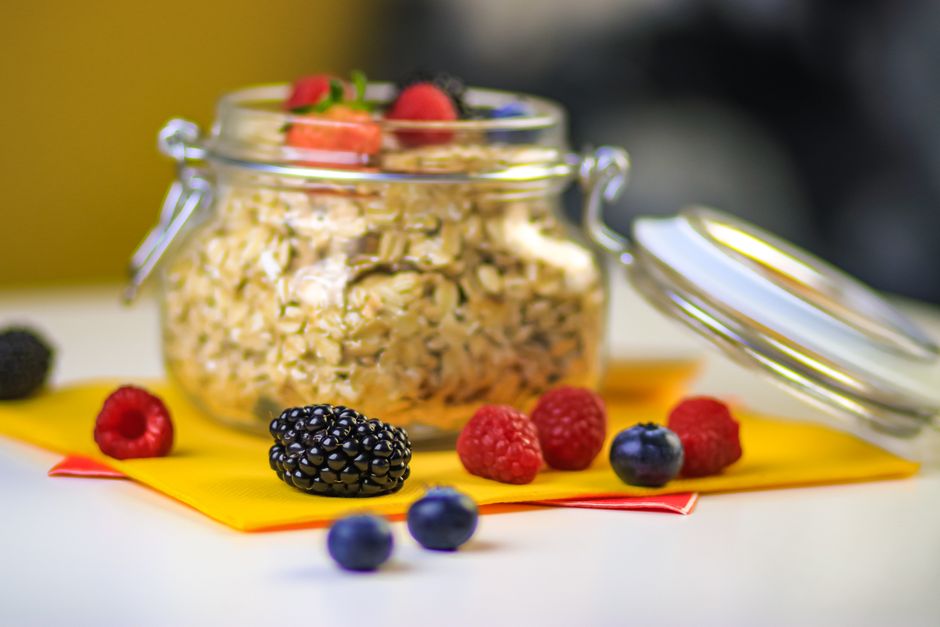
Oats do raise blood sugar. That is not a flaw or a hidden danger — it is what happens when you eat a food that contains carbohydrate. The more useful question is how much they raise it, how fast, and whether that matters for you. The answer depends less on oats themselves than on which oats you eat, what you eat with them, and how your body handles glucose.
Do Oats Raise Blood Sugar?
Yes. Oats are a grain, and grains are mostly carbohydrate. During digestion, that carbohydrate breaks down into glucose, which enters the bloodstream. Blood sugar rises.
The rise is real but usually moderate. Oats contain a type of soluble fiber called beta-glucan, which forms a gel-like substance in the gut. That gel slows the emptying of the stomach and the absorption of glucose, so the rise tends to be gentler than what you would see from white bread, white rice, or most breakfast cereals.
How gentle depends heavily on the form of the oat. Steel-cut oats, rolled oats, and instant oats all come from the same grain. They behave quite differently in the body.
Which Oats Raise Blood Sugar the Most?
Less processed oats raise blood sugar more slowly. More processed oats raise it faster. This is one of the more consistent findings in nutrition research, and the reason is mostly physical structure.
Steel-cut oats are chopped whole groats. The pieces are dense and take longer to chew and digest. Rolled oats are steamed and flattened, which disrupts the structure somewhat. Instant oats are rolled thinner and often precooked, so they break down quickly. Quick oats sit somewhere in between.
The finer and more processed the oat, the more surface area your digestive enzymes can reach at once. More surface area means faster starch breakdown, which means a sharper glucose rise. This is the same principle that makes white flour raise blood sugar faster than whole wheat berries.
One practical detail worth knowing: the difference between steel-cut and instant oats can be substantial. If you have diabetes or prediabetes, the form you choose may matter more than the portion size.
What Is the Glycemic Index of Oats?
The glycemic index is a scale that ranks foods by how much they raise blood sugar compared with a reference food, usually glucose or white bread. Lower numbers mean a slower, smaller rise.
Oats do not have a single glycemic index value, because the value changes with processing and preparation. As a general pattern, steel-cut oats sit at the lower end, rolled oats in the middle, and instant oats at the higher end. Cooking time matters too — longer cooking breaks down starch further and tends to raise the value.
Glycemic index also has real limits as a tool. It measures a fixed portion of a single food eaten alone. Most people do not eat oats alone. They eat them with milk, yogurt, nuts, fruit, or sweeteners, and those additions change the glucose response. The glycemic index also does not account for how much you actually eat.
That is why researchers increasingly look at glycemic load, which combines the quality of the carbohydrate with the quantity. A small bowl of instant oats may have a lower glycemic load than a large bowl of steel-cut oats. Portion and form both matter.





Does Adding Protein or Fat Change the Blood Sugar Response?
Yes. Adding protein, fat, or additional fiber to a meal slows digestion and blunts the glucose rise from the carbohydrate in that meal. This is well established and applies to oats like any other carb-containing food.
Practical additions that tend to help:
- Greek yogurt or cottage cheese
- Nuts, nut butter, or seeds
- Chia or ground flaxseed
- Eggs on the side
- Berries rather than sweetened dried fruit
What you add can also work against you. Flavored instant oatmeal packets often contain added sugar, and some contain more sugar per serving than a bowl of many breakfast cereals. Honey, maple syrup, brown sugar, and sweetened dried fruit all add rapidly absorbed carbohydrate. If blood sugar is your concern, the sweetener is often a bigger factor than the oat itself.
How Do Oats Affect People With Diabetes or Prediabetes?
For most people with diabetes or prediabetes, oats can fit into a well-planned diet. They are not a food to avoid by default. What matters is which oats, how much, and what they are eaten with.
Individual responses vary widely. Two people can eat the same bowl of oats and see meaningfully different glucose patterns, depending on insulin sensitivity, medications, activity, time of day, and what else was eaten. This variability is well documented and is one reason a continuous glucose monitor can be more informative than any general ranking.
If you monitor your blood sugar, testing after a standard bowl of oats — and then after the same bowl with added protein and fat — can show you your own pattern. That is more useful than any universal rule. If you take insulin or medications that can cause low blood sugar, changes to your diet should be discussed with your clinician.
One clarification that often gets lost: a food raising blood sugar is not the same as a food being harmful. Blood sugar rises after every meal containing carbohydrate. The question is whether the rise is within a range your body can manage well.
Are Oats Still a Healthy Choice?
Oats carry genuine nutritional value. They are a source of beta-glucan fiber, which has been linked to modest reductions in LDL cholesterol in controlled trials. They provide B vitamins, magnesium, and iron. For many people, they are a practical and affordable breakfast.
This does not make them a low-carbohydrate food. A typical serving of plain cooked oats contains roughly 25 to 30 grams of carbohydrate, depending on the serving size and the type of oat. That number matters if you are counting carbs.
The evidence on oats and long-term blood sugar control is more mixed than marketing often suggests. Some studies show improvements in markers like fasting glucose or A1C with regular oat intake, while others show little difference compared with other whole grains. The honest position is that oats are one reasonable whole grain among several, not a uniquely protective food.
If you enjoy oats and they fit your eating pattern, there is no strong reason to avoid them. If you do not enjoy them, there is no strong reason to force them. Other whole grains and fiber sources can do similar work.
What Is the Best Way to Eat Oats if You Are Watching Blood Sugar?
Choose the least processed form you are willing to eat. Steel-cut oats take longer to cook but tend to produce a slower glucose rise than instant oats. If instant is what fits your morning, that is still a reasonable choice — just watch the portion and the added sugar.
Pair oats with protein and fat. Add nuts, seeds, yogurt, or eggs. Skip or reduce added sweeteners. Watch the serving size, since a large bowl delivers more carbohydrate than a small one regardless of the type of oat.
If you have diabetes or prediabetes and want to know how oats affect you specifically, test your own blood sugar after eating them. General rankings are a starting point, not a personal answer.
Frequently Asked Questions
Do oats spike blood sugar?
Oats raise blood sugar, but the rise is usually slower and smaller than from refined grains like white bread. Instant oats and sweetened packets tend to cause a faster rise than steel-cut or rolled oats.
Are oats bad for diabetics?
No, oats are not off-limits for most people with diabetes. The key factors are choosing less processed oats, controlling portion size, and pairing them with protein or fat.
Which oats have the lowest glycemic index?
Steel-cut oats generally have the lowest glycemic index, followed by rolled oats, with instant oats at the higher end. Cooking time and added ingredients also affect the final response.
Can I eat oatmeal every day if I have prediabetes?
Many people with prediabetes can eat oatmeal regularly as part of a balanced diet. Individual glucose responses vary, so monitoring your own blood sugar after eating is the most reliable way to know how it affects you.
