
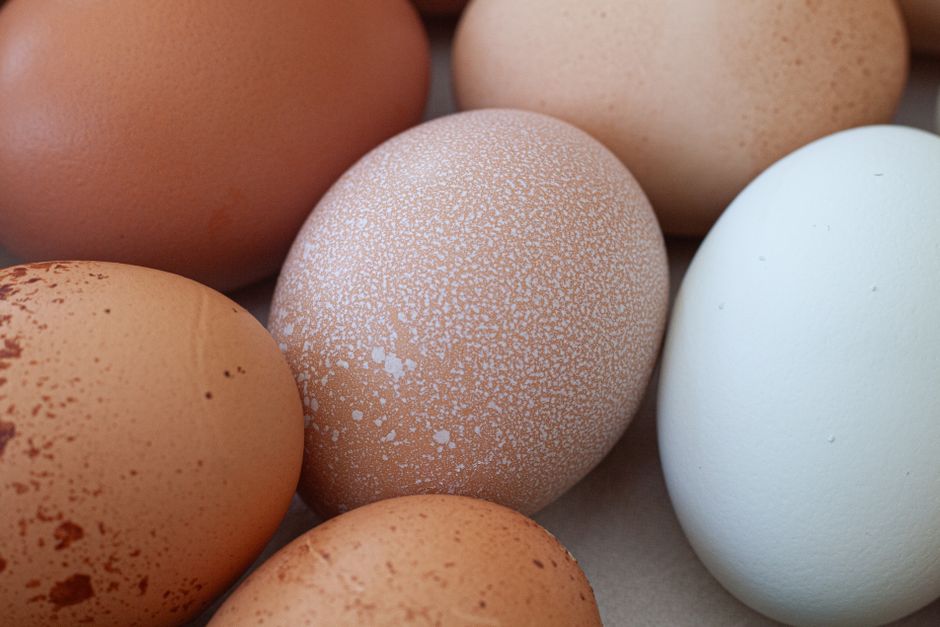
Eggs contain more cholesterol than almost any other common food. One large egg has about 186 milligrams, all of it in the yolk. For decades, that single fact drove the advice to limit eggs to a few per week. The science has since become more interesting, and more complicated, than that rule suggested.
For most people, eating eggs raises blood cholesterol far less than once feared. The body makes most of its own cholesterol and adjusts production based on what you eat. But “most people” is doing real work in that sentence. A minority respond to dietary cholesterol more strongly, and for them eggs can move blood levels in a meaningful way.
Do Eggs Raise Your Cholesterol What Science Says
Dietary cholesterol has a smaller effect on blood cholesterol than saturated and trans fats do. That is one of the more firmly established findings in nutrition science, and it reshaped how researchers think about eggs.
When you eat cholesterol, the liver typically responds by making less of its own. This feedback loop keeps blood levels fairly stable in many people. The technical term is compensatory downregulation, and it helps explain why a high-cholesterol food does not automatically produce high blood cholesterol.
The catch is individual variation. Research has long identified people the field calls hyper-responders. In these individuals, dietary cholesterol produces a larger rise in blood cholesterol than in the average person. Estimates of how common this is vary, and there is no simple test your doctor can run to identify you as one. Some researchers have proposed that certain genetic variants influence the response, but this is an active area of study rather than settled clinical guidance.
Saturated fat is the bigger lever. Butter, fatty cuts of meat, and full-fat dairy tend to raise LDL cholesterol, the “bad” kind, more reliably than eggs do. So a breakfast of eggs cooked in butter alongside bacon is a different cholesterol story than two hard-boiled eggs.
What Is the Difference Between Dietary Cholesterol and Blood Cholesterol?
They are related but not the same thing. Dietary cholesterol is what you eat. Blood cholesterol is what circulates in your bloodstream, and your body tightly manages how much of it is there.
The liver produces the majority of the cholesterol in your body. Cholesterol is not a villain by default. Your body uses it to build cell membranes, make vitamin D, and produce hormones like estrogen and testosterone. You cannot function without it.
Blood cholesterol travels packaged in particles called lipoproteins. LDL carries cholesterol to tissues and is associated with plaque buildup in arteries when levels are high. HDL carries cholesterol back to the liver. When people talk about “good” and “bad” cholesterol, this is what they mean.
Because the liver regulates its own production, the cholesterol on your plate and the cholesterol in your blood are not directly proportional. This is the core reason the old “eggs clog your arteries” message was oversimplified.
How Do Eggs Affect LDL and HDL Cholesterol?
In most people, eating eggs tends to raise both LDL and HDL cholesterol slightly. That pattern matters, because the ratio between them is often more informative than either number alone.
Some research suggests that egg consumption can shift LDL particles toward a larger, less artery-damaging size in some individuals, though this finding is not universal. The evidence here is mixed and depends heavily on the person and their overall diet.
What most studies agree on is that the effect of eggs on blood cholesterol is modest in the general population and highly variable between individuals. A person eating a diet high in saturated fat may see a larger LDL rise from their overall diet than from the eggs specifically.
One clarification worth making: the cholesterol in an egg yolk is not the same as the cholesterol measured on a blood test. Confusing the two has fueled a lot of unnecessary worry.




Does the Evidence Support Limiting Eggs?
Current dietary guidance in the United States no longer sets a specific daily limit on dietary cholesterol the way it once did. The focus shifted toward limiting saturated fat and added sugars instead.
That said, guidance for people with certain conditions is more cautious. For those with diabetes or existing heart disease, some clinicians still recommend being mindful of egg intake, because the evidence in these groups is less clear and some studies have shown different patterns than in the general population.
The honest position is this: for most healthy adults, the evidence does not support strict egg limits. For people with diabetes, heart disease, or a strong family history of high cholesterol, the picture is less certain and worth discussing with a doctor who knows your numbers.
What the evidence does not support is the idea that eggs are a health food that improves cholesterol. They are a nutrient-dense food that, in most people, has a small and mixed effect on blood cholesterol.
What Else Is in Eggs Besides Cholesterol?
Eggs are a concentrated source of several nutrients. One large egg provides about 6 grams of protein, along with vitamin B12, vitamin D, choline, and selenium. The yolk holds most of the vitamins and minerals.
Choline is worth noting because many people do not get enough of it. It supports brain and nervous system function. Eggs are one of the richest common food sources.
Eggs also contain lutein and zeaxanthin, two carotenoids that concentrate in the retina. Some research links these compounds to eye health, though the evidence comes largely from studies of supplements and diets rather than eggs specifically.
On the other side of the ledger, eggs are low in saturated fat compared to many animal foods. One large egg has roughly 1.6 grams of saturated fat. That is a small fraction of the daily amount most guidelines suggest limiting.
How Should You Think About Eggs in Your Diet?
The most useful question is not “are eggs good or bad” but “how do eggs fit into what I eat overall.” Context shapes the effect more than the egg itself.
Consider what comes with the eggs. Eggs fried in butter and served with processed meat carry a very different nutritional profile than eggs poached or boiled and paired with vegetables and whole grains.
- Pay attention to saturated fat across your whole diet, not just from eggs.
- If you have high LDL, diabetes, or heart disease, talk with your doctor about your individual response.
- Get your cholesterol checked with a blood test rather than guessing based on what you eat.
- Remember that genetics, activity, weight, and smoking all influence blood cholesterol.
Some people eat eggs daily with no meaningful change in their cholesterol. Others see a rise. Without a blood test before and after a change in diet, you cannot know which group you are in.
Do Eggs Cause Heart Disease?
Eating eggs has not been consistently linked to higher rates of heart disease in the general population. Studies on this question have produced mixed results, and the disagreement is genuine, not just a matter of interpretation.
Some large observational studies found no clear link between egg consumption and heart disease in healthy adults. Others found a modest association, particularly in people who already had diabetes or heart disease. Observational studies cannot prove cause and effect, because people who eat more eggs may differ in other ways.
The most defensible summary is that for most healthy adults, moderate egg consumption does not appear to raise heart disease risk in a meaningful way. For people with existing metabolic conditions, the evidence is less reassuring and less consistent.
What is clearer is that the overall dietary pattern matters more than any single food. A diet built around vegetables, fruits, whole grains, legumes, and lean proteins tends to support heart health regardless of whether eggs are part of it.
What About Egg Substitutes and Egg Whites?
Egg whites contain no cholesterol, because all of the cholesterol sits in the yolk. If you are specifically trying to lower dietary cholesterol, using egg whites or a mix of whole eggs and whites is one way to do it.
But removing the yolk also removes most of the vitamins, minerals, and choline. Egg whites are mostly protein and water. Whether that trade-off is worth it depends on your goals and your blood work.
Commercial egg substitutes vary widely. Some are mostly egg whites with added color and nutrients. Others are plant-based and contain no egg at all. Read the label if cholesterol or saturated fat is a concern for you.
Frequently Asked Questions
Do eggs raise your cholesterol?
For most people, eggs raise blood cholesterol only slightly, and the effect varies a lot between individuals. Some people respond more strongly, but there is no simple way to know which group you are in without a blood test.
How many eggs a day is safe?
There is no single number that applies to everyone, and current US dietary guidance does not set a specific daily limit on dietary cholesterol. For people with diabetes or heart disease, some clinicians recommend being more cautious, so it is worth discussing with your doctor.
Are egg yolks bad for your heart?
Egg yolks contain the cholesterol, but eating them has not been consistently linked to higher heart disease rates in healthy adults. The evidence is less clear for people who already have diabetes or heart disease.
Does cooking eggs change their cholesterol?
Cooking does not remove or meaningfully change the cholesterol in an egg. What changes the health picture is what you cook them in, since butter and other fats add saturated fat that affects blood cholesterol more than the egg itself.
