
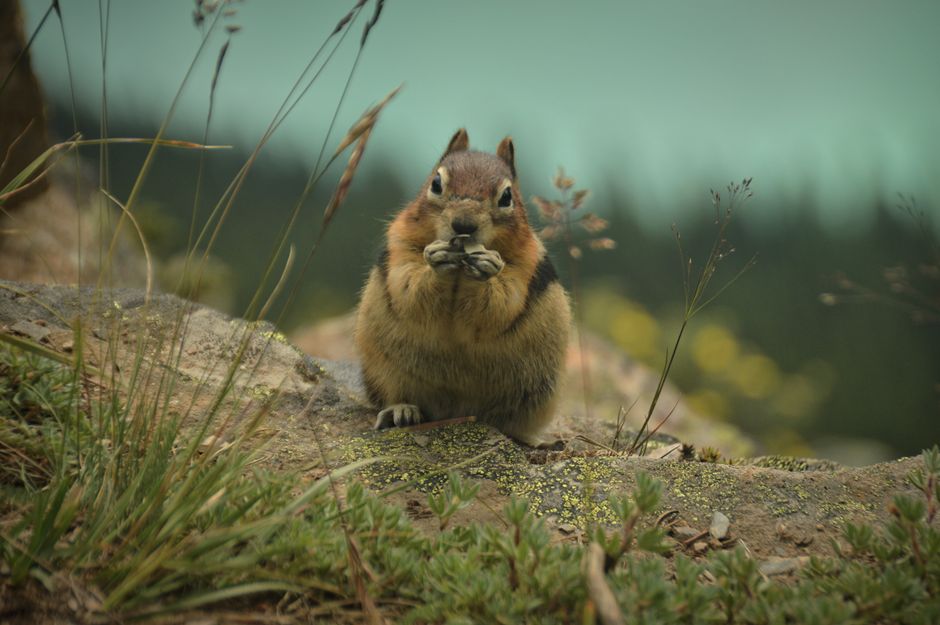
Chipmunks are small, cute, and busy. You see them darting around parks and gardens with full cheeks. It is natural to wonder what they eat. The quick answer is no, chipmunks do not eat mice. Chipmunks are omnivores, but their diet is made up of seeds, nuts, fruits, insects, and the occasional small animal like a baby bird or a frog. A full-grown mouse is not on the menu. A chipmunk is simply too small to hunt one. This article covers the real facts about what a chipmunk eats, so you can stop wondering and know for sure.
What Does a Chipmunk Actually Eat?
Research from wildlife biologists shows chipmunks are opportunistic eaters. They eat what is available. The bulk of their diet is plant material. A study published in the Journal of Mammalogy found that seeds and nuts make up about 70 percent of their food intake. Acorns, sunflower seeds, and beechnuts are favorites. They also eat berries, mushrooms, and tender green shoots.
Insects are the second biggest part of their diet. Chipmunks eat crickets, grasshoppers, caterpillars, and beetles. They will eat snails and slugs too. This protein is important for growth and for females who are nursing babies. Some people report seeing chipmunks eat small frogs, baby birds, or bird eggs. This is true, but it is rare. These events happen when the chipmunk stumbles upon an easy meal. It is not a hunting behavior.
The idea that chipmunks eat mice likely comes from this occasional carnivorous behavior. A chipmunk might eat a dead mouse if it finds one. But it will not chase or kill a healthy mouse. Mice are fast, defensive, and roughly the same size as a chipmunk. The risk of injury is too high for a chipmunk to bother. The chipmunk’s brain is wired to gather seeds, not to hunt rodents.
Do Chipmunks Eat Mice The Facts On A Chipmunks Diet?
Let us be clear on this specific question. A chipmunk does not eat mice as part of its regular diet. There is no evidence from any major wildlife agency or university study that chipmunks prey on mice. The National Wildlife Federation lists chipmunks as omnivores but does not list mice as a food source. The Cornell Lab of Ornithology also confirms that chipmunks eat insects and small vertebrates but not rodents.
The confusion often comes from people mixing up chipmunks with other animals. Squirrels, for example, are also omnivores. Some ground squirrels do eat mice or voles. But chipmunks are a different genus. They have different teeth, different jaw strength, and different behaviors. A chipmunk cannot overpower a mouse. The mouse would win in a fight.
If you see a chipmunk carrying something small and furry, it is almost certainly a large insect like a cricket or a piece of fallen fruit. It is not a mouse. The visual trick is understandable. But the biology does not support it.
What Do Baby Chipmunks Eat?
Baby chipmunks are called pups. They are born blind and hairless. For the first few weeks, they drink only their mother’s milk. The mother chipmunk produces milk that is high in fat and protein. This helps the pups grow fast.
Around three to four weeks old, the pups start to open their eyes. They also start to eat solid food. The mother brings them soft foods first. This includes crushed seeds, small berries, and soft insects like caterpillars. She does not bring them meat. She does not bring them mice. The pups learn to eat what their mother eats, which is mostly plants and bugs.
By six weeks old, the pups are weaned. They leave the nest and start foraging on their own. At this point, they eat exactly what adult chipmunks eat. They learn by watching their mother. If the mother never brings mice, the pups never learn to eat mice. This is a behavioral fact that reinforces the dietary truth.





How Does a Chipmunk’s Diet Change by Season?
Chipmunks do not hibernate in the true sense. They go into a state called torpor. They sleep for days at a time but wake up to eat from their stored food. This means their diet changes a lot depending on the season.
In spring and summer, chipmunks eat fresh food. They eat berries, flowers, and insects. They need water from these fresh foods because they do not drink much standing water. They get most of their hydration from what they eat. In fall, they shift to high-calorie foods. They gather acorns, nuts, and seeds. They stuff their cheek pouches and carry the food back to their burrows. One chipmunk can store up to eight pounds of food in a single burrow system.
In winter, they eat from their stash. They wake up every few days, eat a few seeds or nuts, and go back to sleep. They do not need to hunt. They do not need fresh meat. Their stored plant food gives them everything they need to survive until spring. A mouse would spoil in the burrow. Seeds stay good for months. This is another reason why chipmunks do not eat mice. It would be a bad storage strategy.
What Are the Differences Between a Chipmunk Diet and a Mouse Diet?
This comparison helps clear up the confusion. Mice and chipmunks are both rodents, but their diets are very different.
| Food Type | Chipmunk | Mouse |
|---|---|---|
| Seeds and nuts | Primary food (70% of diet) | Common but not primary |
| Insects | Common (20% of diet) | Rare |
| Fruits and berries | Common in summer | Common |
| Small vertebrates | Very rare (baby birds, frogs) | Never |
| Other rodents | Never | Never (mice are herbivores) |
| Human food scraps | Occasional | Very common |
Mice are mostly herbivores. They eat grains, seeds, fruits, and some insects. They do not eat other mice or chipmunks. So the idea that chipmunks eat mice is biologically backwards. Neither animal preys on the other. They compete for some of the same food sources, like seeds. But they are not predator and prey.
The only real overlap is that both animals store food. Mice will stash seeds in walls or attics. Chipmunks stash them in burrows. But a mouse will not attack a chipmunk, and a chipmunk will not attack a mouse. They mostly ignore each other.
Common Misconceptions About Chipmunk Diets
There are several myths about what chipmunks eat. Let us clear them up.
Myth: Chipmunks eat bird eggs regularly. This is overstated. Chipmunks will eat an egg if they find a nest on the ground and the parent bird is gone. But they do not climb trees to rob nests. That is a squirrel behavior. Chipmunks are ground dwellers. They rarely climb above eye level.
Myth: Chipmunks eat meat to survive winter. False. They survive winter on stored seeds and nuts. Their body enters torpor and uses stored fat. Meat would rot in their burrow. They do not need it.
Myth: Chipmunks eat mice because they are omnivores. Being omnivore means they can eat both plants and animals. It does not mean they eat everything. A cow is a herbivore but does not eat all plants. A chipmunk is an omnivore but does not eat all animals. The word describes potential, not behavior.
Myth: A chipmunk will eat a mouse if it is hungry enough. This is widely claimed but strong evidence is limited. In controlled studies of chipmunk foraging behavior, researchers have never observed a chipmunk killing a mouse. They will eat dead insects or dead frogs. But a live mouse is simply not something a chipmunk sees as food. Their brain does not register it as prey.
Frequently Asked Questions
Can a chipmunk kill a mouse?
No. A chipmunk lacks the strength, teeth, and hunting instinct to kill a mouse. A mouse is roughly the same size and can defend itself well.
What small animals do chipmunks eat?
Chipmunks occasionally eat baby birds, small frogs, and snails. These are rare events and only happen when the animal is already vulnerable or dead.
Do chipmunks eat meat at all?
Yes, but only in the form of insects and very small vertebrates. They do not eat mammal meat like mouse, rat, or squirrel.
Will chipmunks eat dead mice?
It is possible but not common. A chipmunk might nibble on a dead mouse if it is starving and finds one. This is not a normal behavior.
