
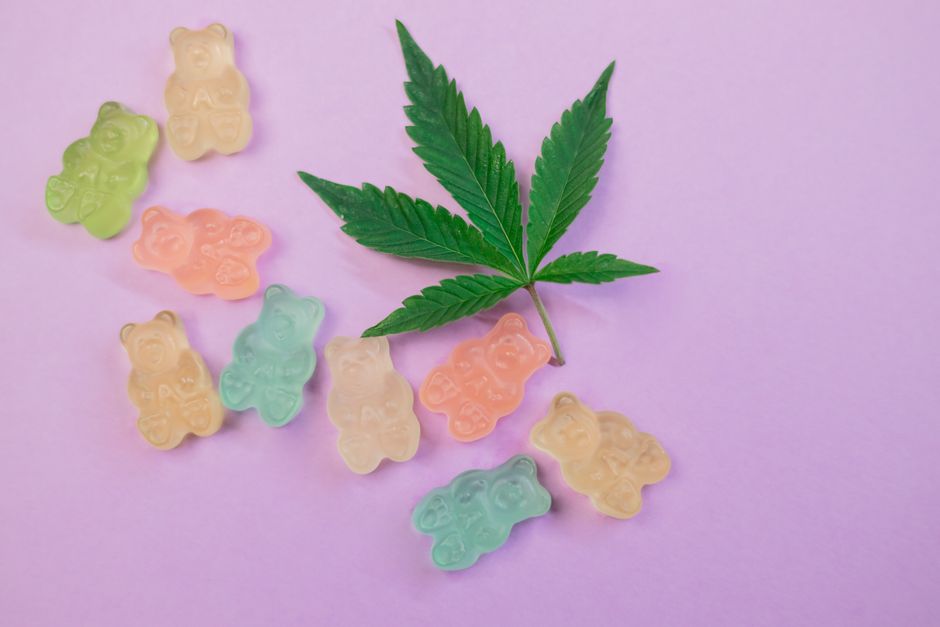
CBD gummies are everywhere right now. You can buy them at gas stations, grocery stores, and online. But a lot of people pause before taking one and ask a simple question: will this make me fail a drug test or get me high? The short answer is that most CBD gummies contain only trace amounts of THC, the compound in cannabis that causes a high. However, the exact amount depends entirely on the type of CBD used and how the product was made. Research shows that full-spectrum gummies can contain up to 0.3% THC, while broad-spectrum and isolate gummies are designed to contain none at all.
What Types of CBD Gummies Exist?
Before you can know if a gummy has THC, you need to know which type of CBD it uses. There are three main categories, and they are not created equal.
Full-spectrum CBD contains all the compounds found in the cannabis plant, including THC. Under federal law, products made from hemp can legally contain up to 0.3% THC. That is a very small amount, but it is not zero.
Broad-spectrum CBD also contains multiple plant compounds, but the THC is removed during processing. These products should contain no detectable THC, though trace amounts can sometimes slip through depending on manufacturing quality.
CBD isolate is the purest form. It is extracted and refined until it contains only CBD and nothing else. Isolate gummies should contain no THC at all.
If you are buying a gummy labeled “broad-spectrum” or “isolate,” the manufacturer is claiming it is THC-free. If you are buying “full-spectrum,” you should expect a small amount of THC to be present.
How Much THC Is Actually in a CBD Gummy?
The legal limit for hemp-derived products in the United States is 0.3% THC by dry weight. That percentage refers to the weight of the product, not the amount in each gummy. A gummy weighing 5 grams with 0.3% THC would contain about 15 milligrams of THC per gummy. That is enough to be detected on a sensitive drug test.
However, most manufacturers do not push the maximum limit. Many full-spectrum products contain far less than 0.3%, often closer to 0.1% or below. The exact amount should be listed on the Certificate of Analysis (COA) that reputable brands publish online. That document shows the results of third-party lab testing and will state precisely how much THC, CBD, and other cannabinoids are in the product.
Here is the key point: even a small amount of THC can accumulate in your body. If you take a full-spectrum gummy daily, THC can build up in your fat tissue over time. This is why people who use full-spectrum CBD products sometimes fail drug tests even if they never felt high.
Can CBD Gummies Get You High?
No, not in the way marijuana does. The 0.3% THC limit is intentionally low. It was set so that hemp products would not produce psychoactive effects. Most people cannot feel any intoxicating effect from this small amount.
That said, there is a difference between feeling high and having THC in your system. You can have measurable levels of THC in your body without ever feeling impaired. The amount in a single full-spectrum gummy is unlikely to cause noticeable intoxication, but it can still show up on a drug test.
Some people are more sensitive than others. A person with very low body weight or a fast metabolism might feel subtle effects from a high-THC full-spectrum product. But for the average person, a single gummy at the legal limit will not produce a high.





What Does the Research Say About THC in CBD Products?
Research on CBD products has consistently found that labels are not always accurate. Several studies have tested commercial CBD products and found significant discrepancies between what the label claims and what is actually in the bottle.
Some research suggests that a notable percentage of CBD products contain more THC than the label states. In some cases, products labeled as “THC-free” were found to contain detectable levels of THC. This is more common with broad-spectrum products than with isolates, but it happens across all categories.
One reason for this is that CBD and THC are chemically similar and come from the same plant. Separating them completely requires sophisticated equipment and careful quality control. Smaller manufacturers may not have the resources to do this reliably.
Another issue is contamination. If a facility processes both full-spectrum and isolate products, trace amounts of THC can carry over between batches. This is why independent lab testing matters. A brand that tests every batch and publishes the results is far more trustworthy than one that does not.
How to Check If Your Gummies Contain THC
You do not have to guess. There is a clear way to find out exactly what is in your gummies.
Look for the Certificate of Analysis, or COA. This is a lab report from an independent testing facility. It should list the levels of CBD, THC, and other cannabinoids in the product. Legitimate brands make these documents easy to find on their websites. Often there is a QR code on the product label that links directly to the COA for that specific batch.
When you read the COA, look for two things:
- The THC level, which may be listed as delta-9 THC
- The date of the test, which should be recent
If a brand does not provide a COA, that is a red flag. It does not necessarily mean the product contains THC, but it means you have no way to verify what is in it. For people who need to avoid THC entirely, such as those subject to drug testing, this is a risk not worth taking.
Who Should Avoid THC in CBD Gummies?
Some people should avoid even trace amounts of THC. If you fall into any of these categories, you should choose broad-spectrum or isolate gummies and verify the lab results yourself.
People who undergo drug testing. Workplace drug tests screen for THC, not CBD. Even small amounts can trigger a positive result, especially with regular use. If your job requires drug testing, full-spectrum products are a gamble.
Pregnant or breastfeeding women. There is no established safe level of THC exposure during pregnancy or while nursing. The American College of Obstetricians and Gynecologists advises against cannabis use during pregnancy. No clinical guidelines currently exist for CBD use in this population, so caution is warranted.
People taking certain medications. THC and CBD both interact with liver enzymes that process many medications. This can change how your body breaks down prescription drugs. If you take medication for a chronic condition, talk to your doctor before using any cannabis product.
People with a history of substance use. Even small amounts of THC can be problematic for individuals in recovery. The safest choice is an isolate product with verified zero THC content.
Why Do Some Gummies Say “Hemp Gummies” Instead of “CBD Gummies”?
This is an important distinction. Hemp gummies and CBD gummies are not the same thing, though the terms are sometimes used interchangeably in marketing.
Hemp gummies are often made from hemp seed oil, which contains no CBD and no THC. They are essentially a food product with potential nutritional benefits from the oil. CBD gummies, on the other hand, are infused with CBD extract and may contain other cannabinoids.
If a product is labeled “hemp gummies,” check the ingredients and the COA. If it does not list CBD content, it likely contains no CBD at all. This is not necessarily bad, but it means you are not getting what you might expect.
Frequently Asked Questions
Will CBD gummies make me fail a drug test?
Full-spectrum gummies can cause a positive drug test because they contain trace amounts of THC. Broad-spectrum and isolate gummies are less likely to, but label accuracy varies by brand.
Are CBD gummies legal if they contain THC?
Yes, as long as the THC content is below 0.3% by dry weight and the product is derived from hemp. Products above that limit are classified as marijuana and are federally illegal.
How do I know if my CBD gummies have THC?
Check the Certificate of Analysis from the manufacturer. This third-party lab report lists the exact THC content. If no COA is available, you cannot verify the THC level.
Can children take CBD gummies?
No clinical guidelines currently exist for CBD use in children. The FDA has approved certain CBD-based medications for specific seizure disorders, but these are prescription drugs, not gummies.
