
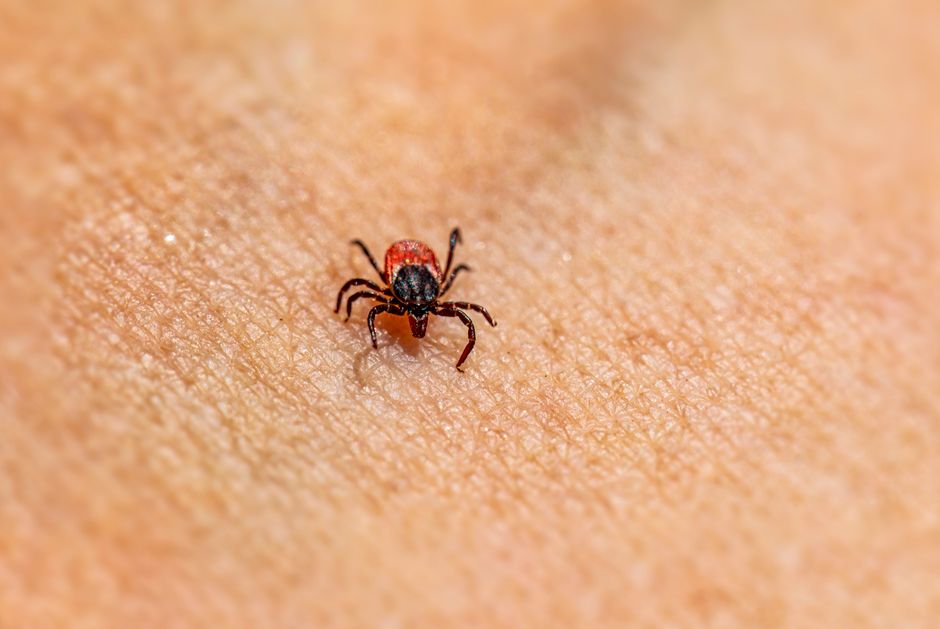
Yes, pet fleas bite humans, but they cannot live on us. Fleas prefer the warmth and fur of dogs and cats, but a hungry flea will happily bite a human leg or ankle. The bites are real, they itch, and they can be mistaken for other skin problems. The good news is that fleas do not set up permanent residence on people the way they do on pets.
Why Do Fleas Bite Humans If They Prefer Pets?
Fleas are parasites that need blood to survive and reproduce. Their bodies are built for moving through fur, not for living on human skin. Human skin is bare, smooth, and lacks the dense hair that gives fleas cover and a place to hide.
Even so, a flea will bite a human if the opportunity arises. This usually happens when a pet brings fleas indoors and the fleas fall off or jump off the animal. The flea detects body heat, movement, and carbon dioxide from breathing. A person sitting on the couch where an infested dog just slept is an easy target.
Fleas do not prefer humans. They bite us because we are available. They do not stay long after feeding because they cannot hide well on us and they cannot reproduce on human blood alone in most cases.
Can Fleas Live On Human Skin Or Hair?
No. Fleas cannot live on humans. They may jump onto a person, bite, and feed, but they will leave shortly after. Human skin does not provide the right environment for fleas to survive long-term.
Fleas need consistent warmth, humidity, and cover to thrive. Human hair on the scalp is too fine and sparse compared to animal fur. Fleas also lay eggs that fall off the host. On a pet, those eggs fall into carpets, bedding, and furniture. On a human, eggs would simply fall to the floor and likely die without the right conditions.
The scientific term for this is that humans are not a reservoir host for fleas. We are an incidental host. We get bitten, but we do not sustain a flea population.
What Do Flea Bites Look And Feel Like?
Flea bites on humans usually appear as small, red, raised bumps. They often show up in clusters or lines, especially around the ankles and lower legs. Some people develop a small red halo around the bite.
The bites itch intensely. Scratching can break the skin and lead to a secondary bacterial infection. If you see red streaks, increased swelling, or warmth around a bite, contact a healthcare provider.
Flea bites are frequently confused with bed bug bites, mosquito bites, or skin allergies. A key difference is location. Flea bites are most common on the lower legs and feet because fleas jump from the floor. Bed bug bites often appear on the arms, neck, and face because bed bugs crawl onto exposed skin while you sleep.
Some people barely react to flea bites. Others develop a more significant allergic response with larger welts and prolonged itching. The reaction depends on individual sensitivity, not on the type of flea.





Do Fleas Carry Diseases That Affect Humans?
Fleas can transmit several diseases to humans, but the risk in most modern households is low. The most well-known flea-borne illness is plague, caused by the bacterium Yersinia pestis. This is rare in the United States and is primarily associated with wild rodents like prairie dogs and ground squirrels, not domestic pets.
Cat scratch disease is another flea-associated illness. It is caused by the bacterium Bartonella henselae. Fleas transmit the bacteria between cats, and humans usually get it from a cat scratch or bite, not directly from a flea bite.
Flea-borne typhus is caused by Rickettsia typhi and is transmitted by rat fleas. Cases occur in some parts of the United States, particularly in California, Texas, and Hawaii. It is treatable with antibiotics.
In most cases, a healthy person bitten by a household pet flea will only experience itching and discomfort. The bigger risk is tapeworm infection, which occurs when a person accidentally swallows a flea. This is more common in young children who may put things in their mouths.
How Do You Treat Flea Bites On Humans?
Treatment focuses on relieving the itch and preventing infection. Wash the area with soap and water. Apply a cold compress to reduce swelling.
Over-the-counter hydrocortisone cream can reduce inflammation and itching. Oral antihistamines such as diphenhydramine (Benadryl) or cetirizine (Zyrtec) can help if the itching is widespread or severe. Calamine lotion is another option that many people find soothing.
Do not scratch. Scratching breaks the skin and opens the door to bacterial infection. If you develop signs of infection — pus, spreading redness, warmth, or fever — see a doctor.
Most flea bites heal on their own within one to two weeks. If bites do not improve or if you have a severe reaction, a healthcare provider can prescribe stronger topical treatments or oral medications.
How Do You Get Rid Of Fleas In Your Home?
Treating the pet is only half the battle. If you only treat the animal, fleas in the environment will jump right back on. You must treat the pet and the home at the same time.
Start with your pet. Use a flea control product recommended by your veterinarian. Many effective options exist, including oral tablets, topical drops, and collars. Some products kill adult fleas quickly. Others disrupt the flea life cycle by preventing eggs from hatching.
Wash all pet bedding in hot water. Vacuum carpets, rugs, and upholstered furniture thoroughly. Pay special attention to areas where your pet sleeps and rests. Vacuuming removes adult fleas, eggs, and larvae. Dispose of the vacuum bag or empty the canister outside immediately after vacuuming.
In severe infestations, you may need an insecticide spray or fogger designed for flea control. Read the label carefully. Some products are safe for use around pets and children only after they dry. Follow the instructions exactly.
Consistency matters. Flea eggs can survive for weeks before hatching. You may need to repeat treatment for several weeks to break the life cycle. A single treatment rarely solves a serious infestation.
How Do You Prevent Flea Bites In The First Place?
Prevention starts with your pet. Keep your dog or cat on year-round flea prevention, even if they are indoor-only. Indoor pets can still get fleas from visiting animals, from you, or from the environment.
Regularly vacuum your home, especially if you have carpet. Wash pet bedding weekly in hot water. Keep your yard tidy by mowing the lawn and removing leaf litter, which provides habitat for fleas and wildlife that carry them.
If you are visiting a home with an active flea problem, wear long pants and socks. Tuck your pants into your socks to reduce exposed skin. Apply an insect repellent containing DEET or picaridin to your ankles and lower legs.
If you suspect fleas in your home but do not have pets, consider that wildlife such as raccoons, opossums, or stray cats may be bringing fleas onto your property. Sealing entry points and removing food sources can help reduce this risk.
Do Fleas Bite Some People More Than Others?
Yes, and this is not about blood type or sweetness of blood. It is about sensitivity. Fleas bite anyone who is available. The difference lies in how each person reacts to the bite.
Some people produce a strong histamine response, resulting in large, itchy welts. Others produce a minimal response and may not even notice they were bitten. This is why two people in the same household can have completely different experiences with the same flea infestation.
There is no evidence that fleas prefer one blood type over another. Claims about blood type preferences are not supported by scientific research. Fleas are drawn to heat, carbon dioxide, and movement — not to the type of blood beneath the skin.
Frequently Asked Questions
Can fleas live in human hair?
No. Fleas cannot live in human hair. Human hair is too fine and sparse compared to animal fur, so fleas cannot hide or reproduce there.
How long do flea bites last on humans?
Flea bites typically heal within one to two weeks. The itching usually subsides within a few days, but the marks may take longer to fade.
Do I need to see a doctor for flea bites?
Most flea bites do not require medical attention. See a doctor if you develop signs of infection, a severe allergic reaction, or if bites do not improve after two weeks.
Can fleas lay eggs on humans?
Fleas do not lay eggs on humans. Eggs would fall off the smooth skin surface and cannot develop without the right environmental conditions.
