
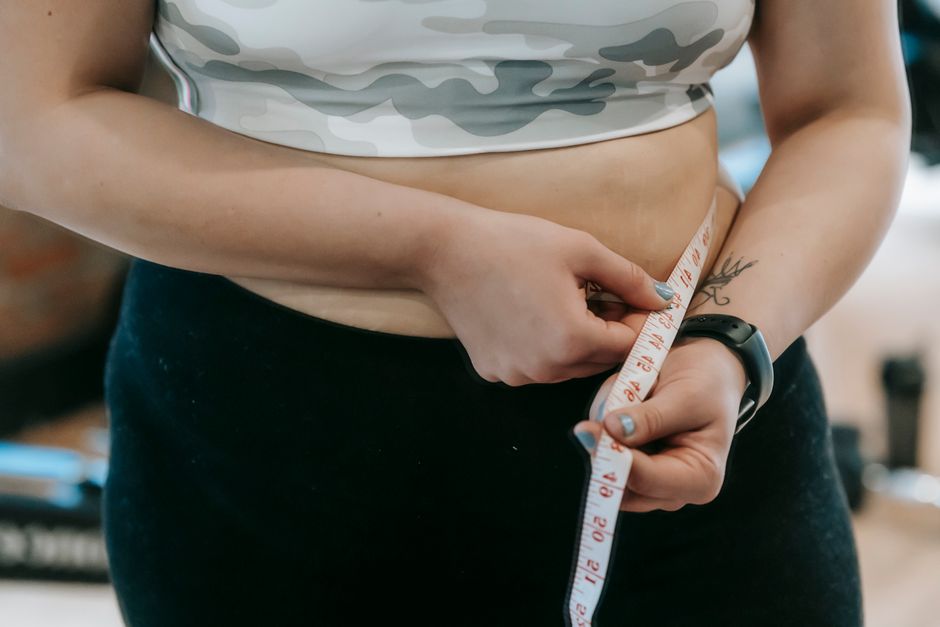
Ab workouts do not reduce belly fat. They build and strengthen the muscles underneath it, but they cannot burn fat from the specific area you are targeting. Spot reduction — the idea that working a body part melts fat from that body part — is not supported by exercise science.
That answer surprises people because it runs against what fitness marketing has promised for decades. Crunches, planks, and leg raises are genuinely good exercises. They just do a different job than fat loss. Understanding why separates a workout plan that works from one that keeps you frustrated.
Why Can’t You Target Fat With Ab Workouts?
Fat is stored energy, and your body pulls from that stored energy in a hormonal and systemic way rather than a local one. When you exercise, hormones such as adrenaline signal fat cells throughout the body to release fatty acids into the bloodstream. Those fatty acids then travel to working muscles and other tissues to be burned as fuel.
That process does not care which muscle is moving. A hard set of crunches does not tell the fat sitting over your abdomen to break down any more than a set of bicep curls would. The fat cells closest to the working muscle do not empty first in any meaningful way.
Researchers have tested this directly. Studies have compared people doing intense abdominal training against people doing other exercise and measured fat in the trained area. The consistent finding is that the abdominal workouts strengthen abdominal muscles without preferentially reducing fat in that region. Fat loss happens across the whole body, and where it comes off first is largely determined by genetics and hormones, not by which exercises you choose.
This is the part most people never hear. You can have a strong, well-developed core and still have a layer of fat covering it. Those are two separate goals that require two separate approaches.
What Do Ab Workouts Actually Do?
Ab exercises make the muscles of your trunk stronger, and that has real value. Your core muscles — the rectus abdominis, the obliques, and the deep stabilizers like the transverse abdominis — support your spine, help you bend and twist, and contribute to balance and posture.
A stronger core shows up in daily life. Lifting a suitcase, getting up from a chair, carrying a child, and swinging a golf club all rely on trunk strength. For people with certain types of low back pain, core strengthening is a common part of physical therapy, though the evidence for which specific exercises help most is mixed.
What ab training does not do is reveal a six-pack on its own. Visible abdominal muscles require two things: developed muscle and low enough body fat to see it. Ab exercises build the first. Only overall fat loss delivers the second.
What Actually Reduces Belly Fat?
Belly fat comes off the same way fat comes off anywhere: through a sustained energy deficit, meaning you burn more calories than you take in over time. That deficit can come from eating less, moving more, or both.
Where you lose fat first and fastest is largely out of your control. Some people notice it in their face or arms before their midsection. Others lose it from the waist early. This pattern is influenced by genetics, sex, age, and hormones, and no exercise selection overrides it.
Two forms of fat live in the abdomen, and they behave differently. Subcutaneous fat sits just under the skin and is what you can pinch. Visceral fat wraps around the internal organs deeper inside. Visceral fat is the more metabolically active and the more health-relevant of the two, and it tends to respond to overall fat loss and regular physical activity. You cannot see or pinch visceral fat, which is one reason waist circumference is often used as a rough indicator.
Aerobic exercise has the strongest body of evidence for reducing visceral fat. Research has fairly consistently found that regular moderate-intensity cardio reduces visceral fat even when body weight does not change much. Resistance training helps preserve and build muscle, which supports your metabolism and overall function. Combining the two is a reasonable, well-supported approach.
What about diet?
Diet generally drives fat loss more than exercise alone, mainly because it is easier to create a calorie deficit by eating less than by exercising enough to burn the same amount. That is not a reason to skip exercise — it is a reason not to rely on it exclusively for fat loss.
No single food, supplement, or “fat-burning” product has been shown to reliably target belly fat. Some supplements are marketed with claims that no large human trial has confirmed. Protein intake and fiber both support satiety, which can make a calorie deficit easier to maintain, but neither targets the abdomen specifically.





Does Cardio or Strength Training Work Better for Belly Fat?
Both help, and they help in different ways. Cardio burns more calories during the activity itself and has the clearest evidence for reducing visceral fat. Strength training builds muscle, which supports strength, function, and long-term metabolic health. Neither one spot-reduces.
If the goal is fat loss, the more useful question is which approach you will actually stick with. Consistency over months matters far more than the specific method. A brisk walk you do five days a week beats a brutal workout you quit after two weeks.
High-intensity interval training has gotten attention for fat loss, and it does burn calories efficiently in a short time. Whether it is superior to steady-state cardio for belly fat specifically is not clearly settled. The evidence is mixed, and total energy expenditure and consistency still matter most.
Should You Still Do Ab Workouts?
Yes, if you want a stronger core — just not as a fat-loss strategy. Think of ab training as building the structure and cardio plus diet as removing what covers it. Both belong in a complete plan, but they serve separate purposes.
If visible abs are the goal, the honest expectation is that you need to lower overall body fat, and how low depends on your genetics and starting point. For many people, reaching the body fat level where abs are clearly visible requires a fairly lean state that takes sustained effort and is not realistic or healthy for everyone to maintain.
A few practical points:
- Train your core two to three times a week for strength, not daily.
- Prioritize overall activity — walking, cycling, swimming, or any cardio you enjoy.
- Add resistance training for the whole body, not just the abs.
- Address diet if fat loss is the goal, since it drives most of the change.
- Expect a timeline of months, not weeks. Fat loss is gradual and rarely linear.
The non-obvious point here is that a strong core and a flat stomach are not the same achievement, and chasing one with the tools meant for the other is where most people get stuck. Crunches are not failing you. They were just never designed to do the job you were asking of them.
Do Ab Workouts Reduce Belly Fat Faster With More Reps?
More reps build more muscular endurance, not more fat loss. Doing 500 crunches instead of 50 does not burn belly fat faster, because the limiting factor is your overall energy balance, not your rep count.
Very high-rep abdominal work can actually work against you if it crowds out time and energy you could spend on cardio, strength training, or recovery. The muscles also need rest to adapt, so daily high-volume ab training is not more effective than training them a few times a week.
If you enjoy high-rep core work and it fits your routine, there is no harm in it. Just do not expect the extra reps to change where your body burns fat. That part is not up to your abs.
Frequently Asked Questions
Can you lose belly fat by doing only ab exercises?
No. Ab exercises strengthen the abdominal muscles but do not burn fat from the abdomen specifically. Fat loss requires an overall calorie deficit, which reduces fat across the whole body.
Why do some people have visible abs without doing ab workouts?
Visible abs depend mostly on having low enough body fat to see the muscles underneath. People with low body fat can show abdominal definition even with minimal direct ab training.
What is the fastest way to reduce belly fat?
There is no fast, targeted method. A sustained calorie deficit through diet and regular aerobic exercise has the strongest evidence for reducing belly fat, including visceral fat, and results typically take months.
Do planks or crunches burn belly fat?
Neither burns fat from the belly specifically. Both build core strength, which is valuable for posture, balance, and daily movement, but fat loss comes from overall energy balance.
