

Mold is everywhere — in damp basements, around leaky windows, behind bathroom tiles. It can make a home smell musty and trigger coughing and sneezing. So it is reasonable to ask whether breathing mold spores could lead to pneumonia.
The short answer: mold itself is not a common cause of pneumonia in healthy people. The organisms that most often cause pneumonia are bacteria and viruses. But mold can cause other serious lung problems, and in people with weakened immune systems, certain molds can invade the lungs in ways that resemble pneumonia. The distinction matters, because the treatment is different.
Can You Get Pneumonia From Mold?
Mold is not a typical pneumonia-causing organism in the way that Streptococcus pneumoniae or influenza virus is. When doctors talk about pneumonia, they usually mean an infection of the lung’s air sacs caused by bacteria, viruses, or — less often — fungi. Mold is a type of fungus, so the question becomes whether mold can act as a fungal cause of pneumonia.
It can, but mostly in specific groups of people. Fungal lung infections from mold are uncommon in healthy adults. They tend to occur in people whose immune defenses are weakened, such as those receiving chemotherapy, organ transplant recipients, or people with advanced HIV. In those situations, molds like Aspergillus can grow inside the lungs and cause invasive disease that is treated with antifungal medication.
For most people living in a home with mold, the realistic concerns are allergy and irritation — not pneumonia.
What Is the Difference Between Mold Exposure and Pneumonia?
Mold exposure and pneumonia are two different problems that can produce some overlapping symptoms, which is part of why they get confused.
Pneumonia is an infection. It causes inflammation in the lung tissue, and the air sacs can fill with fluid or pus. Common symptoms include fever, chills, a productive cough, chest pain when breathing, and shortness of breath. It is diagnosed with a chest X-ray, physical exam, and sometimes lab tests.
Mold exposure in an otherwise healthy person more often leads to:
- Nasal stuffiness and sneezing
- Itchy, watery eyes
- Dry cough or throat irritation
- Wheezing in people with asthma
- Skin irritation after contact
These are allergic and irritant reactions, not infections. A runny nose from mold is not pneumonia. A cough from mold is usually not pneumonia either — though a cough that lingers, brings up discolored mucus, or comes with fever deserves a medical evaluation.
Who Is at Higher Risk From Mold in the Lungs?
Some people are more vulnerable to mold-related lung problems than others. Risk depends on the person’s immune status and underlying lung health.
Groups that face higher risk include:
- People with weakened immune systems from illness or immune-suppressing medications
- People with asthma, whose airways may react strongly to mold spores
- People with cystic fibrosis or other chronic lung conditions
- People who have had a lung transplant
In these groups, mold can contribute to conditions that are more serious than a simple allergy. One example is allergic bronchopulmonary aspergillosis, in which the immune system reacts to Aspergillus mold in the airways and causes inflammation. Another is invasive aspergillosis, where the mold actually grows into lung tissue — this is the form that can behave like pneumonia and requires antifungal treatment.
It is worth being clear that these conditions are not the same as getting “pneumonia from mold” in a healthy person. They are specific diagnoses with specific risk factors.



Can Mold Cause Pneumonia in Children or Infants?
Mold does not commonly cause pneumonia in children or infants either. The usual causes of childhood pneumonia are viruses and bacteria, and this is well established in pediatric medicine.
That said, children with asthma or allergies may be more sensitive to mold in the home, and their symptoms can flare when mold levels are high. Infants and young children with fever, fast breathing, or difficulty breathing need prompt medical attention regardless of any mold exposure — those symptoms can signal pneumonia from a common infection and should not be attributed to mold without evaluation.
No clinical guidelines currently exist for diagnosing or treating “mold pneumonia” in children, because it is not a recognized common diagnosis in that group.
How Do You Tell If Mold Is Affecting Your Health?
There is no simple test that says “mold is causing your symptoms.” Doctors usually work by pattern and history rather than a single mold test.
Clues that mold may be involved include symptoms that get worse when you are in a particular building and better when you leave, a visible or musty mold problem in that space, and symptoms that look like allergy rather than infection — sneezing, itchy eyes, and congestion rather than fever and chest pain.
If you have fever, shaking chills, chest pain with breathing, or you are coughing up blood, that points away from simple mold allergy and toward an infection or another condition that needs medical care. Do not assume mold is the cause. Get evaluated.
Blood tests for mold allergy exist, and they can show whether you are sensitized to mold. But a positive allergy test does not prove that mold in your home is causing your current symptoms, and it does not diagnose pneumonia.
Does Removing Mold From Your Home Help?
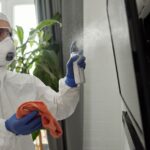
Reducing indoor mold and moisture is reasonable and is supported by public health guidance. The Centers for Disease Control and Prevention and other health agencies recommend fixing water leaks, controlling humidity, and cleaning up mold growth — not because mold commonly causes pneumonia, but because damp indoor environments are linked to respiratory symptoms, asthma flare-ups, and allergies.
What the evidence does not show is that mold remediation cures pneumonia or prevents it in healthy people. If someone has a bacterial or viral pneumonia, removing mold from the house will not treat the infection. That requires the appropriate medical treatment.
Practical steps that health agencies generally recommend include:
- Fixing leaks and water damage promptly
- Keeping indoor humidity under control
- Ventilating bathrooms, kitchens, and laundry areas
- Cleaning visible mold from hard surfaces with appropriate products
- Removing and replacing moldy porous materials like soaked drywall or carpet
For large mold problems, professional remediation may be needed. This is about improving indoor air quality, not about preventing pneumonia specifically.
When Should You See a Doctor?
See a doctor if you have symptoms that suggest infection rather than allergy. These include fever, chills, a cough that produces colored or bloody mucus, chest pain when you breathe, and shortness of breath.
You should also seek care if you have a weakened immune system and develop new respiratory symptoms, because the risk of a serious fungal or other infection is higher in that group. Early evaluation matters more when your immune defenses are reduced.
Finally, if allergy-type symptoms from mold are persistent or interfering with daily life, a doctor or allergist can help sort out whether mold is truly the trigger and what can be done about it.
Frequently Asked Questions
Can mold give you pneumonia?
Mold is not a common cause of pneumonia in healthy people, where bacteria and viruses are the usual culprits. Certain molds can cause fungal lung infections that resemble pneumonia, but mainly in people with weakened immune systems.
What are the symptoms of mold exposure in the lungs?
Mold exposure most often causes allergy-type symptoms such as sneezing, congestion, itchy eyes, and cough or wheezing. Fever, chills, and chest pain point more toward an infection and should be evaluated by a doctor.
Can black mold cause pneumonia?
So-called black mold is not a recognized common cause of pneumonia in healthy people. Some molds, including certain Aspergillus species, can cause serious lung infection in people with weakened immune systems.
How do I know if my cough is from mold or pneumonia?
A mold-related cough is usually dry and linked to allergy, while pneumonia often brings fever, chills, and a cough with mucus. Only a medical evaluation with an exam and sometimes a chest X-ray can tell them apart.
