
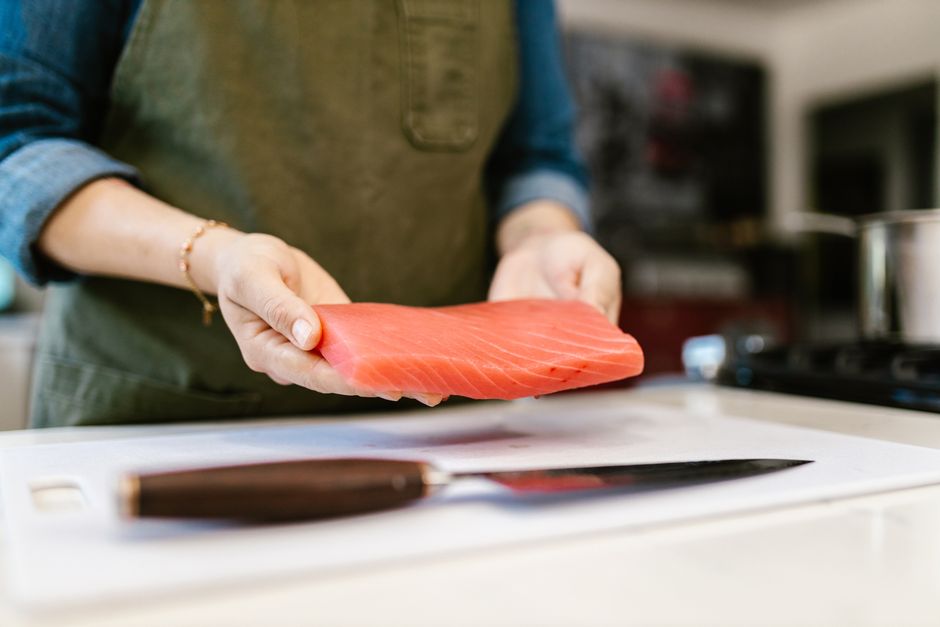
Yes, you can get a parasite from eating salmon, but it is highly preventable. The specific parasites found in salmon are killed by proper freezing or thorough cooking. The risk comes down to how the fish is handled before it reaches your plate, not whether salmon is inherently dangerous.
What Parasites Are Found In Salmon?
Two main types of parasites affect salmon. The most common are roundworms from the family Anisakidae, usually called anisakis. The second type is tapeworms, specifically the broad fish tapeworm Diphyllobothrium.
These parasites are natural parts of the marine environment. Salmon pick them up by eating smaller infected fish and crustaceans. The parasites live in the salmon’s muscle tissue and internal organs. Wild salmon tend to have higher exposure because they feed on a wider variety of prey. Farmed salmon are generally considered lower risk because they are fed processed feed that breaks the parasite’s life cycle.
That does not mean farmed salmon is guaranteed parasite-free. It just means the risk profile is different. Both types can carry parasites depending on farming practices and location.
Can You Get Anisakis From Salmon?
Yes. Anisakis is the parasite most frequently linked to salmon consumption. When a person eats raw or undercooked salmon containing live anisakis larvae, the larvae can attach to the stomach or intestinal wall.
This causes a condition called anisakiasis. Symptoms usually appear within hours of eating the infected fish. They include severe abdominal pain, nausea, vomiting, and sometimes an allergic reaction. In some cases, the parasite passes through the digestive tract without causing lasting harm. In other cases, it burrows into the tissue and requires medical removal.
Anisakis infections are not common in the United States, but they are underreported. Many mild cases resolve on their own and are never diagnosed. The most important point is that freezing or cooking kills the larvae before they can cause infection.
Can You Get A Tapeworm From Salmon?
Yes. The broad fish tapeworm is the other parasite of concern. This infection is called diphyllobothriasis. It is less common than anisakiasis in the U.S., but it is a real risk when eating raw or undercooked salmon.
Tapeworm infections can be silent for a long time. Some people have no symptoms at all. Others develop abdominal discomfort, diarrhea, or weight loss. A tapeworm can grow very large inside the intestine, and some people pass segments of the worm in their stool. This is often how people realize they are infected.
Unlike anisakis, which causes acute symptoms quickly, tapeworm infections develop slowly over weeks or months. The treatment is a prescription antiparasitic medication. It is highly effective, but prevention is much easier than treatment.




Does Freezing Kill Parasites In Salmon?
Yes, freezing kills parasites when done correctly. This is the standard method used by sushi-grade fish suppliers. The U.S. Food and Drug Administration recommends freezing fish at negative 4 degrees Fahrenheit (negative 20 degrees Celsius) for at least 7 days to kill parasites. An alternative is freezing at negative 31 degrees Fahrenheit (negative 35 degrees Celsius) for 15 hours.
Home freezers are a separate issue. Most home freezers do not get cold enough to kill parasites reliably. Many home freezers operate around 0 degrees Fahrenheit, which is not cold enough. Even if a home freezer reaches the right temperature, it may not maintain it consistently. Relying on a home freezer to make raw salmon safe is not reliable.
Commercial flash freezing is the industry standard. This process freezes fish rapidly at very low temperatures. It kills parasites while preserving the texture and flavor that raw fish lovers expect. If you are buying salmon specifically for raw consumption, it must be labeled as sushi-grade or sashimi-grade. That label means it has been frozen according to FDA guidelines.
Smoked salmon is a separate case. Cold-smoked salmon is not cooked. It relies on the freezing process to kill parasites. Hot-smoked salmon is cooked and is safe to eat without freezing first.
Does Cooking Salmon Kill Parasites?
Yes. Cooking salmon to an internal temperature of 145 degrees Fahrenheit kills parasites. At this temperature, the fish is opaque and flakes easily with a fork. This is the FDA’s recommended internal temperature for all fish.
Some people prefer salmon cooked to lower temperatures for texture reasons. The FDA recommendation is 145 degrees, but many chefs cook salmon to around 125 to 130 degrees for a medium finish. This is a personal choice, but it carries a small parasite risk if the salmon was not previously frozen.
The safest approach is to start with previously frozen salmon and then cook it to your preferred doneness. The freezing step kills parasites, and the cooking step kills any bacteria. This combination addresses both parasite and bacterial risks.
What Are The Symptoms Of A Parasite Infection From Salmon?
Symptoms depend on the type of parasite. Anisakis causes symptoms quickly, usually within a few hours. The most common signs are severe stomach pain, nausea, and vomiting. Some people develop an allergic reaction with hives or itching. In rare cases, anisakis can cause a severe allergic response called anaphylaxis.
Tapeworm infections are different. Symptoms may not appear for weeks. When they do, they include mild abdominal pain, diarrhea, and unexplained weight loss. Some people notice segments of the worm in their stool. Vitamin B12 deficiency can develop in long-standing infections because the tapeworm absorbs this vitamin from the host.
If you ate raw or undercooked salmon and develop severe abdominal pain within hours, seek medical attention. This is especially important if the pain is intense or accompanied by vomiting. Doctors can diagnose anisakiasis with an endoscopy, which allows them to see and remove the parasite directly.
How Common Is This Actually?
Parasite infections from salmon are rare in the United States. The combination of commercial freezing and widespread cooking practices keeps infection rates very low. Japan has higher reported rates of anisakiasis because raw fish consumption is more common there. Even in Japan, the condition is not common relative to the amount of fish eaten.
Global cases of anisakiasis are estimated in the tens of thousands per year, but this number includes all fish, not just salmon. The actual number of salmon-specific infections is much lower. Tapeworm infections from salmon have declined significantly in developed countries due to improved fishing practices and freezing standards.
The risk is real but manageable. Understanding how parasites are killed gives you control over your own safety. The people who get infected are almost always eating fish that was never properly frozen or cooked.
Is Farmed Salmon Safer Than Wild Salmon?
Farmed salmon is generally considered lower risk for parasites. The reason is feed. Farmed salmon are fed processed pellets that do not contain live parasite larvae. Wild salmon eat live prey, which is how they acquire parasites.
This difference is well documented in research. Studies have found significantly lower parasite loads in farmed Atlantic salmon compared to wild Pacific salmon. Some studies found no parasites at all in farmed salmon from certain regions.
However, farmed salmon is not zero risk. Parasite infections have been documented in farmed fish, especially in open-net pen systems where wild fish can swim through. The risk is lower, not absent. If you are eating raw salmon, the freezing standard matters more than whether the fish was farmed or wild.
How To Safely Eat Salmon
For cooked salmon, the rule is simple. Cook to 145 degrees Fahrenheit and the parasites are dead. This applies to fresh, frozen, wild, or farmed salmon.
For raw salmon, only eat fish that has been commercially frozen according to FDA guidelines. Look for sushi-grade or sashimi-grade labels. These labels indicate the fish was frozen at the required temperature and duration to kill parasites.
Do not rely on visual inspection. Parasite larvae in salmon muscle are often too small to see with the naked eye. A fish can look perfectly fresh and still contain parasites. Freezing is the only reliable way to make raw salmon safe.
If you catch salmon yourself, treat it with extra caution. Recreational catch is not commercially frozen. You must either cook it thoroughly or freeze it at the proper temperature for the required time. A standard home freezer is not sufficient for this purpose.
Frequently Asked Questions
Can you get parasites from eating raw salmon?
Yes, raw salmon can contain live parasites if it was not properly frozen first. Commercially frozen sushi-grade salmon is safe because the freezing process kills parasites.
Does lemon juice or vinegar kill parasites in salmon?
No. Acidic marinades like lemon juice or vinegar do not kill parasites. Only freezing at the correct temperature or cooking to 145 degrees Fahrenheit kills them.
Can you see parasites in salmon?
Some parasites are visible as small white or cream-colored worms in the flesh, but many are too small to see. Visual inspection is not a reliable way to detect parasites.
Is it safe to eat salmon every day?
Eating salmon every day is generally safe for most people when it is properly cooked or commercially frozen. The main concern is mercury, but salmon is a low-mercury fish.
