
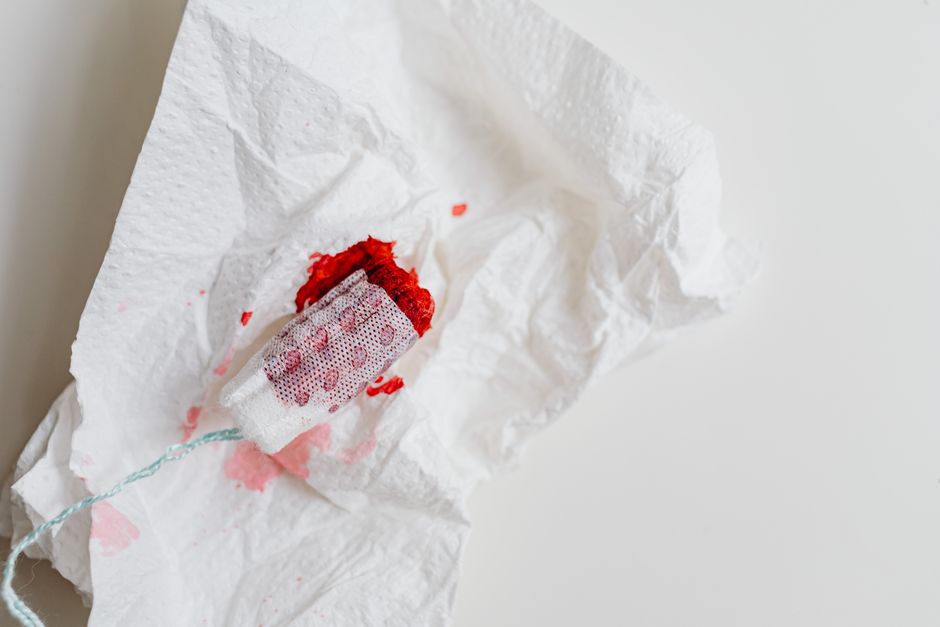
After 12 straight months without a period, any vaginal bleeding is not a period. It is a symptom that needs a medical explanation. Doctors call this postmenopausal bleeding, and while most causes turn out to be non-cancerous, it is treated as a warning sign until proven otherwise.
Bleeding is not a normal part of menopause itself. Menopause is defined as the point 12 months after your final menstrual period. Once you reach that point, the hormonal cycling that drove monthly bleeding has stopped. So bleeding after that date is coming from something else, and that something needs to be identified.
The good news is that the large majority of cases are not cancer. The important part is that you do not wait to find out which category you fall into.
Can You Bleed During Menopause?
Yes, bleeding can happen during the menopausal transition, and the pattern of that bleeding matters a great deal.
There are two distinct phases people often confuse. Perimenopause is the years leading up to the final period, when hormone levels swing unpredictably. Bleeding during perimenopause is expected, though it can become irregular, heavier, lighter, or spaced differently than before. Postmenopause is everything after that 12-month mark. Bleeding then is not expected.
This distinction is the single most useful thing to understand. A woman still having occasional periods is in a different situation than a woman who has gone a full year without one and then bleeds. The first is usually a normal transition. The second always warrants evaluation.
Some clinicians use the term “menopause” loosely to cover the whole transition, which creates confusion. For medical purposes, the definition is precise: 12 consecutive months without menstruation, with no other cause. Keep that definition in mind, because it determines what your bleeding means.
What Causes Bleeding After Menopause?
The causes fall into a few broad groups, and most of them are treatable.
Vaginal atrophy, now more often called genitourinary syndrome of menopause, is one of the most common sources. Falling estrogen makes vaginal and urinary tissues thinner, drier, and more fragile. Those tissues can bleed with friction, during sex, or even from minor irritation. This is not dangerous, but it can be uncomfortable and recurrent.
Endometrial atrophy is another frequent cause. The lining of the uterus also thins when estrogen drops, and a thin lining can shed small amounts of blood.
Polyps and fibroids are growths in the uterus or cervix. Polyps are usually benign. Fibroids are almost always benign. Either can cause bleeding.
Endometrial hyperplasia is a thickening of the uterine lining. Some forms are benign, but certain types can progress to cancer over time if untreated. This is why hyperplasia is taken seriously and usually treated.
Endometrial cancer is the cause doctors are most concerned about ruling out. It is the most common cancer of the female reproductive organs in the United States. Postmenopausal bleeding is its most common presenting symptom. That said, most women who bleed after menopause do not have cancer.
Other causes include infection, inflammation of the uterine lining, blood-thinning medications, and in rare cases, bleeding from nearby structures such as the bladder or rectum that can be mistaken for vaginal bleeding.
How Common Is Postmenopausal Bleeding?
It is common enough that most gynecologists see it regularly. Estimates vary, but a meaningful share of postmenopausal women experience at least one episode.
What matters more than the raw frequency is the proportion that turns out to be cancer. Across studies, roughly one in ten cases of postmenopausal bleeding is eventually found to be endometrial cancer. That means about nine in ten are not cancer. Those numbers are approximate and vary by population and how cases are counted, but the general picture is consistent: most bleeding is benign, and a minority is serious.
That minority is exactly why the symptom cannot be ignored. A one-in-ten chance is far too high to dismiss, and it is high enough that guidelines recommend evaluation rather than watchful waiting.





When Should You See a Doctor?
Any bleeding after 12 months without a period should prompt a call to your doctor. That includes spotting, light pink discharge, brown discharge, and a single episode that stops on its own.
Do not wait to see if it happens again. A single episode is enough to warrant evaluation. Bleeding that resolves by itself does not rule out a serious cause.
Also pay attention to bleeding during perimenopause that becomes unusually heavy, lasts longer than a week, occurs between periods, or happens after sex. Those patterns are not automatically dangerous, but they deserve a conversation.
If you are unsure whether you have reached menopause, track your bleeding dates. Knowing the date of your last period helps your doctor interpret what is happening.
How Is Postmenopausal Bleeding Evaluated?
Evaluation is straightforward and usually begins with a pelvic exam and ultrasound.
A transvaginal ultrasound measures the thickness of the uterine lining, called the endometrial stripe. A thin lining makes cancer much less likely. A thickened lining raises concern and usually leads to tissue sampling.
Endometrial biopsy is the standard next step when the lining is thickened or when bleeding persists. A small sample of the uterine lining is taken and examined under a microscope. This is the definitive test for detecting hyperplasia and cancer.
Sometimes a procedure called hysteroscopy is used. A thin scope is passed through the cervix to look directly at the inside of the uterus, and tissue can be sampled at the same time. Some clinicians use hysteroscopy when a biopsy does not provide enough information or when a polyp is suspected.
If the uterus looks normal but bleeding continues, your doctor may also check for causes outside the uterus, including the cervix, bladder, and rectum.
What Does the Evidence Say About Outcomes?
The evidence here is reassuring in one direction and cautionary in the other.
Reassuring: most postmenopausal bleeding has a benign cause, and many cases resolve once the underlying issue is treated. Atrophic changes, polyps, and benign hyperplasia are all manageable.
Cautionary: when cancer is present, it is often found at an early stage precisely because bleeding prompts evaluation. Endometrial cancer detected early generally has a favorable prognosis compared with many other cancers. This is one reason the symptom is taken seriously rather than watched.
What the research does not support is the idea that you can safely wait and see. Studies consistently show that delaying evaluation after postmenopausal bleeding is associated with worse outcomes. The evidence does not tell us exactly how long is too long, but the direction is clear.
One clarification worth making: bleeding after menopause is not itself a disease. It is a signal. The job of evaluation is to find what is producing the signal.
What About Hormone Therapy and Bleeding?
Hormone therapy can cause bleeding, and the pattern depends on the type.
Estrogen alone is generally prescribed only for women who have had a hysterectomy, because estrogen alone can stimulate the uterine lining in women who still have a uterus. In women with a uterus, estrogen is usually combined with a progestin to protect the lining.
With combined therapy, some bleeding or spotting is common in the first few months as the body adjusts. Planned bleeding on a cyclic regimen is expected. Unplanned bleeding that continues or starts later should be reported to your doctor.
If you are on hormone therapy and bleeding is new, heavier, or persistent, that is a reason to check in. Do not stop or change your medication on your own.
What Should You Do if It Happens to You?
Call your doctor. That is the whole answer, and it is the same answer whether the bleeding is a single spot or a heavier flow.
Write down when it started, how much there was, and whether it has happened before. Bring the date of your last period if you know it. These details help your doctor decide how urgently to evaluate you.
Do not assume it is just dryness or just stress. Do not assume it will pass. Most of the time it is not cancer, but the only way to know is to look.
Frequently Asked Questions
Can you bleed during menopause and it be normal?
Bleeding during perimenopause, before your final period, is expected and usually normal. Bleeding after 12 full months without a period is not normal and should always be evaluated.
What percentage of postmenopausal bleeding is cancer?
Roughly one in ten cases is eventually found to be endometrial cancer, though estimates vary by study and population. That means about nine in ten cases have a non-cancerous cause.
How long after menopause can you still bleed?
There is no time limit after which bleeding becomes expected. Any bleeding at any point after the 12-month mark warrants a medical evaluation, no matter how much time has passed.
Does spotting after menopause always mean cancer?
No. Most spotting after menopause is caused by non-cancerous conditions such as vaginal atrophy, polyps, or a thin uterine lining. Even so, spotting is a reason to see a doctor rather than wait.
