
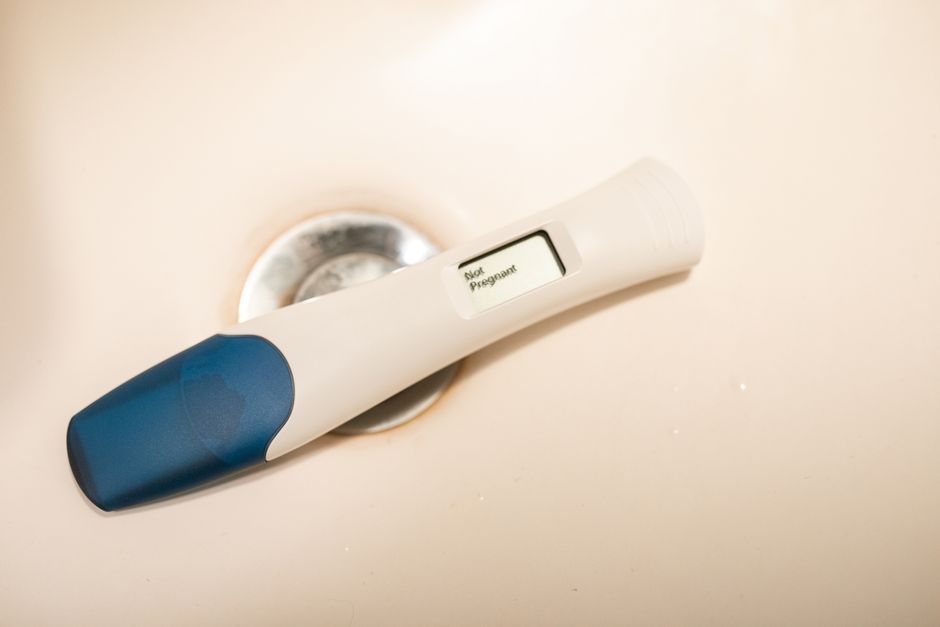
Yes, you can be pregnant and still get a negative home pregnancy test result. This is known as a false negative. It happens more often than most people realize, and the reasons are usually straightforward. Understanding how these tests work and what can interfere with them will help you know when to trust the result and when to test again.
How Home Pregnancy Tests Work
Home pregnancy tests detect a hormone called human chorionic gonadotropin, or hCG. The body starts producing this hormone after a fertilized egg implants in the uterus. Implantation typically happens 6 to 10 days after ovulation.
The placenta begins making hCG quickly after implantation. Levels double roughly every 48 to 72 hours in early pregnancy. The test strip contains antibodies that bind to hCG in your urine. When enough hCG is present, a colored line appears.
Most home tests claim to detect pregnancy on the first day of a missed period. But that claim depends on the sensitivity of the test and the amount of hCG in your urine at that moment.
Why You Can Get a Negative Test While Pregnant
The most common reason for a false negative is testing too early. Your body may not have produced enough hCG yet for the test to detect. Urine hCG levels rise quickly, so a test taken even 48 hours later may show a different result.
Diluted urine is another frequent cause. Testing after drinking large amounts of fluid can lower the hCG concentration in your urine. This is why most test instructions recommend using first-morning urine, when hCG levels are most concentrated.
Some tests are simply less sensitive than others. A test with a sensitivity threshold of 25 mIU/mL requires more hCG than one with a 10 mIU/mL threshold. If your hCG level is between those numbers, a less sensitive test may miss it.
Rarely, a condition called the hook effect can cause a false negative. This happens when extremely high levels of hCG overwhelm the test antibodies. The test cannot bind properly, and the line does not appear. This is uncommon and typically associated with certain pregnancy-related conditions.
How Soon Can You Test?
Testing before your missed period increases the chance of a false negative. Even sensitive tests can miss a pregnancy if you test more than a few days before your period is due.
For the most reliable result, wait until the first day of your missed period. If your cycles are irregular, wait at least 14 days after you think you ovulated. Testing at these times gives your body enough time to produce detectable hCG levels.
If you get a negative result but your period does not arrive, wait 3 to 5 days and test again. This time frame allows hCG levels to rise significantly if you are pregnant. A second negative test with a missed period makes pregnancy much less likely.


Blood Tests vs. Urine Tests
Blood tests for hCG are more sensitive than urine tests. A qualitative blood test simply confirms whether hCG is present. A quantitative blood test measures the exact amount of hCG in your blood.
Blood tests can detect pregnancy earlier than urine tests, sometimes as soon as 6 to 8 days after ovulation. They are performed in a doctor’s office or laboratory. Results may take a few hours to a day or more.
If you have negative home tests but still think you might be pregnant, a blood test is the more definitive option. Your doctor can order this test and explain the results.
Signs of Pregnancy When the Test Is Negative
Pregnancy symptoms vary widely. Some women have noticeable symptoms early, while others have almost none. Common early signs include breast tenderness, fatigue, nausea, and frequent urination.
These symptoms are not proof of pregnancy. They can also be caused by hormonal changes in a normal menstrual cycle, stress, or illness. Relying on symptoms alone is not a reliable way to confirm pregnancy.
The only way to confirm pregnancy is a positive test result or an ultrasound. If your symptoms persist and tests remain negative, a doctor visit is the right next step.
Medical Conditions That Cause False Results
Certain medical situations can create confusing test results. An ectopic pregnancy, where the embryo implants outside the uterus, can produce lower hCG levels. This may lead to negative urine tests even though pregnancy has occurred.
A chemical pregnancy is a very early miscarriage that happens shortly after implantation. hCG may be present briefly but drop quickly. A test taken after the drop will be negative.
Some medications containing hCG, such as certain fertility treatments, can cause a false positive. This is different from a false negative but worth knowing about if you are undergoing fertility treatment.
If you have irregular bleeding, pelvic pain, or a history of ectopic pregnancy, seek medical attention even with negative tests. These symptoms require evaluation regardless of test results.
What to Do After a Negative Test
If your period arrives, you are not pregnant. The negative test was correct. If your period does not arrive within one week, test again or contact your doctor.
Testing too frequently can cause unnecessary stress. Home tests are most accurate when used as directed and at the appropriate time. Follow the instructions on your specific test brand for the best result.
If you have irregular cycles, tracking ovulation can help you time testing better. Ovulation predictor kits, basal body temperature tracking, and cycle apps can help identify when you are most likely to conceive.
When to See a Doctor
See a doctor if you have a missed period and multiple negative tests. They can perform a blood test or ultrasound to determine what is happening. This is especially important if you have symptoms of pregnancy.
Seek immediate care if you have severe pelvic pain, shoulder pain, dizziness, or fainting. These can be signs of an ectopic pregnancy, which is a medical emergency. Do not wait for another home test.
If you are trying to conceive and have irregular cycles or have been unable to get pregnant after a year of trying, discuss this with your doctor. They can assess for underlying conditions affecting fertility.
Frequently Asked Questions
Can you be pregnant with a negative test?
Yes, a false negative can happen if you test too early, use diluted urine, or use a less sensitive test. Testing again after a few days usually gives a clearer answer.
How many days after a missed period should I test?
Test on the first day of your missed period for the most reliable result. If your period does not come, test again 3 to 5 days later.
Can stress cause a false negative pregnancy test?
Stress does not directly affect hCG levels in a way that causes false negatives. However, stress can delay your period, which may make you test before hCG levels are detectable.
What should I do if I have pregnancy symptoms but negative tests?
Wait a few days and test again with first-morning urine. If symptoms continue and tests stay negative, see a doctor for a blood test.
