
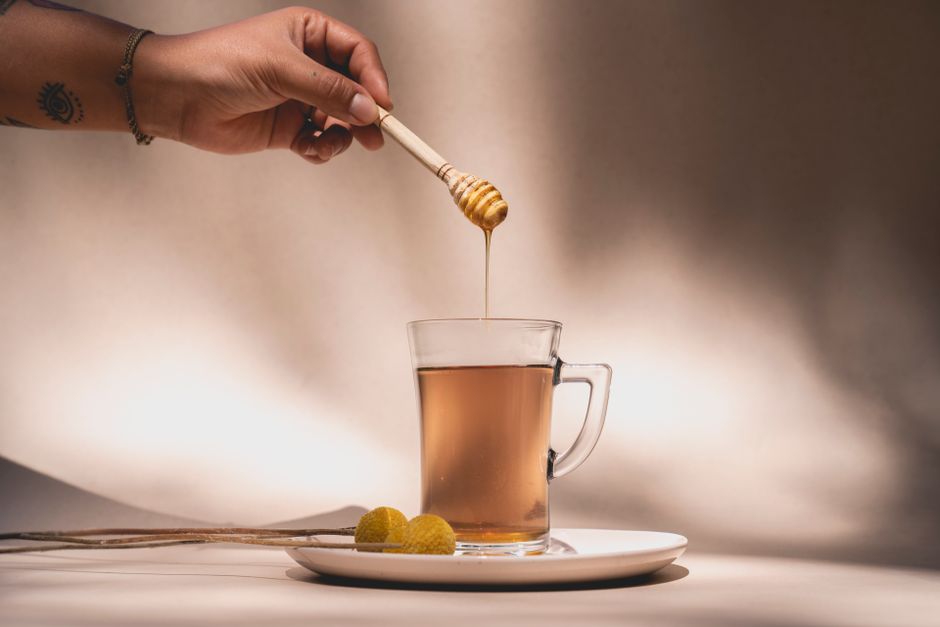
Honey is an animal product. That single fact answers the question for most vegans: no, vegans do not eat honey. Veganism, as defined by the Vegan Society when it coined the term in 1944, is a way of living that seeks to exclude, as far as possible and practicable, all forms of exploitation of and cruelty to animals for food, clothing, or any other purpose. Honey is made by bees, harvested by humans, and sold as food. For a strict vegan, that puts it in the same category as dairy or eggs.
But the honey question splits the vegan community more than almost any other food debate. Some vegans avoid it completely. Others eat it and still call themselves vegan. And a third group avoids it not for animal-welfare reasons but because they see commercial beekeeping as environmentally harmful. Understanding why requires looking at what honey actually is, how it is produced, and what the arguments on each side actually claim.
Why Do Vegans Avoid Honey?
The core vegan argument against honey is not about whether bees suffer in the way a cow or pig suffers. It is about consent and exploitation. Bees cannot consent to having their honey taken. Vegans who avoid honey generally hold that using another species’ labor or product for human benefit is wrong regardless of whether that species is sentient in a human-like way.
There is also a practical welfare argument. Commercial honey production involves practices that can harm bees:
- Hives are often managed so that bees produce more honey than they need, and the surplus is removed.
- In many operations, hives are transported long distances on trucks to pollinate crops, which stresses colonies.
- Some beekeepers cull colonies after harvest season rather than overwinter them, because replacing bees can be cheaper than feeding them through winter.
- Queen bees are sometimes artificially inseminated, and queens may be clipped or replaced to control colony behavior.
These practices vary widely. A small backyard beekeeper who leaves enough honey for the colony and does not move hives is operating very differently from a large commercial operation. That difference matters to how the ethical argument applies, even if it does not change the strict vegan position.
Is Honey an Animal Product?
Yes. Honey is produced by honeybees from flower nectar. The bees collect nectar, add enzymes, deposit it in wax cells, and fan it with their wings to reduce its water content until it thickens into honey. It is stored as food for the colony. Humans harvest the excess.
This is why honey sits alongside eggs and dairy in the vegan framework. All three are substances produced by animals that humans take and consume. The fact that honey comes from an insect rather than a mammal does not change its classification as an animal product under standard vegan definitions.
One clarification worth making: honey is not the same as bee pollen, royal jelly, or beeswax, though all four come from bees. Vegans who avoid honey typically avoid all of them for the same reason. Beeswax shows up in candles, cosmetics, and food coatings, so it is easy to consume or use without realizing it.
Do All Vegans Agree About Honey?
No. This is genuinely one of the most contested lines in the vegan community. The disagreement is not about facts. It is about where to draw the boundary of moral concern.
One position holds that veganism is about avoiding all animal exploitation, and insects count. Under this view, honey is not vegan, full stop.
Another position holds that the capacity to suffer is what matters morally, and the evidence on insect sentience is uncertain. Some people in this camp eat honey while avoiding meat, dairy, and eggs, reasoning that bee welfare is a smaller concern than the suffering of farmed mammals and birds. They may still call themselves vegan or use a term like “beegan” to signal the exception.
A third position avoids honey for environmental reasons rather than animal-welfare ones. Commercial beekeeping can compete with wild pollinators for nectar and can spread disease between colonies. Some conservation-minded people avoid honey because they see managed honeybee populations as a pressure on wild bee species, not because they object to using bees.
These are three different arguments that sometimes reach the same conclusion. That is worth keeping straight, because someone who avoids honey for ecological reasons may have no objection to a friend eating it.



What Do Vegans Use Instead of Honey?
Several plant-based sweeteners work as honey substitutes. The best choice depends on what you are making, because honey contributes moisture, flavor, and browning in ways that plain sugar does not always match.
- Maple syrup — closest in texture and pourability to honey; works well in baking, tea, and on pancakes.
- Agave syrup — thinner than honey and sweeter; dissolves easily in cold drinks.
- Date syrup — darker and more caramel-like; good in baked goods and drizzled over yogurt alternatives.
- Brown rice syrup — mild and less sweet; useful when you do not want to overpower other flavors.
- Molasses — strong flavor, best in small amounts; contains iron and calcium, unlike honey.
One practical note: honey is not a direct one-to-one swap in every recipe. It is slightly acidic and holds moisture, so baked goods made with honey tend to stay softer longer. Maple syrup and agave are close enough for most home cooking, but very precise baking recipes may need adjustment.
Is Honey Healthier Than Sugar?
Honey and sugar are both concentrated sources of simple carbohydrates, and the differences between them are smaller than marketing often suggests. Honey does contain trace amounts of vitamins, minerals, and antioxidants. The amounts are small enough that they are unlikely to matter at typical serving sizes.
Honey has a slightly lower glycemic index than white sugar in some comparisons, meaning it may raise blood glucose a bit more slowly. That difference is modest and does not make honey a low-sugar food. A tablespoon of honey still contains roughly the same calories and carbohydrate as a tablespoon of sugar. For someone managing blood sugar, the practical difference between the two is small.
Honey is not safe for infants under one year of age. It can contain spores of Clostridium botulinum, which can cause infant botulism because an infant’s digestive system is not developed enough to prevent the spores from germinating. This is a well-established pediatric warning and applies to all honey, including raw and pasteurized honey. It does not apply to children over one year or to adults.
For anyone else, honey is generally safe to eat. The health claims made for raw honey, manuka honey, and other specialty varieties are often stronger than the evidence behind them. Some research suggests certain honeys have antibacterial properties in laboratory settings, and some is used in wound care. Whether eating honey delivers meaningful health benefits beyond its nutrition is not well established.
How Can You Tell If a Product Contains Honey?
Honey hides in more products than people expect. Reading ingredient labels is the only reliable way to know. Honey appears in:
- Breakfast cereals and granola
- Bread and baked goods
- Salad dressings and marinades
- Barbecue and dipping sauces
- Flavored teas and cough drops
- Some plant-based snack bars and “natural” candies
- Cosmetics and lip balms, where it appears as an ingredient rather than a food
Labels may list honey under other names. Look for “honey,” “honey powder,” “honey extract,” and sometimes “bee products” or “royal jelly.” Products labeled “vegan” should not contain honey, but certification is not universal, and some brands use the label loosely. When in doubt, check the ingredient list rather than the front of the package.
The Bottom Line
By the standard definition of veganism, honey is not vegan. It is an animal product, and avoiding it is consistent with the ethical framework most vegans follow. That said, the vegan community does not speak with one voice on this, and plenty of people who avoid all other animal products still eat honey.
If you are vegan and trying to decide, the honest answer is that this is a personal judgment about where to draw a moral line, not a settled fact. If you are cooking for a vegan guest, treat honey like dairy or eggs and leave it out. There are good substitutes, and the effort of checking a label is small.
Frequently Asked Questions
Can vegans eat honey?
No, vegans do not eat honey because it is an animal product made by bees. Standard vegan definitions exclude all animal-derived foods, and honey falls into that category alongside dairy and eggs.
Is honey vegan according to the Vegan Society?
The Vegan Society, which coined the term vegan in 1944, does not classify honey as vegan because it involves the use of bees. Some people who eat honey still call themselves vegan, but that is a personal exception rather than the standard definition.
Why do some vegans eat honey?
Some vegans eat honey because they base their choices on animal suffering rather than animal use, and they view insect sentience as uncertain. Others avoid it for environmental reasons rather than welfare reasons, which is a separate argument.
What can vegans use instead of honey?
Maple syrup, agave syrup, date syrup, brown rice syrup, and molasses are common plant-based swaps. Maple syrup is usually the closest match in texture and flavor for most recipes.
