
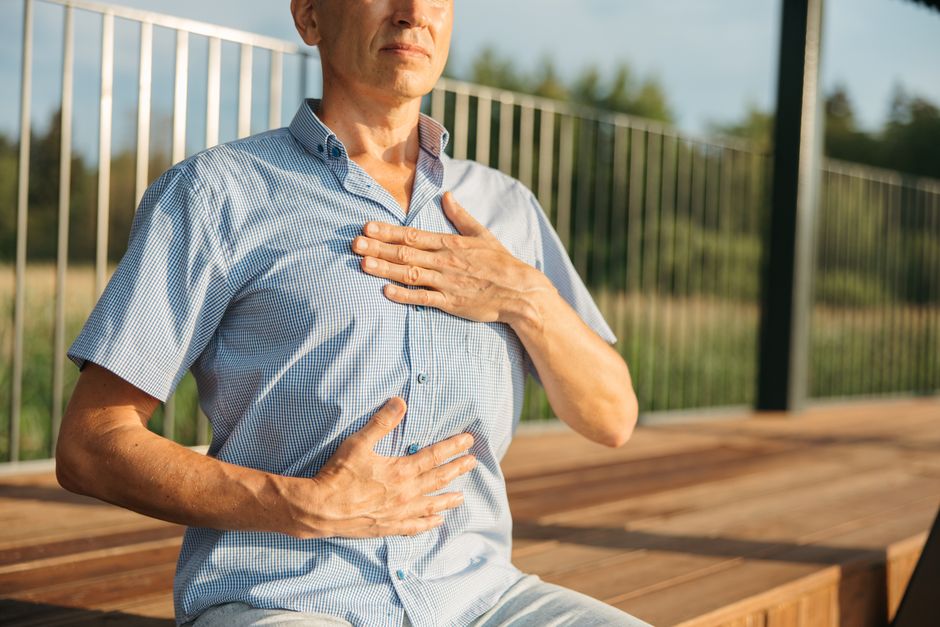
Yes, stress can cause chest pain. It is one of the most common reasons people go to an emergency room with chest discomfort, and in many cases the heart is not the source of the problem. The pain is real, not imagined, and it deserves a proper medical evaluation before anyone assumes stress is the cause.
Can Stress Cause Chest Pain Symptoms And Relief?
Stress can absolutely produce chest pain, and the mechanism is well understood. When the brain perceives a threat, it triggers the release of adrenaline and cortisol. These hormones speed up the heart, tighten blood vessels, and tense the muscles around the chest wall. The result can feel like pressure, tightness, aching, or a sharp stab in the chest.
The tricky part is that stress-related chest pain and heart-related chest pain can feel similar. That overlap is why doctors do not simply assume stress is the answer. They rule out dangerous causes first.
There is also a direct biological link between emotional stress and the heart that goes beyond muscle tension. Sudden severe stress can cause a temporary weakening of the heart muscle in a condition called stress cardiomyopathy. It is uncommon, but it is real and it can look exactly like a heart attack on the outside. This is one reason chest pain during a stressful event should never be self-diagnosed.
What Does Stress-Related Chest Pain Actually Feel Like?
Stress chest pain tends to have a few patterns, though no two people describe it the same way. The most common descriptions include a dull ache, a tight band across the chest, or sharp jabbing pain that comes and goes. Some people feel it more on the left side, others in the center.
Two features often point toward a muscular or stress-related cause. The first is that the pain changes with body position or when you press on the chest wall. The second is that it tends to come on gradually during a stressful period rather than suddenly at peak exertion.
Heart-related chest pain usually behaves differently. It often shows up during physical activity, improves with rest, and may spread to the arm, jaw, neck, or back. It may come with shortness of breath, sweating, or nausea.
That said, these patterns are not reliable enough to tell the two apart on your own. Some heart attacks cause only mild discomfort. Some stress pain feels crushing. Do not use a symptom checklist to decide whether to call for help.
How Does Stress Physically Create Chest Pain?
There are several distinct pathways, and most people with stress chest pain have more than one happening at the same time.
- Muscle tension. The muscles between the ribs and around the chest wall tighten during stress. Sustained tension causes aching and soreness that can last for hours or days.
- Rapid breathing. Stress often speeds up breathing. Fast, shallow breaths can strain the chest muscles and, in some people, trigger a feeling of tightness or air hunger.
- Acid reflux. Stress does not directly create stomach acid, but it can change how the digestive system behaves. Heartburn pain sits behind the breastbone and can mimic heart pain closely.
- Increased heart rate. Adrenaline raises heart rate and blood pressure. Some people feel this as a pounding or fluttering sensation in the chest.
- Heightened pain perception. Stress and anxiety can lower the threshold at which the brain registers pain, so the same physical signal feels stronger.
The last point matters more than most people realize. Anxiety does not just create sensations. It changes how intensely the brain interprets them. That is why two people with identical muscle tension can have very different experiences of pain.





When Is Chest Pain a Medical Emergency?
Call 911 for chest pain that comes on suddenly, feels like pressure or squeezing, lasts more than a few minutes, or comes with any of the following:
- Shortness of breath
- Pain spreading to the arm, jaw, neck, or back
- Cold sweat
- Nausea or vomiting
- Lightheadedness or fainting
- A sense of doom or impending collapse
Do not drive yourself to the hospital. Do not wait to see if it passes. Heart attacks are treatable, and the treatments work best when given early.
Even if you are fairly sure the pain is stress-related, a first episode of chest pain warrants a medical evaluation. Conditions like heart disease, blood clots in the lung, aortic problems, and collapsed lung can all present with chest pain that feels manageable at first.
How Is Stress-Related Chest Pain Treated?
Treatment depends on what is actually causing the pain, which is why an evaluation comes first. Once serious causes are ruled out, the approach usually focuses on the mechanisms at work.
For muscle tension, gentle stretching, heat, and over-the-counter pain relievers are commonly used. Physical therapy can help when chest wall pain becomes chronic.
For reflux-related pain, doctors often recommend avoiding large meals close to bedtime, limiting alcohol and caffeine, and in some cases prescribing acid-reducing medication. Lifestyle changes alone do not work for everyone, and medication does not work for everyone either.
For anxiety-driven pain, the evidence supports several approaches. Cognitive behavioral therapy has the strongest research support for anxiety disorders. Breathing exercises and progressive muscle relaxation can help in the moment. Regular aerobic exercise has been shown in multiple studies to reduce anxiety symptoms, though the effect varies between individuals.
Medication for anxiety is sometimes appropriate, but it is a decision to make with a clinician, not a self-treatment. Some anti-anxiety medications carry dependence risks and should not be started casually.
What does not have strong evidence: most supplements marketed for stress or heart health. No large human trial has confirmed that these products relieve stress-related chest pain.
Can You Tell Stress Chest Pain From Heart Pain on Your Own?
Not reliably. This is the honest answer, and it matters.
Several widely shared tips are not trustworthy. The idea that heart pain never changes when you press on your chest is not a safe rule. The idea that heart pain always radiates to the left arm is also not reliable. Some heart attacks cause only jaw pain or back pain. Some cause no pain at all, particularly in women and in people with diabetes.
A comparison of typical features can be useful for understanding, but not for self-diagnosis.
| Feature | Often stress-related | Often heart-related |
|---|---|---|
| Trigger | Emotional stress, anxiety | Physical exertion |
| Onset | Gradual over minutes to hours | Sudden, often at peak activity |
| Duration | Minutes to days | Usually minutes, sometimes longer |
| Response to rest | Variable | Often improves |
| Changes with position or touch | Often yes | Usually no |
| Associated symptoms | Racing thoughts, muscle tightness | Sweating, nausea, shortness of breath |
Notice the word “often” in every row. That word is doing a lot of work. These patterns describe tendencies across groups of people, not rules that apply to any single person. The table is a teaching tool, not a decision guide.
What Can Help Prevent Stress-Related Chest Pain?
Prevention focuses on lowering the stress response and reducing the muscle and digestive effects that come with it. The evidence here is strongest for a few well-studied habits.
Regular physical activity has the most consistent research support for reducing anxiety and improving how the body handles stress. The effect is modest but reliable across many studies.
Sleep matters more than most people give it credit for. Chronic short sleep raises stress hormone levels and lowers pain tolerance. Most adults need seven or more hours, though individual needs vary.
Slow breathing practices, done regularly rather than only during a crisis, have been shown in some studies to reduce anxiety symptoms. The effect is not dramatic, but the practice is low-risk and easy to try.
Limiting alcohol and caffeine can reduce both reflux and the physical sensations of a racing heart. This is a common clinical recommendation, though formal trials on chest pain specifically are limited.
If chest pain keeps returning during stressful periods, that pattern itself is worth discussing with a doctor. Recurring chest pain has many possible causes, and identifying the actual one is more useful than managing the symptom alone.
Frequently Asked Questions
Can stress cause chest pain that feels like a heart attack?
Yes. Stress-related chest pain can feel like pressure, tightness, or squeezing that closely resembles heart pain. Because the two can be indistinguishable by feel alone, any new or severe chest pain should be evaluated by a medical professional.
How long does stress-related chest pain usually last?
It varies widely. Muscle-tension pain may last from minutes to several days, while anxiety-driven episodes often come in waves that peak and fade. Pain that lasts more than a few minutes without a clear cause should be checked.
Does anxiety chest pain happen on the left side only?
No. Stress and anxiety chest pain can occur on the left, right, or center of the chest. Location alone does not reliably distinguish it from heart-related pain.
When should I go to the emergency room for chest pain?
Go immediately, or call 911, if chest pain is sudden, feels like pressure, lasts more than a few minutes, or comes with shortness of breath, sweating, nausea, or pain spreading to the arm or jaw. Do not drive yourself.
