
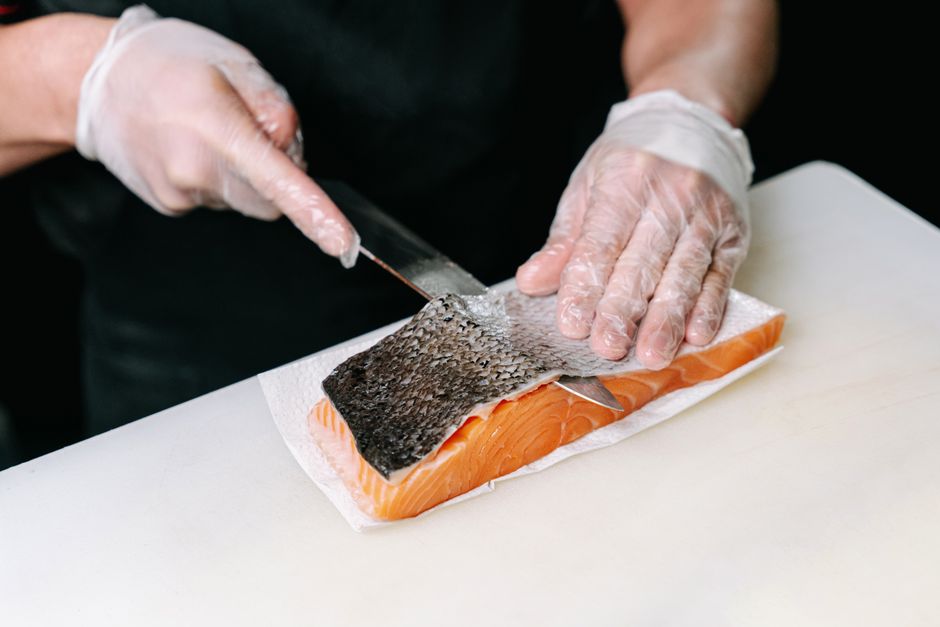
Yes, salmon skin is safe to eat and is commonly consumed in many cuisines. When cooked properly, it is not only safe but also provides a concentrated source of protein and healthy fats. The main considerations are the source of the fish and how you prepare it, not whether the skin itself is edible.
Is It Safe to Eat Salmon Skin?
For most healthy adults, eating fully cooked salmon skin poses no health risk. The skin is a natural part of the fish and contains no toxins of its own. The safety concerns that exist are the same ones that apply to the flesh of the fish itself, such as contamination from pollutants in the water where the salmon was raised or caught.
The one rule that matters is cooking. Salmon skin should always be cooked thoroughly. Eating raw or undercooked salmon skin increases the risk of foodborne illness from bacteria or parasites. This is not unique to the skin. The same risk applies to raw salmon flesh. If you would not eat the flesh raw, do not eat the skin raw either.
Does Salmon Skin Have Nutritional Value?
Salmon skin is more than just an edible wrapper. It contains a meaningful amount of nutrition that is often overlooked. The skin holds a significant portion of the fish’s healthy fats, including omega-3 fatty acids. These are the same fats that make salmon a recommended part of a heart-healthy diet.
The skin is also a source of protein. A serving of salmon with the skin on will have slightly more protein than a skinless fillet. The difference is not dramatic, but it is measurable. Additionally, the skin contains collagen, a structural protein that is popular in supplements. Eating the skin provides collagen in its natural food form, though the amount you get from a single serving is small.
One caution applies here. The nutritional benefits of the skin depend heavily on how it is cooked. Deep-frying the skin or cooking it with heavy butter and salt will add calories and sodium. Baking, grilling, or pan-searing with minimal oil preserves the natural nutritional profile much better.
What Are the Risks of Eating Salmon Skin?
The risks associated with eating salmon skin are not about the skin itself. They are about what the skin may have absorbed from the environment. Fish can accumulate environmental contaminants in their fat and skin. This is a real concern, but it is also a concern that applies to the entire fish, not just the skin.
The level of risk depends on the source of the salmon. Wild-caught salmon generally has a lower contaminant profile than farmed salmon, though both are considered safe for regular consumption by most health authorities. The bigger issue is the type of salmon and where it came from. Salmon from clean, well-managed waters will have lower contaminant levels than salmon from heavily polluted areas.
For most people, the occasional serving of salmon with the skin on is not a health concern. The benefits of eating fish, including the omega-3 fatty acids, outweigh the risks for the general population. The exception is for people who eat fish very frequently, such as several times per week. In that case, varying the types of fish you eat and choosing lower-contaminant options is a reasonable approach.





Does the Source of the Salmon Matter?
Yes, the source matters more than most people realize. Wild-caught salmon and farmed salmon are not identical in their contaminant profiles or their fat content. This difference affects the skin as well as the flesh.
Wild salmon tends to have a leaner profile and a more varied diet. Farmed salmon is often higher in total fat, which means the skin may contain more fat-soluble contaminants if they are present in the feed. However, modern aquaculture practices have improved significantly, and most commercially available farmed salmon is safe to eat regularly.
The most important factor is whether the salmon comes from a reputable supplier. Fish sold in major grocery stores in the United States is subject to inspection and safety standards. Salmon from these sources is safe to eat with the skin on. Salmon purchased from a fish market with unclear sourcing, or caught recreationally in unknown waters, carries more uncertainty.
If you catch your own salmon, check local advisories about the water body where you are fishing. Some waterways have specific guidance about how much fish you can safely eat from them. These advisories apply to the whole fish, and the skin should be treated the same way as the flesh.
How Should You Cook Salmon Skin?
The best way to cook salmon with the skin on is to leave the skin attached while cooking and let it crisp. This is the method used in most restaurants. The skin protects the flesh from drying out during cooking and adds texture and flavor.
For a crispy skin, pat the skin dry before cooking. Moisture is the enemy of crispness. Season the skin lightly and place it skin-side down in a hot pan with a small amount of oil. Cook until the skin is golden and crisp, then flip to finish the flesh side. The internal temperature of the fish should reach 145°F according to FDA guidance for fish.
Grilling and baking also work well. The key is to ensure the skin is fully cooked and, if you want it crispy, to expose it to direct heat. Boiling or poaching salmon with the skin on will make the skin soft and rubbery, which most people find unappealing. This is a texture issue, not a safety issue.
What About the Dark or Blackened Parts of the Skin?
You may notice that some parts of salmon skin are darker or have a grayish-black appearance. This is normal. The dark color comes from natural pigments in the fish, including melanin. It is not a sign of spoilage or contamination.
The dark layer just beneath the skin, sometimes called the “fat line,” is a concentrated area of healthy fats. It is safe to eat and actually contains a higher concentration of omega-3 fatty acids than the lighter flesh. Some people remove it for texture reasons, but there is no health reason to avoid it.
If the skin has a slimy texture when raw, that is also normal. All fish skin has a natural protective coating. Washing and cooking will remove it. A truly spoiled fish will have an off smell, which is the most reliable indicator that the fish should not be eaten at all.
Are There People Who Should Avoid Salmon Skin?
Most people can eat salmon skin without any issue. There are a few groups who should be more careful. Pregnant women and young children are more vulnerable to the effects of environmental contaminants. For these groups, the general guidance about fish consumption applies. Eating salmon with the skin on is generally considered safe, but limiting intake of fish that may be higher in contaminants is a reasonable precaution.
People with fish allergies should avoid salmon skin entirely. The skin contains the same allergenic proteins as the flesh. If you are allergic to salmon, the skin is not safe for you, even when cooked.
People with compromised immune systems should also be careful about any undercooked fish, including the skin. For these individuals, the recommendation is to ensure all fish is cooked to a safe internal temperature and to avoid raw preparations entirely.
Does Eating Salmon Skin Help With Weight Management?
Salmon skin is calorie-dense because it is high in fat. This does not make it unhealthy, but it does mean portion control matters. The fat in salmon skin is mostly unsaturated fat, which is the type associated with cardiovascular benefits. However, calories still count.
If you are managing your weight, eating the skin is fine as long as you account for the extra calories. A salmon fillet with the skin on will have more calories than a skinless fillet of the same size. The difference is modest, typically in the range of 20 to 40 calories per serving, depending on the size of the fish and how it is cooked.
The more significant calorie issue comes from cooking method. A crispy pan-seared skin cooked in butter will add far more calories than the skin itself. If weight management is your goal, bake or grill the salmon and use minimal added fat.
Frequently Asked Questions
Can you eat salmon skin raw?
No, you should not eat raw salmon skin. Raw fish skin can contain bacteria and parasites that are only destroyed by thorough cooking.
Is salmon skin high in mercury?
Salmon is a low-mercury fish, and the skin does not concentrate mercury more than the flesh. Mercury levels in salmon are among the lowest of commonly eaten fish.
Does removing the skin reduce the health benefits of salmon?
Removing the skin reduces the total fat and calorie content slightly, but the flesh alone still provides significant protein and omega-3 fatty acids. The skin adds extra nutrition but is not essential.
How can you tell if salmon skin is bad?
Fresh salmon skin should look moist and shiny, not dry or discolored. A strong fishy or ammonia-like odor means the fish is past its prime and should be discarded.
