
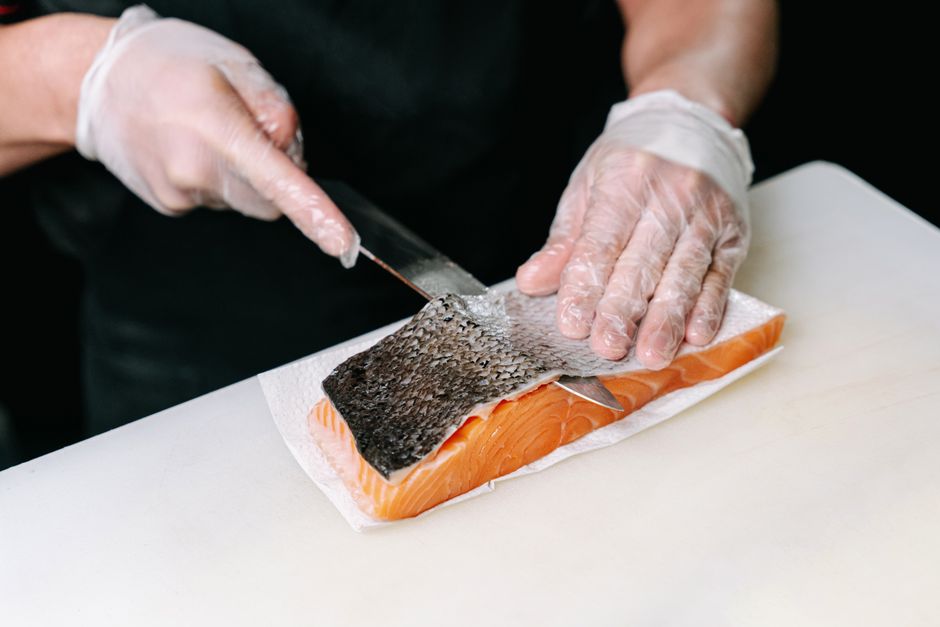
Pouring hot water over a salmon fillet is a fast, reliable way to loosen the skin before cooking. The heat gently separates the fat layer between the flesh and the skin, letting you pull it off cleanly with little waste. This method works best on raw fillets and takes about 30 seconds from start to finish.
Does Hot Water Actually Loosen Salmon Skin?
Yes, and the science is straightforward. Salmon skin is attached to the flesh by a thin layer of connective tissue and fat. Hot water warms that fat quickly, softening the bond without cooking the fish itself.
When you pour water at a temperature between 140°F and 160°F over the skin side, the fat begins to melt. The skin then lifts away from the flesh with minimal tugging. You are not cooking the salmon. You are simply warming the adhesive layer that holds the skin in place.
This technique is common in professional kitchens because it is fast and produces a clean fillet. It also avoids the waste that comes from cutting the skin off with a knife.
Step-By-Step: How To Take Skin Off Salmon With Hot Water
You need three things: a raw salmon fillet, hot tap water, and a clean work surface. No special tools are required.
- Run your kitchen tap until the water is hot but not boiling. Boiling water will cook the outer layer of the fish.
- Place the salmon fillet skin-side down in a colander or on a wire rack set over the sink.
- Pour the hot water slowly over the skin side of the fillet. You will see the skin begin to tighten and pull away from the flesh within seconds.
- Pat the fillet dry with paper towels. This step matters because excess moisture will prevent a good sear later.
- Grab the skin at one corner with your fingers or a paper towel. Pull it gently across the fillet. It should come off in one piece.
If the skin does not release easily, pour a little more hot water over it and wait five seconds. Do not force it. Forcing the skin will tear the flesh.
Why This Method Beats Using a Knife
Removing salmon skin with a knife takes practice. A fillet knife requires a specific angle and steady pressure. One wrong move and you slice into the flesh, wasting a portion of the fish.
The hot water method removes that risk entirely. You are not cutting anything. You are separating the skin from the flesh at the natural break point.
There is also less mess. Knife work on raw fish leaves residue on your cutting board and requires careful cleanup. The hot water method happens over the sink and takes seconds.
One more advantage: the flesh stays intact. This matters if you plan to portion the salmon into even pieces or serve it skinless in a dish where appearance matters.



Does Hot Water Affect the Taste or Texture of Salmon?
When done correctly, no. The water temperature is not high enough to cook the flesh. A brief rinse with hot tap water will not change the texture of the raw fillet.
The key is time. Keep the water contact brief. A fast pour over the skin is enough. Holding the fillet under running hot water for a full minute will start to cook the outer edge of the fish, turning it opaque and changing its texture.
After removing the skin, pat the fish dry. Moisture on the surface of the flesh will cause it to steam rather than sear in a hot pan. Dry fish gives you a better crust and a more pleasant texture.
Some people worry that hot water rinses away flavor. The water only contacts the skin side briefly. It does not penetrate the flesh deeply enough to wash away natural oils or taste.
When Should You Keep the Skin On?
Skinless salmon is not always the better choice. The skin holds healthy fats and adds flavor during cooking. When you sear a fillet skin-side down in a hot pan, the skin crisps and turns golden. Many chefs consider this the best part of the fish.
Keep the skin on when you are pan-searing, grilling, or roasting. The skin protects the flesh from direct heat and keeps the fish moist. It also makes flipping the fillet easier because the skin holds the fish together.
Remove the skin when you are poaching, making salmon burgers, or serving the fish cold in salads or sandwiches. Skinless fillets also absorb marinades more quickly because there is no barrier blocking the surface.
If you buy salmon with the skin already removed, you do not need this technique at all. The decision to remove skin comes down to how you plan to cook the fish, not which method is superior.
Common Mistakes and How To Avoid Them
The most common mistake is using boiling water. Boiling water cooks the surface of the fish instantly. You end up with a fillet that is partially cooked on the outside and raw inside. This ruins the texture and makes the fish harder to cook evenly later.
Another mistake is leaving the salmon in a puddle of hot water. After pouring, the fillet should drain immediately. Sitting in hot water continues to warm the fish and can make the flesh mushy.
Some people try this method on cooked salmon. It does not work the same way. Once salmon is cooked, the proteins have set and the skin adheres more firmly to the flesh. The hot water technique is only effective on raw fillets.
Finally, do not use this method on frozen salmon. The skin will not release properly, and you risk partially thawing the outer layer unevenly. Always thaw the fillet completely in the refrigerator before attempting to remove the skin.
Alternative Methods for Removing Salmon Skin
Hot water is not the only way to remove salmon skin. Each method has its place depending on your tools and preferences.
The knife method is the traditional approach. Place the fillet skin-side down on a cutting board. Hold the tail end firmly and slide a sharp, flexible knife between the skin and flesh at a slight angle. Use a gentle sawing motion while pulling the skin toward you. This takes practice but gives you complete control.
The cold method involves chilling the fillet thoroughly before removing the skin. Very cold skin becomes firmer and separates more cleanly. Some cooks place the fillet in the freezer for 15 to 20 minutes before attempting removal. This works but adds time to your prep.
Buying skinless fillets is the simplest option. Many grocery stores sell salmon with the skin already removed. You pay a little more, but you skip the prep work entirely.
No method is objectively best. The hot water technique is the fastest and most forgiving. The knife method gives you the most control. The cold method works when you have time to plan ahead.
Frequently Asked Questions
Does hot water cook the salmon when removing the skin?
No, not when done correctly. Hot tap water briefly warms the fat layer under the skin without cooking the flesh.
Can I use boiling water to remove salmon skin?
No. Boiling water will cook the outer layer of the fish and ruin the texture. Use hot tap water instead.
How long should I pour hot water over the salmon?
About 5 to 10 seconds is enough. Pour slowly over the skin side and stop as soon as the skin begins to lift.
Does the hot water method work on frozen salmon?
No. Thaw the salmon completely in the refrigerator first. The skin will not release properly when the fish is frozen.
