
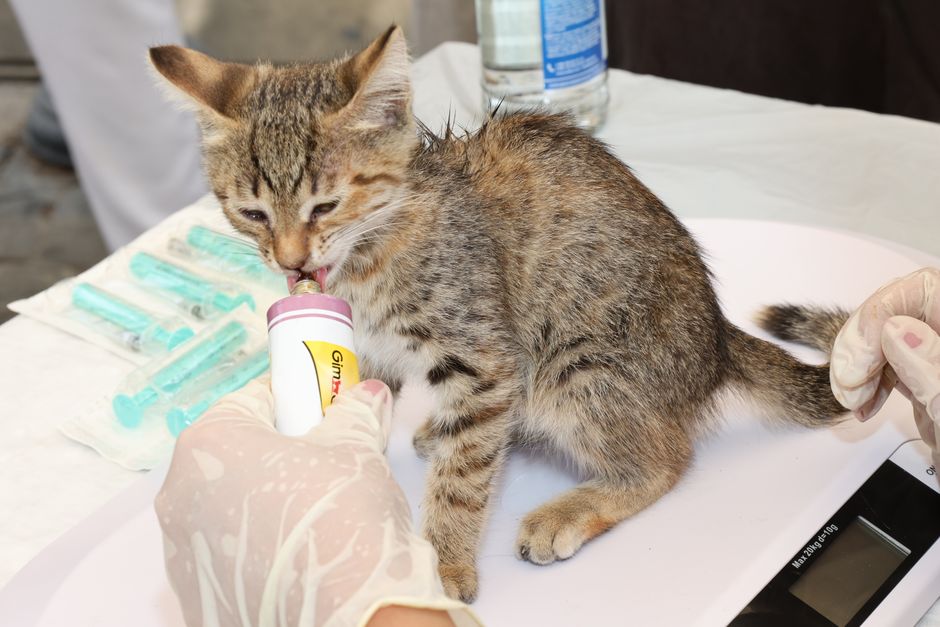
Yes, overfeeding a kitten can cause diarrhea. When a kitten eats more than its digestive system can handle at one time, the excess food moves through the gut too quickly and stools become loose. The problem is most common in bottle-fed orphans and in kittens whose owners refill the bowl whenever it looks empty.
Can Overfeeding a Kitten Cause Diarrhea?
Yes, and the mechanism is fairly straightforward. A kitten’s digestive tract is small and still developing. It produces a limited amount of the enzymes needed to break down fat and lactose, and it can only process so much volume in a given stretch of time.
When more food arrives than the gut can break down and absorb, the unabsorbed material pulls water into the intestine and gets fermented by gut bacteria. The result is loose, sometimes watery stool. In bottle-fed kittens, this often shows up as pasty yellow or gray poop rather than a formed stool.
Overfeeding is not the only cause of kitten diarrhea, and it is not even the most dangerous one. But when a kitten is otherwise bright, playful, and eating well, and the diarrhea started shortly after a feeding increase, overfeeding belongs near the top of the list.
How Does Overfeeding Actually Cause Loose Stool?
The gut has a maximum rate at which it can absorb nutrients. Push past that rate and the leftovers stay in the intestinal lumen, where they draw water in by osmosis. This is the same principle behind milk of magnesia and other osmotic laxatives.
There is a second factor. Undigested sugars and fats become food for bacteria in the lower intestine. That fermentation produces gas and irritates the gut lining, which speeds up transit. Faster transit means less time for water to be reabsorbed, so stool comes out loose.
In very young kittens, the pancreas and small intestine are still maturing. Enzyme activity is lower than in an adult cat, so the volume a kitten can handle before overload is genuinely small. This is why a small overfeed can produce a big change in stool.
Which Kittens Are Most at Risk?
Bottle-fed orphans are the highest-risk group. Hand-feeding makes it easy to lose track of volume, and a hungry kitten will often take more formula than it should. A kitten that gulps quickly may also swallow air, which adds to the gut upset.
Kittens recently separated from their mother are another at-risk group, especially if they are being transitioned to solid food. Free-feeding dry kibble to a kitten under eight weeks can lead to overeating because the kitten has not yet learned to self-regulate.
Kittens recovering from illness or parasites may also overeat when their appetite returns. Their gut is still healing, so it handles volume poorly even if the kitten acts starving.

How Can You Tell Overfeeding Apart From Other Causes?
Timing and context matter more than the appearance of the stool. Diarrhea that starts within a day or two of a feeding increase, in a kitten that is otherwise alert and active, points toward overfeeding. Diarrhea in a kitten that is lethargic, not eating, vomiting, or losing weight points somewhere else.
Several other causes of kitten diarrhea are common and can look similar:
- Intestinal parasites such as roundworms, hookworms, coccidia, and giardia
- Viral infections, including panleukopenia, which is serious and can be fatal
- Sudden diet changes or switching formula brands without a transition
- Bacterial overgrowth or infections
- Food intolerance or sensitivity
- Stress from rehoming, travel, or a new environment
A fecal exam at a veterinarian is the only reliable way to rule out parasites and infections. Overfeeding is a reasonable first suspicion, but it should not be the only one.
What Does Normal Kitten Poop Look Like?
Normal kitten stool is formed, soft but not runny, and light brown. It holds its shape when picked up. In bottle-fed kittens, stool is often a mustard or tan color and slightly softer than in weaned kittens.
Signs that stool is abnormal include:
- Watery or liquid consistency
- Pale yellow, gray, or green color
- Foul or unusually sour smell
- Mucus or blood in the stool
- Straining or discomfort during a bowel movement
Kittens normally poop several times a day. A sudden increase in frequency, along with a change in consistency, is worth noting.
How Should You Feed a Kitten to Avoid Overfeeding?
Feed small amounts more often rather than large amounts less often. Young kittens have small stomachs, and frequent small meals match how they would nurse from their mother.
For bottle-fed kittens, follow the feeding guide on the formula container and adjust based on the kitten’s weight and body condition, not on how eagerly the kitten finishes the bottle. A kitten that drains a bottle in seconds and still cries is not necessarily still hungry.
A few practical habits help:
- Weigh the kitten regularly and track growth rather than guessing
- Warm formula to body temperature, not hot
- Let the kitten set the pace and pause between sucks
- Avoid free-feeding dry food to kittens under eight weeks
- Transition any diet change slowly over several days
If you are unsure how much a specific kitten should eat, a veterinarian can give you a volume based on the kitten’s weight and age. There is no single number that fits every kitten.
When Is Kitten Diarrhea an Emergency?
Kittens dehydrate faster than adult cats, and diarrhea can become dangerous within a day. A kitten can lose a significant amount of fluid and body weight quickly, and its small reserves do not buffer that loss well.
Contact a veterinarian right away if a kitten:
- Is lethargic, weak, or unresponsive
- Refuses to eat or drink
- Is vomiting along with the diarrhea
- Has blood in the stool
- Shows a sunken or dull appearance, or its gums feel tacky
- Has diarrhea lasting more than a day or two
Do not wait to see if it improves on its own. In very young kittens, the gap between mild diarrhea and a serious problem is short.
Can You Just Cut Back the Food and Wait?
Cutting back to a normal portion and watching the kitten closely is reasonable if the kitten is bright, active, and drinking normally. Stool often firms up within a day or two once the volume is corrected.
That approach has limits. If the diarrhea does not improve after reducing the amount, or if the kitten gets worse, the cause is likely something other than overfeeding. Parasites, infections, and other conditions do not resolve with portion control.
Never withhold food or water from a kitten to “rest the gut.” Kittens have high energy needs and can become hypoglycemic quickly. Reducing the amount per feeding is not the same as starving the kitten.
The Bottom Line
Overfeeding is a real and common cause of diarrhea in kittens, especially in bottle-fed orphans and kittens being transitioned to solid food. The mechanism is osmotic and bacterial: too much food for the gut to absorb, water pulled into the intestine, faster transit, loose stool.
It is also a cause that is easy to fix and easy to mistake for something more serious. If a kitten is otherwise well, correcting the portion is a sensible first step. If the kitten is sick, lethargic, or not improving, the cause is probably not overfeeding and a veterinarian needs to be involved.
Frequently Asked Questions
Can overfeeding a kitten cause diarrhea?
Yes. When a kitten eats more than its gut can absorb, the excess draws water into the intestine and causes loose stool. It is most common in bottle-fed kittens and kittens being weaned.
How long does overfeeding diarrhea last in a kitten?
Stool often firms up within a day or two after portions are corrected. If diarrhea lasts longer than that, or the kitten seems unwell, another cause should be ruled out by a veterinarian.
Should I stop feeding a kitten with diarrhea?
No. Never withhold food or water from a kitten, because kittens can become hypoglycemic quickly. Reduce the amount per feeding instead and contact a veterinarian if the kitten is lethargic or not improving.
What does overfeeding diarrhea look like in a kitten?
It usually appears as pasty or watery yellow, tan, or gray stool, sometimes with a sour smell. The stool is softer and more frequent than the kitten’s normal formed poop.
