
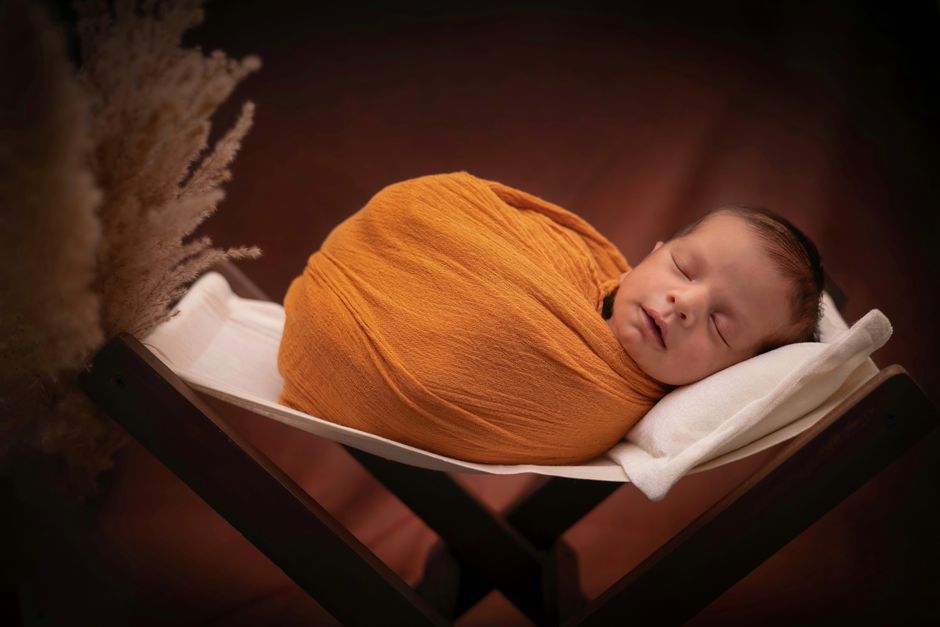
A baby who falls asleep in a swing looks peaceful. Many parents have used that moment to finally sit down, eat, or rest. But the question of whether an infant can safely sleep in a swing has a clear answer from pediatric safety experts: no. Swings are not designed or approved for infant sleep, and unsupervised sleep in any sitting device carries real risks.
Can Infant Sleep In Swing? What Safety Experts Say
No. Infant swings are not safe for sleep, and major pediatric organizations advise against letting babies sleep in them. This applies to supervised and unsupervised sleep alike.
The problem is the position. In a swing, a baby’s body is semi-upright and their head is often tilted forward. That position can cause the chin to drop toward the chest. When that happens, the airway can narrow or close off.
For a newborn, the neck muscles are not yet strong enough to correct this. A baby may not have the strength or the awareness to lift their head or cry out. This is why the risk is highest in the first months of life.
The American Academy of Pediatrics has stated that infants should sleep on a firm, flat surface — not in swings, car seats, bouncers, or similar products. This position is backed by decades of research on sudden infant death syndrome (SIDS) and sleep-related infant deaths.
This does not mean swings are dangerous when used as intended. A swing used for short, supervised play or calming is a different situation. The issue is specifically sleep.
Why Is Sleep in a Swing Unsafe?
The core problem is airway positioning. A flat, firm surface keeps a baby’s head and neck in a neutral line. A swing does not.
When a baby sleeps semi-upright, gravity pulls the head forward. The chin can press against the chest. This is sometimes called positional asphyxia — a blocked airway caused by body position.
Several things make this worse in a swing:
- The seat is angled, so the head tips forward.
- The baby’s head may flop to one side with no support to keep it centered.
- Soft or padded sides can press against the face.
- Newborns cannot reliably turn or lift their heads to protect their airway.
Positional asphyxia can happen quietly. A baby may not struggle or make noise. That is part of what makes it so dangerous. A parent watching closely might not notice anything is wrong until it is too late.
Some swings also have a recline feature. Even a more reclined swing is not the same as a flat sleep surface, and it still does not meet safe-sleep standards.
What About a Swing With a Flat Recline?
A swing that reclines flat may look closer to a bassinet. But a flat recline does not make a swing a safe sleep space.
For a product to be a safe sleep surface, it must meet specific safety standards. These include a firm, flat mattress and sides that allow free airflow. Most swings do not meet these standards, even when reclined.
Some products are marketed as “sleep-approved” or “for sleep.” If a product claims to be safe for sleep, it should meet the federal safety standard for bassinets or cribs. A swing that does not carry that specific certification is not a sleep product, no matter how it is positioned.
If you want a portable sleep space, a bassinet or a play yard that meets current safety standards is the right choice. Those are designed and tested for sleep.




Can a Baby Sleep in a Car Seat or Bouncer Instead?
The same airway concern applies to car seats, bouncers, and similar sitting devices. These are not safe for routine sleep either.
Car seats are necessary for travel. When a baby falls asleep in a car seat during a drive, that is expected. The concern is leaving a baby to sleep in a car seat once you are no longer traveling.
When a car seat is taken out of the car and set on the floor, the angle can change. On a flat floor, a car seat may sit more upright than it does when installed in a vehicle. That can increase the forward head tilt.
For that reason, experts advise moving a sleeping baby to a firm, flat surface as soon as you reasonably can after arriving at your destination. For a baby who is still small, that often means transferring them carefully to a bassinet or crib.
Bouncers and similar seats have the same issue. They keep a baby semi-upright. They are fine for short, supervised awake time. They are not sleep spaces.
What Is the Safest Way for a Baby to Sleep?
The safest sleep surface is a firm, flat mattress in a crib, bassinet, or play yard that meets current safety standards. Nothing else has been shown to lower risk the same way.
Key safe-sleep practices include:
- Place the baby on their back for every sleep.
- Use a firm, flat surface with a fitted sheet only.
- Keep the sleep space free of pillows, blankets, bumpers, and toys.
- Share a room but not a bed — room-sharing is linked to lower SIDS risk.
- Keep the sleep area cool and free of overheating.
If a baby falls asleep in a swing or car seat, the safest step is to move them to a flat surface. For a very young infant, this should be done as soon as it is practical.
Some parents worry that moving a sleeping baby will wake them. That is a real trade-off. But the safety concern outweighs the inconvenience of a possible wake-up.
How Long Can a Baby Stay in a Swing?
A swing is best used for short periods of supervised awake time. There is no established time limit from clinical guidelines for awake use, but the key point is that it should not be used for sleep.
When a baby is awake and you are watching, a swing can be a calming tool. Many babies find the motion soothing. That is a reasonable use.
The moment a baby falls asleep, the situation changes. At that point, the swing is no longer a safe place for them to stay.
If you need to step away, place the baby in a crib or bassinet first. Do not leave a sleeping baby in a swing, even for a short time, and even if you are nearby.
What Should Parents Do Instead?
If your baby only settles in a swing, the goal is to use it to calm them, then transfer them to a safe sleep surface before they fall deeply asleep.
Some practical approaches:
- Use the swing to soothe, then move the baby to a crib or bassinet.
- Try other calming methods — swaddling (for younger infants), white noise, or holding.
- Keep the crib or bassinet close so transfers are easy.
- If your baby resists the flat surface, talk with your pediatrician.
Every baby is different. Some settle easily on a flat surface. Others need more help. If sleep is a ongoing struggle, your pediatrician can offer guidance and rule out issues like reflux or discomfort.
For parents dealing with exhaustion, it can feel like there is no good option. That feeling is common and understandable. Reaching out for support — from a partner, family, or a doctor — is not a sign of failure.
Frequently Asked Questions
Can a baby sleep in a swing if I’m watching them?
No. Supervision does not make swing sleep safe, because positional asphyxia can happen quietly without visible signs of distress. The risk comes from the semi-upright position itself, not from a lack of attention.
Is it OK if my baby falls asleep in a swing for just a few minutes?
It is best to move a sleeping baby to a firm, flat surface as soon as you notice they are asleep. Even short periods in a semi-upright position can affect a young infant’s airway.
Are swings with a flat recline safe for sleep?
No. A flat recline does not make a swing meet safe-sleep standards, which require a firm, flat mattress and free airflow. Only cribs, bassinets, and play yards that meet current safety standards are designed for sleep.
What should I do if my baby will only sleep in a swing?
Use the swing only to calm your baby, then transfer them to a crib or bassinet before they fall deeply asleep. If sleep remains a struggle, talk with your pediatrician for guidance.
