
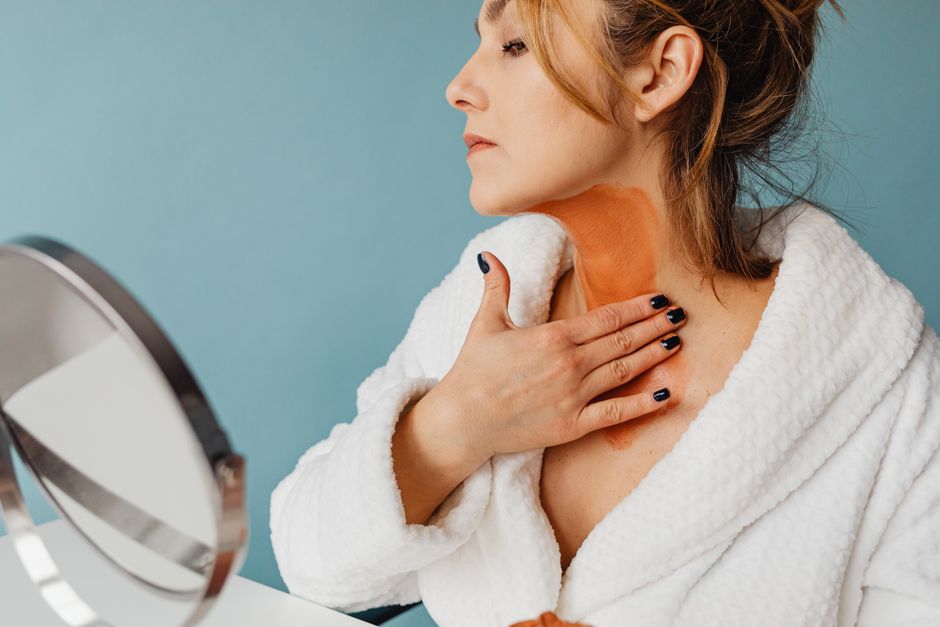
Yes, hypothyroidism can directly cause skin problems. When your thyroid gland does not produce enough hormones, your body slows down. This affects your skin in several ways. Skin becomes dry, rough, pale, and sometimes swollen. The medical name for this is myxedema. It happens because thyroid hormones control how your skin cells grow, repair, and hold moisture. Without enough hormones, skin cells do not shed normally. They build up and become flaky. Your oil and sweat glands also slow down. This leaves your skin without its natural moisture barrier. The result is skin that feels tight, looks dull, and may crack easily.
What Specific Skin Problems Does Hypothyroidism Cause?
The most common skin problem linked to hypothyroidism is extreme dryness. The skin on your elbows, knees, shins, and hands often gets rough and scaly. This is not regular dry skin. It is a thickening of the outer layer called hyperkeratosis. Your body cannot shed dead skin cells fast enough, so they pile up.
Another common issue is puffiness, especially around the eyes and on the face. This is not from allergies or lack of sleep. It is caused by a buildup of sugars and proteins in the skin. The medical term is non-pitting edema. When you press on it, it does not leave a dent like regular swelling does. Research published in the journal Thyroid found that up to 80 percent of people with hypothyroidism report some type of skin change. The most frequent complaints are dryness, roughness, and facial puffiness.
Some people also develop a yellowish tint to their skin. This is not jaundice. It happens because the body cannot convert beta-carotene from vegetables like carrots and squash into vitamin A. The pigment builds up in the skin instead. Your palms and soles may look orange or yellow. This goes away once thyroid levels are treated.
Less common but real problems include brittle nails that split easily, thinning eyebrows on the outer edges, and slow wound healing. Cuts and scratches take longer to close. This is because thyroid hormones help regulate collagen production. Collagen is the protein that holds skin together. Without enough hormones, your skin cannot repair itself as fast.
Why Does Hypothyroidism Change Skin Structure?
Thyroid hormones act like a thermostat for your cells. They tell every cell in your body how fast to work. Skin cells are no exception. When hormone levels drop, the metabolic rate of skin cells slows down significantly. This means new skin cells are produced more slowly. Older cells stick around longer than they should. The normal 28-day skin cell turnover cycle can stretch to 40 or 50 days.
Your oil glands and sweat glands also depend on thyroid hormones. They produce less sebum and less sweat. Sebum is the natural oil that keeps your skin soft and flexible. Sweat helps keep the skin surface slightly acidic, which protects against bacteria. Without enough of both, your skin barrier weakens. Water evaporates from the skin faster than normal. This is why people with untreated hypothyroidism often feel their skin is never moist enough, no matter how much lotion they use.
Blood flow to the skin also decreases. The body prioritizes blood flow to vital organs when thyroid levels are low. Skin gets less oxygen and fewer nutrients. This makes skin look pale or even grayish. It also makes it harder for the skin to regulate its own temperature. You may feel cold all the time, and your skin may feel cool to the touch.
There is also a structural change in the skin itself. The buildup of glycosaminoglycans — which are sugar molecules that hold water — causes the skin to swell. This is what creates the puffiness and thickened appearance. Unlike regular fluid swelling, this type does not go away when you elevate your head or reduce salt. It only resolves when thyroid hormone levels return to normal.
Can Hypothyroidism Cause Skin Problems That Resemble Other Conditions?
Yes, and this is where misdiagnosis often happens. Hypothyroidism-related skin changes can look like eczema, psoriasis, or even allergic reactions. The dry, scaly patches on elbows and knees might be mistaken for psoriasis. The facial puffiness can look like chronic allergies or sinus problems. The yellow tint to the skin can be confused with liver issues.
One key difference is that hypothyroidism skin problems usually appear on both sides of the body symmetrically. They also tend to be widespread rather than in isolated patches. The skin feels thick and doughy, not just dry. And the most telling sign is that these skin changes appear alongside other hypothyroidism symptoms. These include fatigue, weight gain, constipation, feeling cold, hair loss, and brain fog.
A study from the American Academy of Dermatology noted that about half of people with undiagnosed hypothyroidism first see a dermatologist for their skin complaints. The skin issues often prompt the doctor to order a thyroid test. This is why dermatologists are trained to look for thyroid-related skin signs. If you have persistent dry skin that does not respond to moisturizers, and you also feel tired and cold, ask your doctor about a TSH blood test.
It is also possible to have both hypothyroidism and a separate skin condition. Treating the thyroid may improve the skin but not fully resolve it. For example, some people with hypothyroidism also have eczema. Getting thyroid levels to normal helps the eczema respond better to treatment, but the eczema may still need its own management.




What Does the Research Say About Treating Hypothyroidism-Related Skin Problems?
Research consistently shows that the most effective treatment for hypothyroidism skin problems is replacing the missing thyroid hormone. The standard treatment is levothyroxine, a synthetic form of T4 hormone. Once your TSH level returns to the normal range, skin changes usually begin to improve within a few weeks. Full resolution can take three to six months. This is because skin cells turn over slowly, and it takes time for the new, healthy cells to reach the surface.
A study published in Clinical Endocrinology followed people with hypothyroidism before and after treatment. Within two months of starting levothyroxine, skin hydration levels improved significantly. Skin roughness and scaling also decreased. The study noted that people whose TSH levels were kept in the optimal range — between 0.5 and 2.5 mIU/L — had the best skin outcomes. Those whose TSH stayed on the higher end of normal still had some dryness.
There is no strong evidence that any specific diet, supplement, or topical cream can fix hypothyroidism skin problems on its own. Some small studies suggest that selenium supplements may help people with Hashimoto’s thyroiditis, which is the most common cause of hypothyroidism. Selenium supports thyroid function and may improve skin texture. But this is not a replacement for thyroid medication. Always talk to your doctor before starting any supplement.
Topical treatments like urea-based creams or ceramide lotions can help manage symptoms while you wait for the medication to work. They do not treat the underlying cause, but they can make your skin more comfortable. Avoid harsh exfoliants or strong retinoids. Your skin is already fragile and slow to heal. Aggressive treatments can make things worse.
Common Misconceptions About Hypothyroidism and Skin
One common myth is that hypothyroidism always causes weight gain and that losing weight will fix the skin. Weight changes are common with hypothyroidism, but the skin problems are not caused by the weight. They are caused by the hormone deficiency. Treating the thyroid is what helps the skin, not dieting. Some people lose weight after starting medication and their skin improves, but this is because the hormone levels are corrected, not because of the weight loss itself.
Another misconception is that natural thyroid supplements or herbal remedies can treat hypothyroidism better than prescription medication. As of 2026, there is no clinical evidence that any over-the-counter supplement can replace thyroid hormone therapy. Some products marketed for thyroid health contain iodine or kelp. Taking extra iodine can actually make hypothyroidism worse, especially if you have Hashimoto’s thyroiditis. The American Thyroid Association warns against using unregulated thyroid supplements.
Some people believe that if their skin improves, their hypothyroidism is cured. This is not true. Hypothyroidism is usually a lifelong condition. When you stop medication, the skin problems will return, along with other symptoms. The goal is management, not cure. You can have normal-looking skin and normal energy levels while taking the right dose of medication every day.
A final myth is that only severe hypothyroidism causes skin problems. Even mild or subclinical hypothyroidism — where TSH is slightly elevated but T4 is still normal — can cause dry skin. A 2021 study in the Journal of the European Academy of Dermatology and Venereology found that people with subclinical hypothyroidism had measurably drier skin than people with normal thyroid function. You do not need to have full-blown disease to notice skin changes.
What Practical Steps Help Manage Hypothyroidism Skin Problems?
First, take your thyroid medication exactly as prescribed. This is the single most important step. Levothyroxine is best taken on an empty stomach with water, at least 30 to 60 minutes before eating. Consistency matters. Taking it at the same time every day keeps your hormone levels stable. Even small changes in how you take it can affect your skin.
Second, adjust your skincare routine. Use a gentle, fragrance-free cleanser. Avoid hot water — it strips natural oils. Use warm water instead. Apply a thick moisturizer immediately after bathing while your skin is still damp. This locks in moisture. Look for products with ceramides, glycerin, or shea butter. Avoid products with alcohol, which dries skin further.
Third, consider a humidifier in your bedroom during dry months. Low humidity makes dry skin worse. A humidifier adds moisture back into the air and helps your skin barrier function better. Keep the humidity level between 40 and 60 percent.
Fourth, protect your skin from the sun. Hypothyroidism can make your skin more sensitive to UV damage. Sun exposure also dehydrates skin. Use a broad-spectrum sunscreen with SPF 30 or higher every day. Your skin needs all the help it can get to repair itself.
Fifth, stay hydrated and eat a balanced diet. There is no special diet for hypothyroidism skin, but getting enough protein, healthy fats, and vitamins supports skin health. Zinc and vitamin D are particularly important for skin repair. A blood test can tell you if you are deficient. Do not guess and supplement blindly.
| Skin Problem | Description | Time to Improve With Treatment |
|---|---|---|
| Dry, rough skin | Thickened outer layer, flaking on elbows and knees | 4 to 8 weeks |
| Facial puffiness | Non-pitting edema around eyes and cheeks | 6 to 12 weeks |
| Yellowish tint | Beta-carotene buildup in palms and soles | 3 to 6 months |
| Pale, cool skin | Reduced blood flow to skin surface | 2 to 4 weeks |
| Slow wound healing | Delayed collagen production | Several months |
What to Avoid When Managing Hypothyroidism Skin
Avoid over-exfoliating. Many people with dry skin think scrubbing off the dead skin will help. It usually makes things worse. Your skin barrier is already compromised. Harsh physical scrubs or strong chemical exfoliants like glycolic acid can cause irritation, redness, and even infection. Stick to gentle cleansing and moisturizing.
Avoid long, hot showers. Hot water breaks down the lipid barrier in your skin. This is the same barrier that is already weakened by hypothyroidism. Keep showers under 10 minutes and use lukewarm water. Pat your skin dry with a towel instead of rubbing.
Avoid relying on over-the-counter thyroid supplements. Products that claim to boost thyroid function naturally often contain iodine, tyrosine, or kelp. These can interfere with your thyroid medication and lab tests. The FDA does not regulate these supplements for safety or effectiveness. Some people end up with dangerously high or low thyroid levels because of them.
Avoid ignoring other symptoms. If your skin is dry but you also feel depressed, have trouble concentrating, or notice your voice getting hoarse, these are signs your thyroid dose may be too low. Do not assume the skin issue is separate. Get your TSH tested. Your medication may need adjustment.
Avoid the temptation to stop medication when your skin looks better. This is the most common reason people relapse. Skin improvement is a sign that your medication is working. Stopping it will bring back the skin problems and all the other symptoms. Hypothyroidism requires lifelong management for most people.
Frequently Asked Questions
Can hypothyroidism cause acne?
It is not common. Hypothyroidism usually causes dry skin, not acne. Some people experience acne from the hormone fluctuations during treatment adjustment, but the condition itself is not a direct cause.
Does hypothyroidism cause itchy skin?
Yes. Dry, flaky skin from hypothyroidism can become itchy. The lack of moisture and natural oils makes the skin more prone to irritation and itching.
How long after starting thyroid medication will my skin improve?
Most people notice improvement within four to eight weeks. Full recovery of skin texture and hydration can take three to six months because skin cells turn over slowly.
Can skin problems be the only sign of hypothyroidism?
It is possible but rare. Most people have other symptoms like fatigue, cold intolerance, or weight gain. However, some people with mild hypothyroidism notice skin changes first.
