
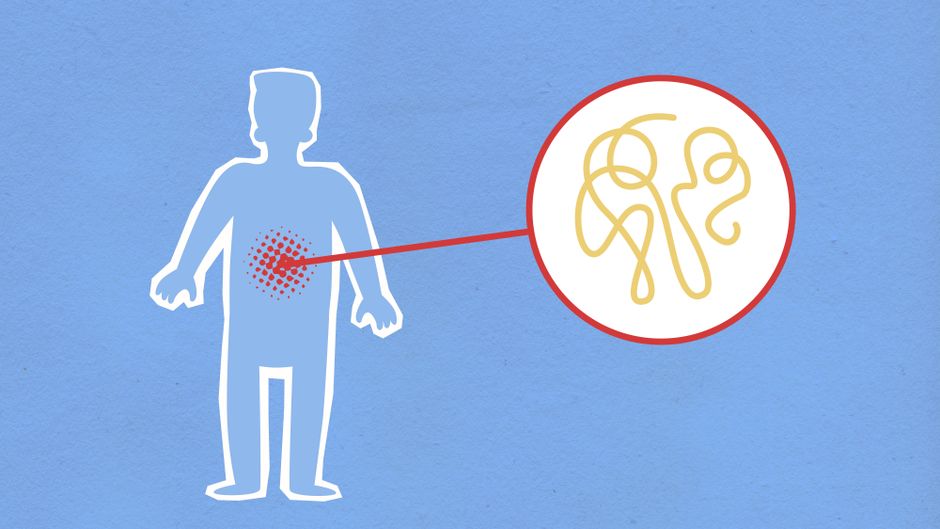
Yes, Helicobacter pylori can cause bloating, and it is one of the most common reasons people seek medical care for this symptom. This bacterial infection is a well-documented cause of chronic stomach inflammation, which directly disrupts normal digestion and leads to trapped gas and abdominal distension. While bloating alone does not confirm an H. pylori infection, persistent bloating combined with other digestive complaints warrants testing.
How Does Helicobacter Pylori Cause Bloating?
H. pylori is a spiral-shaped bacterium that colonizes the mucus layer of the stomach lining. It is remarkably adapted to survive the harsh acidic environment where most bacteria die. Once established, the infection triggers a persistent inflammatory response in the gastric mucosa — a condition called chronic gastritis.
This inflammation interferes with the stomach’s two core jobs: producing acid and emptying food into the small intestine. When the stomach cannot empty at a normal pace, food sits longer than it should. Slower gastric emptying means more fermentation time, more gas production, and a feeling of fullness and pressure that most people describe as bloating.
The infection also alters the balance of stomach acid. Some strains of H. pylori reduce acid production, while others increase it. Either way, digestion becomes less efficient. Undigested carbohydrates travel to the lower gut where bacteria ferment them, producing additional gas that contributes to bloating and flatulence.
What Does H. pylori Bloating Actually Feel Like?
Bloating from H. pylori is not a single sensation. People describe it as a combination of several distinct feelings that often occur together.
- Early fullness: Feeling full after eating only a small portion of a meal. This happens because the inflamed stomach cannot relax properly to accommodate food.
- Persistent pressure: A constant sense of tightness or pressure in the upper abdomen, often worse after meals.
- Visible distension: The abdomen may actually swell outward, making clothes feel tight even when no large meal was consumed.
- Belching: Frequent burping accompanies bloating in many people with H. pylori, as the body tries to release trapped gas.
The key difference between H. pylori bloating and ordinary bloating is persistence. Occasional bloating after a heavy meal is normal. Bloating that occurs most days, lasts for weeks or months, and comes with other symptoms is not normal and deserves evaluation.
What Other Symptoms Often Accompany H. pylori Bloating?
Bloating rarely occurs in isolation with H. pylori infection. The same inflammation that causes bloating produces a recognizable cluster of symptoms. Knowing this pattern helps distinguish H. pylori from other causes of bloating.
The most common companions to bloating are upper abdominal pain or discomfort, particularly a burning or gnawing sensation between meals. Nausea, especially in the morning or when the stomach is empty, is also frequent. Many people report a loss of appetite because eating makes the discomfort worse. Unexplained weight loss can occur when eating becomes unpleasant enough to reduce food intake.
Importantly, some people with H. pylori have no symptoms at all. The infection can be present for years without causing noticeable problems. When symptoms do appear, they tend to develop gradually and persist rather than coming and going in clear episodes.




Can Helicobacter Pylori Cause Bloating — Or Is It Something Else?
This is the right question to ask, because bloating has many causes. H. pylori is one possibility, but it is not the only one, and it is not even the most common one in the general population.
Irritable bowel syndrome (IBS) is the leading cause of chronic bloating in most clinical settings. Unlike H. pylori, IBS involves altered bowel motility and visceral hypersensitivity — the gut is more sensitive to normal amounts of gas. The bloating in IBS typically comes with changes in bowel habits: diarrhea, constipation, or alternating between the two.
Small intestinal bacterial overgrowth (SIBO) is another major cause. In SIBO, bacteria that normally live in the large intestine migrate upward into the small intestine, where they ferment food prematurely and produce significant gas. The bloating in SIBO often worsens within 30 to 60 minutes after eating and improves after a bowel movement.
Food intolerances, particularly to lactose or fructose, can also produce bloating. These are distinct from allergies — they involve the inability to digest specific sugars, which then ferment in the colon. Celiac disease, a gluten-triggered autoimmune condition, causes bloating along with diarrhea and malnutrition. Gynecological conditions in women, such as ovarian cysts or endometriosis, can cause abdominal distension that mimics digestive bloating.
The practical takeaway: H. pylori bloating is real, but it is diagnosed by testing, not by symptoms alone. If you have persistent bloating, the evaluation should consider all these possibilities.
How Is H. pylori Diagnosed?
If H. pylori is suspected, several reliable tests exist. The choice of test depends on whether you are already taking acid-suppressing medications and whether you need an endoscopy for other reasons.
The urea breath test is the most accurate non-invasive option. You drink a solution containing labeled urea. If H. pylori is present, its urease enzyme breaks down the urea, releasing labeled carbon dioxide that you exhale. A special analyzer detects this. The test is about 95% accurate, but you must stop proton pump inhibitors and antibiotics for two weeks before testing.
The stool antigen test detects H. pylori proteins in a stool sample. It is also highly accurate and requires the same medication washout period. This test is often preferred for initial diagnosis because it is simple and non-invasive.
Endoscopy with biopsy remains the gold standard. A thin tube with a camera is passed through the mouth into the stomach, and small tissue samples are taken. The biopsy can be tested for H. pylori directly, and it also shows the degree of inflammation or damage. This is the only test that simultaneously evaluates the stomach lining for ulcers, atrophy, or other changes.
Blood antibody tests exist but are not recommended for initial diagnosis. They detect past exposure, not active infection, and cannot distinguish between a current infection and one that was successfully treated years ago.
What Happens If H. pylori Goes Untreated?
Untreated H. pylori does not resolve on its own. The infection persists for decades in most people. The chronic inflammation it causes can lead to serious complications over time.
Peptic ulcers are the most common complication. The inflamed stomach lining becomes more vulnerable to acid damage, and ulcers can form in the stomach or the first part of the small intestine. These ulcers can bleed, causing black stools or vomiting blood, and in severe cases they can perforate the stomach wall, which is a surgical emergency.
Gastric cancer is the most serious risk. The World Health Organization classifies H. pylori as a Group 1 carcinogen, meaning there is sufficient evidence that it causes cancer in humans. The mechanism is well understood: decades of chronic inflammation lead to changes in the stomach lining — atrophy, intestinal metaplasia, and eventually dysplasia — that can progress to adenocarcinoma. The absolute risk remains low, but it is real, and it is the main reason treatment is recommended even for people with mild symptoms.
MALT lymphoma is a rare type of stomach cancer also linked to H. pylori. Unlike gastric adenocarcinoma, this lymphoma often regresses completely when the infection is eradicated, making H. pylori treatment a genuine cure for this condition in its early stages.
Eradication therapy eliminates the infection in about 85-90% of cases when the full course is completed. Successful treatment heals existing ulcers, reduces cancer risk, and resolves the bloating and other symptoms in most people.
How Is H. pylori Treated?
Treatment is a combination of medications taken together for 10 to 14 days. This is not optional — partial treatment creates antibiotic resistance and makes future eradication much harder.
The standard regimen includes two antibiotics to kill the bacteria, a proton pump inhibitor to reduce stomach acid and help the antibiotics work, and bismuth in some regimens. Common antibiotics include clarithromycin, amoxicillin, metronidazole, and tetracycline. The specific combination depends on local antibiotic resistance patterns and whether you have taken these antibiotics before.
Side effects are common but usually manageable. Metallic taste, loose stools, and mild nausea occur frequently. Completing the full course despite side effects is critical. Stopping early almost guarantees the infection will return with antibiotic resistance.
After treatment, a follow-up test — usually a breath test or stool antigen test — is mandatory to confirm eradication. This should be done at least four weeks after finishing antibiotics. If the infection persists, a second-line regimen with different antibiotics is prescribed.
Frequently Asked Questions
Can H. pylori cause bloating without other symptoms?
Yes, bloating can be the only noticeable symptom in some people. However, many people with H. pylori have no symptoms at all, and bloating alone is more often caused by other conditions like IBS.
How long after H. pylori treatment does bloating go away?
Most people notice improvement within a few weeks of completing treatment. Full resolution can take one to three months as the stomach lining heals from chronic inflammation.
Does H. pylori bloating get worse after eating?
Yes, bloating typically worsens after meals because the inflamed stomach empties more slowly, allowing food and gas to accumulate. Symptoms are often worse after larger or fattier meals.
Can bloating from H. pylori be mistaken for weight gain?
Yes, persistent abdominal distension can make clothes feel tight and the abdomen appear larger, which people sometimes mistake for weight gain. The difference is that H. pylori bloating fluctuates throughout the day, while true weight gain is consistent.
