
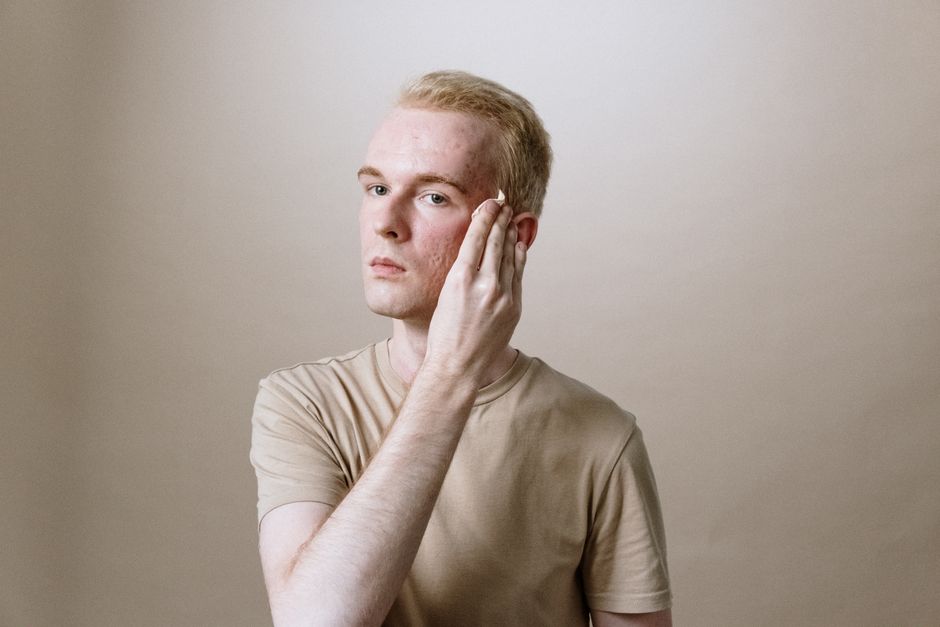
Dry skin does not cause acne. Acne forms when oil, dead skin cells, and bacteria block a hair follicle, and that process is driven mainly by hormones and genetics. Dryness can make acne feel worse and look more irritated, but it does not start the acne itself.
That distinction matters because the two problems need different care. Treating acne with heavy moisturizers alone will not clear it. Treating dry skin with harsh acne products can damage the skin barrier and make everything worse. Understanding what each condition actually is makes it easier to choose products that help instead of products that backfire.
What Actually Causes Acne?
Acne starts deep inside the pore, in a structure called the pilosebaceous unit. That unit contains a hair follicle, a sebaceous gland that produces oil, and a canal that opens onto the skin surface.
Four things have to come together for a pimple to form:
- Extra oil production, driven largely by hormones called androgens
- Dead skin cells that shed abnormally and stick together inside the pore
- Overgrowth of Cutibacterium acnes, a bacterium that normally lives on skin
- Inflammation, as the immune system responds to the blocked follicle
Notice what is missing from that list: dryness. Dry skin is not part of the mechanism. Acne is a disorder of the follicle and oil gland, not of surface moisture.
Hormones explain why acne clusters in the teenage years, why it often flares before a period, and why conditions that raise androgen levels can trigger it in adults. Genetics explain why one person gets cystic acne and another gets almost none despite similar habits. Neither factor is under your control, and neither has anything to do with how dry your skin is.
Why Dry Skin and Acne Get Confused
Dry skin and acne can appear on the same face at the same time, which is why so many people assume one caused the other. They can also look similar in photos, especially when skin is flaky and red.
A few things drive the confusion:
- Acne treatments like benzoyl peroxide and retinoids often cause dryness as a side effect
- Dry, flaky patches can resemble the scaling around some acne lesions
- Both conditions can cause redness and a rough texture
- People often start acne treatment and dry skin at the same time, making the sequence unclear
There is also a real phenomenon worth knowing about. When the skin barrier is damaged, it loses water and becomes more permeable. That can make skin look dull, flaky, and irritated. It can also make existing acne look angrier. But an irritated pimple is still an acne pimple. The barrier damage did not create it.
One clarification that surprises people: oily skin and dry skin are not opposites in the way most people assume. Skin can produce plenty of oil in the T-zone while feeling tight and flaky on the cheeks. This combination is common in adults and is sometimes called combination skin. It is not a sign that dryness is causing breakouts.
Can Dry Skin Make Acne Worse?
Yes, in a specific and indirect way. Dry, compromised skin is more easily irritated, and irritation can make acne look and feel worse without changing the underlying acne.
When the skin barrier is weakened, several things happen. Water evaporates more quickly. Irritants and allergens penetrate more easily. The skin may sting, itch, or turn red. If you then apply a strong acne treatment on top of that, you can get what dermatologists call irritant contact dermatitis layered on top of acne.
This is where a lot of people get stuck in a cycle. They use a harsh cleanser or a high-strength active, their skin dries out and flakes, they add more product to fix the flaking, and the irritation deepens. The acne does not improve because the acne mechanism was never addressed. The dryness gets worse because the barrier keeps taking hits.
There is also a mechanical issue. Flaky, dry skin sheds unevenly. Some of that shedding happens inside the pore, where sticky dead cells contribute to blockages. This does not mean dryness causes acne. It means that how skin sheds is part of the acne process, and dry skin can shed abnormally.





Does Dry Skin Ever Cause Pimples on Its Own?
No. A pimple requires a blocked follicle with oil and bacteria involved. Dryness alone cannot produce that.
What dry skin can produce is a bumpy texture that gets mistaken for acne. There are several possibilities here, and they are not all acne:
- Keratosis pilaris — small rough bumps, often on the upper arms and thighs, caused by keratin plugging hair follicles
- Folliculitis — inflamed hair follicles, sometimes from friction, shaving, or infection
- Eczema — dry, inflamed patches that can include small bumps
- Perioral dermatitis — a rash of small bumps around the mouth, sometimes linked to heavy product use
These conditions look different from acne under close examination, and they respond to different treatments. A dermatologist can usually tell them apart by looking, and sometimes with a simple skin swab or biopsy. If your “acne” is not responding to standard acne treatment, that is a reason to get it checked rather than to add more products.
How Should You Treat Dry Skin With Acne?
Treat both problems, but treat them separately. Acne needs products that address the follicle. Dry skin needs products that support the skin barrier. Trying to fix one by ignoring the other rarely works.
For the acne side, the ingredients with the strongest evidence are benzoyl peroxide, topical retinoids, and salicylic acid. These work on different parts of the acne process. Benzoyl peroxide reduces C. acnes bacteria. Retinoids help normalize how skin cells shed inside the pore. Salicylic acid helps break down the material blocking the pore.
For the dry skin side, the goal is to reduce water loss and support the barrier. That usually means a gentle, non-foaming cleanser, a moisturizer with ingredients like ceramides, glycerin, or hyaluronic acid, and avoiding very hot water and harsh scrubs.
A few practical points that make a real difference:
- Apply acne actives to dry skin, not damp skin, to reduce irritation
- Start with the lowest effective strength and increase slowly
- Moisturize after applying acne treatment, not before, unless your dermatologist says otherwise
- Give any new routine several weeks before judging results — acne treatments typically take time to show change
- Do not layer multiple strong actives on the same night when your skin is already dry
Some clinicians recommend a “skin barrier reset” period — pausing strong actives for a week or two while moisturizing consistently — before restarting acne treatment at a lower strength. This approach is common in practice, though formal trials comparing it directly to continuing treatment are limited.
When Should You See a Dermatologist?
See a dermatologist if your acne is painful, deep, leaving scars, or not improving after a reasonable trial of over-the-counter treatment. Also see one if your skin is so dry that it cracks, bleeds, or stings with basic products.
There are prescription options for acne that work on the hormonal and inflammatory drivers more directly. There are also prescription treatments for barrier damage and eczema. Neither problem needs to be managed alone with drugstore products if it is not responding.
One more reason to get evaluated: some skin conditions that look like acne are actually something else, and using acne products on them can make them worse. Perioral dermatitis is a common example. So is rosacea, which can cause bumps and redness that resemble acne but needs different care.
Frequently Asked Questions
Can dry skin cause acne?
No. Acne is caused by blocked hair follicles involving oil, dead skin cells, and bacteria, driven mainly by hormones and genetics. Dry skin can make acne more irritated but does not create it.
Why do I have dry skin and acne at the same time?
Acne and dry skin are separate conditions that can occur together on the same face. Acne treatments themselves often cause dryness, which is a common reason people notice both at once.
Does moisturizing help acne?
Moisturizing supports the skin barrier and can reduce irritation from acne treatments, which may help you tolerate them better. It does not treat acne directly, so it should be used alongside acne-focused products, not instead of them.
Can dry skin cause pimples that are not really acne?
Dry skin can cause rough, bumpy texture that gets mistaken for acne, including conditions like keratosis pilaris and eczema. A dermatologist can tell these apart from true acne and recommend the right treatment.
