
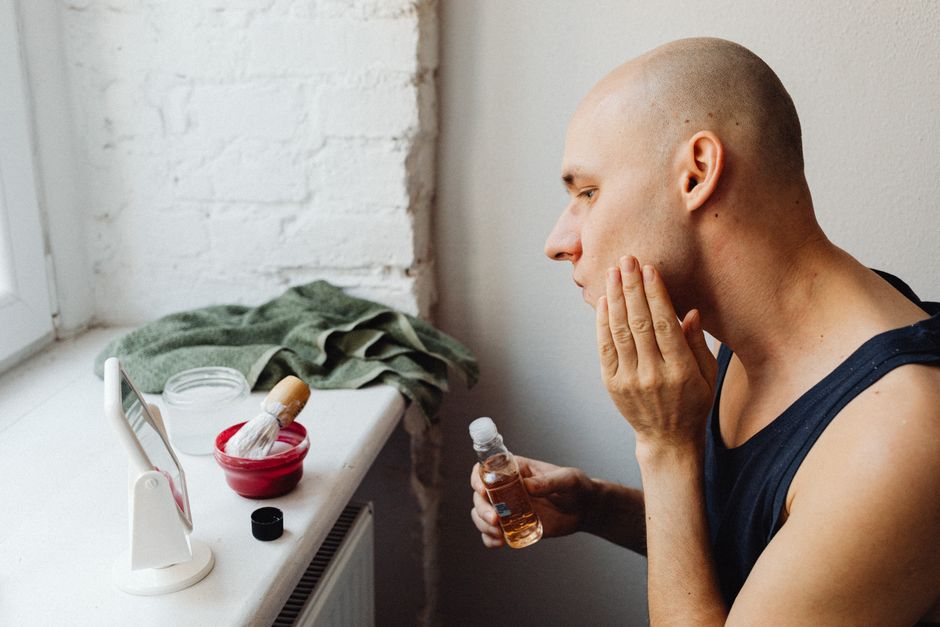
Yes, bald people can absolutely get dandruff. Dandruff comes from the scalp, not from hair. Hair is just where the flakes get trapped. If you have a bald scalp, you still have skin that can shed, get irritated, or react to yeast. The flakes just fall off instead of getting caught in your hair. It is actually more noticeable on a bald head because there is nothing to hide it.
What Actually Causes Dandruff on a Bald Scalp?
Dandruff is not about having hair. It is about the skin on your head. The medical term for dandruff is seborrheic dermatitis. This is a common inflammatory skin condition. It happens in areas with lots of oil glands—your scalp, eyebrows, sides of your nose, and chest.
The main driver is a yeast called Malassezia. This yeast lives on everyone’s skin. It feeds on the oils your sebaceous glands produce. For some people, the immune system reacts to this yeast. That reaction causes skin cells to turn over too fast. Normally, skin cells take about a month to shed. With dandruff, this happens in a few days. The result is clumps of dead skin cells—flakes.
Bald scalps still produce oil. The sebaceous glands are in the skin, not the hair follicles. So the yeast has plenty to eat. The process is identical whether you have a full head of hair or a completely smooth scalp. Research published in the Journal of Clinical and Aesthetic Dermatology confirms that sebum production is the key factor, not hair density.
Can Bald People Get Dandruff More or Less Often?
Bald people might notice dandruff more often, but that does not mean they get it more frequently. The difference is visibility. When flakes are trapped in hair, you see them on your shoulders. When you are bald, flakes land on your shirt or the floor immediately. It feels like more is happening because nothing is filtering it.
There is also a practical upside. A bald scalp is much easier to treat. You can apply medicated shampoos or creams directly to the skin without fighting through hair. You do not have to worry about buildup or residue in your hair. Some studies suggest that people with very short hair or no hair have an easier time managing the condition because the treatment reaches the skin better.
However, bald scalps are also more exposed. Sun, wind, and cold air hit the skin directly. This can dry out the scalp and make dandruff worse. The American Academy of Dermatology notes that environmental irritation can trigger or worsen seborrheic dermatitis, regardless of hair status.
What Is the Difference Between Dandruff and a Dry Scalp on Bald Skin?
This is one of the most common mix-ups. Dry scalp and dandruff look similar but have different causes. Dry scalp happens when the skin lacks moisture. It is usually caused by cold weather, harsh soaps, or low humidity. The flakes from dry scalp are small, white, and dry. There is no redness or greasiness.
Dandruff flakes are often larger, yellowish, and greasy. The scalp may feel itchy, red, or inflamed. The cause is the yeast reaction, not dryness. You can tell the difference by looking at the oiliness. If your scalp feels oily and flaky, it is dandruff. If it feels tight, rough, and the flakes are dry powder, it is likely dry scalp.
Treatment is different too. Dry scalp needs moisturizing—aloe, jojoba oil, or a gentle moisturizing shampoo. Dandruff needs antifungal or anti-inflammatory ingredients like ketoconazole, zinc pyrithione, or selenium sulfide. Using the wrong treatment can make things worse. Moisturizing a dandruff scalp can feed the yeast.




What Treatments Actually Work for Dandruff on a Bald Head?
Since you can apply treatment directly to the skin, bald people have an advantage. Medicated shampoos are still the standard, but you can also use creams and lotions. The key is consistency. Dandruff is a chronic condition. It does not cure completely. You manage it.
| Ingredient | What It Does | Best For |
|---|---|---|
| Ketoconazole | Antifungal that kills Malassezia yeast | Moderate to severe dandruff |
| Zinc pyrithione | Antifungal and antibacterial | Mild to moderate dandruff |
| Selenium sulfide | Slows skin cell turnover and fights yeast | Oily scalp with thick flakes |
| Salicylic acid | Exfoliates dead skin cells | Thick, scaly buildup |
| Coal tar | Slows rapid cell turnover | Stubborn, inflammatory cases |
For a bald scalp, you can leave the shampoo on for 3-5 minutes before rinsing. This gives the medicine time to work. You can also use a non-medicated moisturizer afterward if your scalp feels dry. Avoid heavy oils or petroleum-based products. They can feed the yeast.
If over-the-counter options do not work after four weeks, see a dermatologist. They can prescribe stronger antifungal creams or corticosteroid lotions. The National Eczema Association recommends prescription options for cases that do not respond to OTC treatments.
What Common Mistakes Do Bald People Make With Dandruff?
The biggest mistake is over-washing. Some people think washing more will fix dandruff. But washing too often strips the scalp of natural oils. This triggers more oil production to compensate. More oil means more food for the yeast. It becomes a cycle. Stick to washing 2-3 times per week with a medicated shampoo.
Another mistake is using harsh physical exfoliation. Scrubbing the scalp with a brush or rough cloth might feel like it helps, but it irritates the skin. This can trigger more inflammation and more flaking. Be gentle. Let the medicine do the work.
Some people also ignore the rest of their skin. Seborrheic dermatitis can affect the eyebrows, sides of the nose, and behind the ears. If you treat your scalp but not those areas, the yeast can spread back. Check those spots. If they are red or flaky, use the same treatment there too.
Finally, do not assume it is just dandruff. If the scalp is very red, painful, or has thick crusts, it could be psoriasis or another condition. Psoriasis requires different treatment. A dermatologist can tell the difference with a quick look.
Frequently Asked Questions
Can you get dandruff on a completely bald head?
Yes. Dandruff comes from the scalp skin, not the hair. A bald head still has oil glands and skin that can react to yeast.
Is dandruff on a bald head different from dandruff on a hairy head?
The cause is the same, but it is more visible on a bald head because flakes fall directly onto your shoulders instead of getting trapped in hair.
Can shaving your head cure dandruff?
Shaving does not cure dandruff because the yeast lives in the skin, not the hair. It may make treatment easier to apply, but the condition remains.
Does sunscreen help prevent dandruff on a bald scalp?
Sunscreen protects against sunburn, which can worsen inflammation. It does not prevent the yeast overgrowth that causes dandruff.
