

Yes, a cuff that is too tight can cause a falsely high blood pressure reading. This happens because an undersized cuff requires more pressure to compress the artery, and that extra pressure gets recorded as your blood pressure. The error is usually modest, but it can be enough to push a normal reading into a range that looks like hypertension and lead to unnecessary concern or even unnecessary treatment.
Blood pressure measurement looks simple. A cuff inflates, a number appears, and everyone moves on. In practice, it is one of the most error-prone measurements in routine medicine. Cuff size is one of the biggest sources of that error, and it is one of the easiest to fix.
How Does Cuff Size Change a Blood Pressure Reading?
A blood pressure cuff works by squeezing the brachial artery in your upper arm until blood flow stops, then releasing the pressure slowly while a gauge or monitor watches for the moment blood starts moving again.
The cuff has to be the right width and length for your arm. If the cuff is too small, it cannot compress the artery evenly. The bladder inside the cuff does not fully surround the arm, so the pressure it applies gets concentrated in a smaller area. To stop blood flow, the cuff has to be inflated to a higher pressure than a correctly sized cuff would need.
That higher pressure is what the device reads as your systolic number. The reading is not a measurement of your true blood pressure. It is a measurement of how much pressure this particular cuff needed to do its job. Because the cuff was too small, that number comes out artificially high.
The effect tends to be larger in people with bigger arms, because the mismatch between cuff and arm is greater. A cuff that is only slightly too small may add a small amount. A cuff that is clearly too small for the arm can add a meaningful amount — enough to change how a clinician interprets the result.
Can a Tight Blood Pressure Cuff Cause a High Reading?
Yes, and this is a well-documented source of measurement error. The confusion comes from the word “tight.” A cuff that feels snug is normal and correct. A cuff that is too small for your arm is the actual problem.
These are two different things:
- Snug fit: The cuff wraps smoothly around the arm with the bladder covering most of the circumference. This is how it should feel. It is not the cause of a high reading.
- Undersized cuff: The bladder is too short or too narrow for the arm. This forces higher inflation pressure and produces a falsely elevated number.
So if a cuff feels tight but is the correct size, that snugness is not the issue. If a cuff is the wrong size, the reading can be wrong regardless of how it feels. Feel is a poor guide. Size is what matters.
There is also a separate problem: a cuff that is wrapped too loosely or applied over clothing. That tends to cause error in the other direction or produce inconsistent readings, not a reliable high one.
How Much Can an Undersized Cuff Raise Your Reading?
The size of the error depends on how far off the cuff is. When a cuff is too small relative to the arm, the reading tends to come out higher than the true value. The gap grows as the mismatch grows.
This is why clinical guidelines emphasize cuff sizing rather than treating it as a minor detail. A reading that looks like stage 1 or stage 2 hypertension could, in some cases, be partly or largely an artifact of the wrong cuff.
That does not mean every high reading is a cuff problem. Most high readings reflect real blood pressure. But when a reading is unexpectedly high, or when it does not match readings taken elsewhere, cuff size is one of the first things a careful clinician checks.
The reverse is also worth knowing. A cuff that is too large for the arm can produce a reading that is falsely low. So getting the size right protects against error in both directions.



How Do You Know If Your Cuff Is the Right Size?
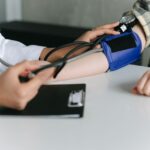
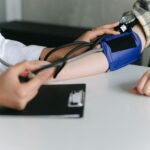
Cuff sizing is based on the circumference of your upper arm, measured around the midpoint between your shoulder and elbow. The cuff you use should match that measurement according to the range printed on the cuff itself.
Most cuffs list a range, such as a specific set of arm circumferences in centimeters, on the label or the cuff fabric. If your arm measurement falls inside that range, the cuff is appropriate. If it falls outside, you need a different size.
Arm circumference varies a lot between people, and standard “one size” cuffs do not fit everyone. This is a common problem in home monitors, which often ship with a single cuff size that fits an average arm but not a large or very small one.
If you measure your blood pressure at home, it is worth checking the range printed on your cuff against your actual arm measurement. Many manufacturers sell separate small, large, and extra-large cuffs for the same monitor. Using the correct one costs little and removes a known source of error.
What Else Causes a Falsely High Blood Pressure Reading?
Cuff size is not the only thing that can push a reading up. Several other factors can produce a number that is higher than your true resting blood pressure.
- Talking during the measurement. Talking can raise the reading. Staying quiet matters.
- Recent caffeine, nicotine, or exercise. These can temporarily elevate blood pressure.
- Not resting first. Blood pressure should be measured after sitting quietly for a few minutes.
- Arm position. If the arm is below heart level, the reading tends to run higher. The arm should be supported at about heart height.
- Full bladder. A full bladder can raise the reading.
- White coat effect. Some people have higher readings in a clinic than at home, driven by the setting itself.
- Back or feet unsupported. Sitting without support can raise the number.
Any one of these can add error. Several together can add up. This is why a single high reading is not a diagnosis — it is a signal to measure again, carefully, under better conditions.
What Should You Do If You Get a High Reading?
Do not panic over one number, and do not ignore a pattern either. A single elevated reading can come from a wrong cuff, a rushed measurement, or a bad day. What matters is whether the elevation repeats.
If a reading looks high, the reasonable next step is to measure again properly: correct cuff size, arm supported at heart level, back supported, feet flat, no talking, after a few minutes of quiet rest. If the number stays high across several careful readings on different days, that is worth discussing with a clinician.
If you are checking at home, bring your monitor and cuff to a medical visit so they can be checked against a properly sized clinical cuff. Home monitors and their cuffs are not all equally accurate, and a size mismatch is a common reason for readings that do not match what your clinician measures.
If you take blood pressure medication, do not adjust it based on home readings alone. Talk to your clinician. A falsely high reading caused by a wrong cuff could otherwise lead to a medication change you do not need.
Does a Tight Cuff Cause Damage to Your Arm?
A correctly used blood pressure cuff does not harm the arm. It briefly squeezes the artery, which is uncomfortable for some people but not damaging. The pressure is released within seconds.
A cuff that is far too small can be more uncomfortable because it must inflate to a higher pressure, and it can leave a temporary mark or a feeling of soreness. That discomfort is a sign the cuff is wrong for your arm, not a sign of injury.
There is no established evidence that routine blood pressure measurement causes lasting harm to the arm. The real risk of a wrong-sized cuff is not physical damage — it is a wrong number that leads to wrong decisions.
Frequently Asked Questions
Can a tight blood pressure cuff give a falsely high reading?
Yes. A cuff that is too small for your arm requires higher inflation pressure, and that extra pressure is recorded as a higher blood pressure. A snug but correctly sized cuff does not cause this.
How do I know if my blood pressure cuff is too small?
Check the arm circumference range printed on the cuff against the measurement around your upper arm. If your arm is larger than the listed range, the cuff is too small and you need a larger size.
Can an undersized cuff make a normal reading look like hypertension?
It can push a reading into a higher category than your true blood pressure, especially with a large mismatch between cuff and arm. That is why correct cuff sizing is part of accurate measurement.
Should I change my blood pressure medication based on one high home reading?
No. A single high reading can reflect cuff size, technique, or temporary factors. Discuss repeated high readings with your clinician before any medication change.
