
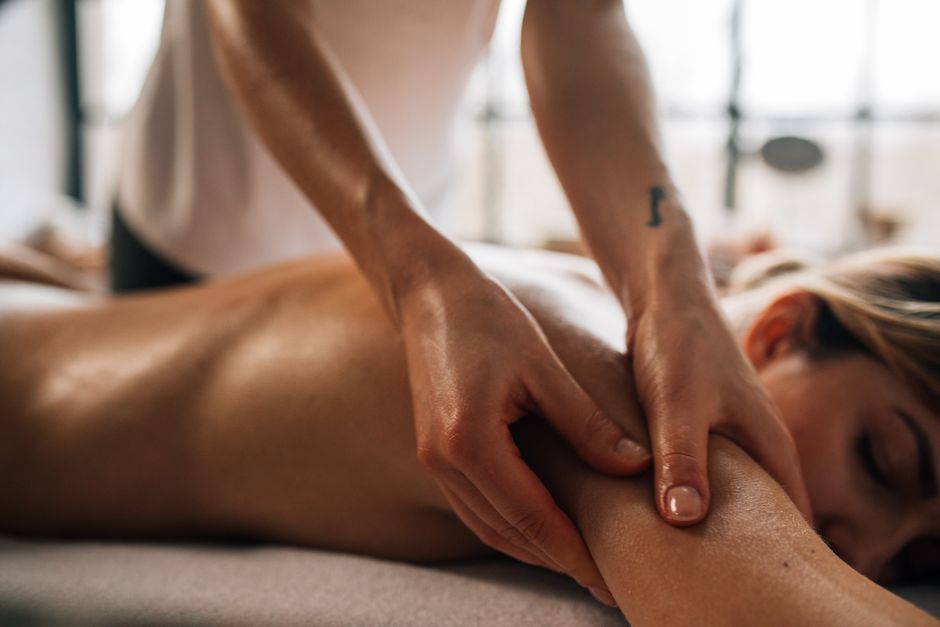
Can a massage help with anxiety? Yes, for many people it can. Research has found that massage therapy can lower feelings of anxiety in the moment, and it often helps people feel calmer and more relaxed. What it cannot do is treat an anxiety disorder on its own. Think of it as one useful tool, not a complete solution.
If you have ever walked out of a massage feeling looser, quieter, and less on edge, that shift is real. It is also well documented. But there is a difference between easing everyday tension and managing a clinical anxiety disorder. Knowing where massage fits — and where it does not — helps you use it well.
How Does a Massage Help With Anxiety?
Massage appears to calm anxiety through the body’s own relaxation systems, not through anything mystical.
Your nervous system has a built-in brake. When you receive steady, predictable touch, pressure receptors in your skin send signals that can shift your body away from a stress response and toward a calmer state. Heart rate may slow. Breathing may deepen. Levels of cortisol, a hormone tied to stress, have been shown to drop after massage in some studies. At the same time, the brain releases chemicals linked to mood and calm, including serotonin and dopamine.
There is also a simpler explanation that matters just as much. A massage gives you a scheduled, quiet hour where no one needs anything from you. That alone can lower the background hum of worry many people carry all day.
One clarification worth making: the physical relief and the mental relief are not the same thing. Someone can have tight shoulders that feel better after massage and still feel anxious. And someone can feel calmer after massage even when their muscles were never the problem. The relaxation response is doing much of the work.
What Does the Research Actually Show?
The evidence is strongest for short-term relief and weaker for long-term treatment.
Reviews of massage therapy studies have generally found reductions in anxiety symptoms, often measured right after a session. This pattern shows up across different groups — people dealing with stress, medical procedures, cancer treatment, and everyday tension. In many of these studies, participants reported feeling less anxious than a comparison group.
What the research does not show is that massage cures or treats an anxiety disorder. Most studies are small and short. They measure how people feel soon after a session, not whether their condition improved over months. That is a meaningful gap, and it is honest to name it.
So the fair summary is this: massage reliably helps people feel calmer in the short term. Whether regular massage changes the course of an anxiety disorder is not established. Anyone who tells you otherwise is going beyond the evidence.
How Long Do the Calming Effects Last?
Most people notice the strongest calm during and right after the session. That feeling often fades within hours to a day or two.
Some people report a lingering sense of ease that lasts longer, especially if they get massage regularly. But there is no reliable timeline that applies to everyone. Effects depend on the person, the type of massage, how often it happens, and what else is going on in their life.
This is why massage works best as part of a routine rather than a one-time fix. A single session can feel wonderful. It rarely changes a pattern of anxiety that has been building for years.





Which Type of Massage Is Best for Anxiety?
There is no single best type. The one that helps most is usually the one that feels safe and pleasant to you.
Swedish massage is the most studied and the most common. It uses long, flowing strokes and light to medium pressure. Many people find it deeply relaxing. Deep tissue massage uses firmer pressure and targets specific areas. Some people find it calming; others find it uncomfortable, and discomfort can work against relaxation.
Other options include:
- Chair massage — a short session focused on the back, neck, and shoulders, often 10 to 20 minutes.
- Self-massage — using your own hands or a tool on tight areas. It is free and can be done at home.
- Partner or couples massage — some people find the presence of a trusted person adds to the calming effect.
Pressure matters more than style. A massage that feels too firm can trigger tension rather than release it. Speak up during the session if something hurts.
Can Massage Replace Therapy or Medication?
No. Massage is a complement to anxiety care, not a replacement for it.
Anxiety disorders are real medical conditions, and the treatments with the strongest evidence are talk therapy — particularly cognitive behavioral therapy — and certain medications. These approaches have been studied far more thoroughly than massage and are the standard of care.
Massage can sit alongside those treatments. Some people find it helps them feel more grounded between therapy sessions. Others use it as a way to manage physical tension that builds with worry. But if anxiety is interfering with your sleep, work, relationships, or daily life, massage alone is not enough. Talk to a doctor or mental health professional.
If you are already in treatment, massage is generally safe to add. It is worth mentioning it to your care team, especially if you take medication or have a health condition.
Is Massage Safe for Everyone?
Massage is generally considered low risk, but it is not right for everyone in every situation.
Talk to a doctor before getting a massage if you:
- Have a bleeding disorder or take blood-thinning medication
- Have a skin infection, rash, or open wound in the area to be massaged
- Have a recent injury, fracture, or blood clot
- Are pregnant — some techniques and positions need adjusting
- Have cancer — some clinics advise avoiding deep pressure near tumors or treatment sites
For most healthy adults, the main risks are soreness afterward and discomfort during the session. Both are usually avoidable by communicating with your therapist.
How to Get the Most From a Massage for Anxiety
A few small choices can make a session more helpful for anxiety.
Book a time when you are not rushing from something stressful or straight into another obligation. Arrive a few minutes early so you are not arriving flustered. Tell the therapist you are there partly for anxiety, not just muscle tension — that changes how they approach the session.
During the massage, focus on your breathing rather than your to-do list. Some people find slow breathing helps them settle faster. Afterward, give yourself a buffer. Rushing back into a busy day can undo much of the calm.
If you cannot afford regular sessions, self-massage and short chair massages are reasonable alternatives. So is any activity that reliably calms your body — a warm bath, slow walking, gentle stretching, or time with a pet. The relaxation response is not exclusive to massage.
Frequently Asked Questions
Can a massage help with anxiety?
Yes, massage can reduce anxiety in the short term, and research supports this for many people. It is a complement to anxiety care, not a treatment for an anxiety disorder on its own.
How often should you get a massage for anxiety?
There is no established schedule, and no clinical guideline sets a specific frequency. Many people find that regular sessions help more than occasional ones, but the right pace depends on your needs and budget.
Does massage help anxiety the same day?
Most people feel calmer during and right after a session. That effect often fades within hours to a day or two.
Can massage cure anxiety?
No. Massage can ease anxiety symptoms in the moment, but it does not cure an anxiety disorder. Therapy and medication have far stronger evidence for treating these conditions.
